A Bridge to Firmer Ground: Learning from International Experiences to Support Pathways to Solutions in the Syrian Refugee Context
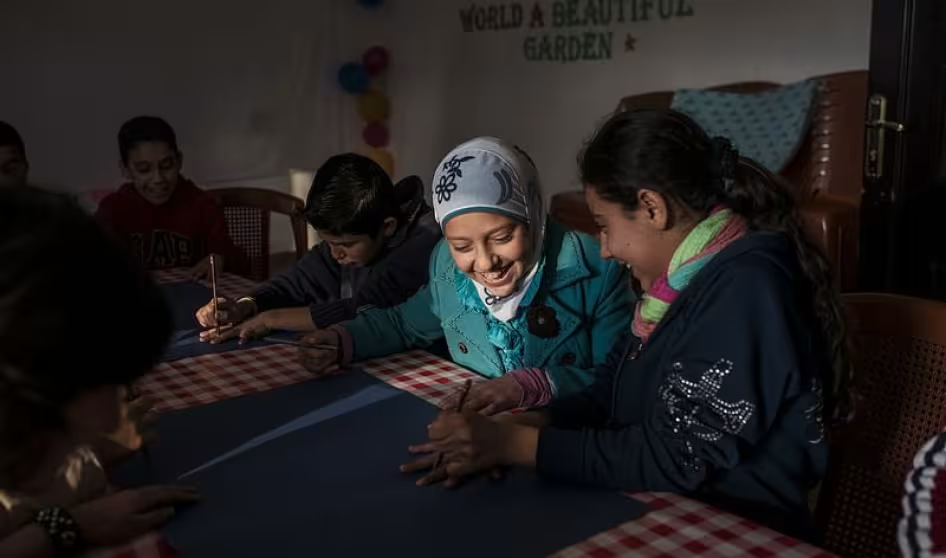
This report draws on international cases to highlight models that could expand Syrian refugees’ access to protection, social safety nets, and education.
Ten years into Syria's violent conflict, Syrians remain the largest refugee population worldwide. The vast majority of these refugees reside in neighboring countries, with 5.5 million living in Turkey, Lebanon, Jordan, and the Kurdistani Region of Iraq (KRI) as of 2021. Many refugees in the region live in poverty and continue to face challenges accessing jobs, health care, and education, a reality that has only worsened as the COVID-19 pandemic has put health systems and local economies under significant strain.
While these challenges are complex, the humanitarian assistance and development fields have responded to refugee situations around the world with great creativity over the last decade. Initially sparked by the Syrian crisis itself and then catalyzed by the Global Compacts on Refugees and Migration, partnerships between host and donor countries, international institutions, civil society, and the private sector have brought about innovative strategies to meet the needs of both refugees and host communities.
This report from MPI and the Durable Solutions Platform offers examples of promising initiatives that promote the resilience of refugees and host communities, and examines how they might apply to the Syrian refugee context. Drawing on case studies from 16 countries on five continents, the report identifies lessons that can be learned in fostering refugee integration and social cohesion in five thematic areas: protection, social protection, education, livelihoods, and health care.
The researchers identify several common strengths among the programs examined, including strong political leadership, the engagement of civil society and nongovernmental actors, continuous support from donor institutions, and an inclusive approach that, while acknowledging the specific needs of refugees, also seeks to benefit host communities. The report also highlights the importance of greater investments in monitoring and evaluation and better coordinated program integration. Given the limited opportunities for refugee resettlement and unlikely prospect of return under safe conditions in the Syrian refugee context, the lessons identified here could have important implications for those working to mitigate the impacts of this protracted crisis—and for the refugees and host communities.
Table of Contents
Introduction
1 Protection
2 Social Protection
3 Education
4 Livelihoods
5 Health Care
Conclusion
Latin America and Caribbean Initiative
The Initiative combines rigorous research with direct engagement of governments, institutions, and stakeholders to help build orderly, rights-respecting migration systems across one of the world's most dynamic migration regions.
About the Global Program
The Global Program bridges policy advice, research, and candid dialogue to design effective migration policies, drawing on global evidence and anticipating the forces reshaping how people move.