Beyond Territorial Asylum: Making Protection Work in a Bordered World
Territorial asylum is under threat globally as spontaneous arrivals strain systems across Europe, North America, and beyond, while international aid cuts have severely weakened humanitarian organizations' capacity to support refugees. Many displaced people lack access to resettlement or other durable solutions.
In response, MPI and the Robert Bosch Stiftung completed a three-year phase in July 2024 to develop flexible, context-adaptable alternatives to traditional territorial asylum—ones that shore up public trust and preserve protection norms.
MPI continues to work to build a globally equitable protection system that is politically viable, creates sustained protection space for those at risk, and re-examines the foundational responsibility-sharing bargain between low-, middle-, and high-income countries amid shifting aid commitments.
This collaboration by MPI with the Robert Bosch Stiftung builds on the two organizations’ longstanding relationship. Based in Germany, the Bosch Stiftung is one of the major foundations in Europe that is associated with a private company. It works in the areas of health, education, and global issues. With its charitable activities, it contributes to the development of viable solutions to social challenges.
Advisory Group
The Beyond Territorial Asylum initiative has drawn on the insights of a distinguished Advisory Group: Tsion Tadesse Abebe, Mustafa Alio, Giulio di Blasi, Vincent Cochetel, Luisa Feline Freier, Bram Frouws, Luciana Gandini, Leander Kandilige, Nassim Majidi, David Manicom, Omar Abdul-Monem Rifai, and Foni Joyce Vuni.
Phase One Final Report
The End of Asylum? Evolving the Protection System to Meet 21st Century Challenges
Territorial asylum is increasingly inadequate to meet 21st-century protection needs. A diversified policy toolkit, including regional cooperation,…
Showing 1–10 of 10 results
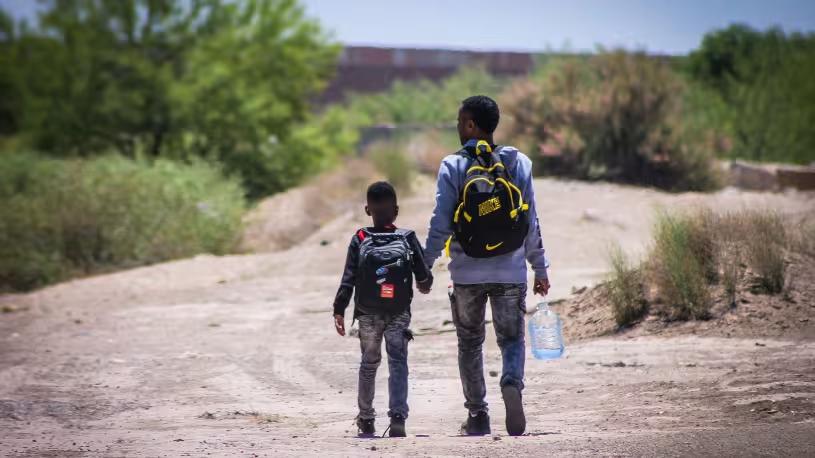
The End of Asylum? Evolving the Protection System to Meet 21st Century Challenges
Territorial asylum is increasingly inadequate to meet 21st-century protection needs. A diversified policy toolkit, including regional cooperation, expanded legal pathways, and streamlined procedures, is urgently needed.

Managing International Protection Needs at Borders
Amid rising mixed migration flows, managing international protection needs at borders requires differentiated screening, flexible surge capacity, interagency coordination, and proactive investment.

The Mobility Key: Realizing the Potential of Refugee Travel Documents
Without usable travel documents, refugees are locked out of work, study, and family reunion. A stronger document ecosystem could ease pressure on the global protection system.
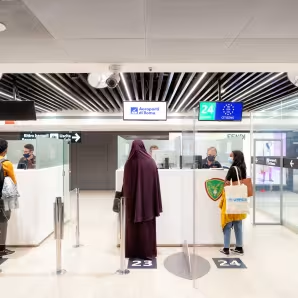
Expanding Protection Options? Flexible Approaches to Status for Displaced Syrians, Venezuelans, and Ukrainians
Flexible protections for displaced Syrians, Venezuelans, and Ukrainians show temporary status can work at scale, but durable solutions remain elusive for millions.

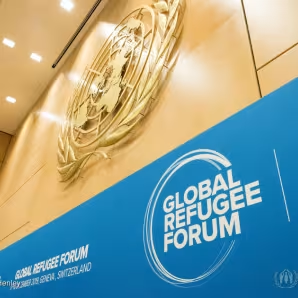
Achieving Meaningful International Cooperation on Displacement: Can the 2023 Global Refugee Forum Deliver?
The 2023 Global Refugee Forum will test whether global solidarity for refugees and their hosts can be revived as the political environment cools in many countries. With responses to major displacement crises since 2019 largely taking place outside forum and Global Compact on Refugees processes, preserving the relevance of the forum and the compact will require going beyond counting pledges in Geneva, as this commentary explains.
Building Meaningful Refugee Participation into Protection Policymaking
Refugee participation in protection policymaking remains largely tokenistic; genuine co-design, clear theories of change, and real policy influence are urgent.
External Processing: A Tool to Expand Protection or Further Restrict Territorial Asylum?
External processing can widen or narrow asylum access; whether it protects or deters hinges on design, procedural safeguards, and international cooperation.

Rebooting the Asylum System? The Role of Digital Tools in International Protection
COVID-19 accelerated digital innovation across asylum systems. Six key lenses reveal both the promise and significant risks of using technology in humanitarian protection systems.

The Ukrainian Conflict Could Be a Tipping Point for Refugee Protection
Recent displacement crises—ranging from Syria, Afghanistan, Venezuela, Myanmar, South Sudan, to most recently Ukraine—have imposed huge stresses on the humanitarian protection regime. Yet individual countries and regional organizations have been innovating to meet the challenge and expand the options available for protection, in some cases bypassing beleaguered asylum systems. This commentary traces the rise of more ad hoc approaches.
From Fear to Solidarity: The Difficulty in Shifting Public Narratives about Refugees
Public solidarity with refugees is fragile. Messaging campaigns often backfire, and durable support requires addressing anxieties, equity, and long-term integration.