Displacement and International Protection in a Warming World
Related Content
Highlights
Climate-related displacement often falls outside humanitarian protection rules. Governments should consider humanitarian visas, flexible status, and more accessible mobility pathways to address this displacement.
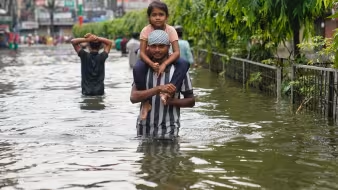
- There were 26.4 million internal disaster displacements in 2023. When climate-displaced people cross borders, they fall into a policy gap because the 1951 Refugee Convention rarely applies and few destination countries have tailored policy tools.
- Existing protection mechanisms may cover narrow cases, such as conflict linked to resource scarcity, but using them broadly risks crowding out other applicants and further straining asylum systems.
- Governments have underused options, including humanitarian visas, temporary protected status, expanded labor and study pathways for climate-affected communities, and bespoke programs such as Australia’s 2023 agreement for Tuvaluans.
- Policymakers should diversify this toolkit now, train asylum officers on climate-related claims, consult affected communities before launching new pathways, and invest in regional free-movement arrangements.
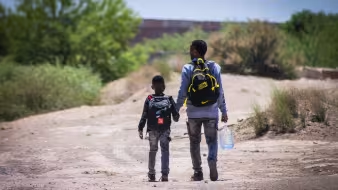
Most climate-related displacement occurs within a country’s territory, but when people cross borders, it poses particular challenges. Policymakers in destination countries face the task of simultaneously managing borders and addressing arriving migrants’ emergency assistance and protection needs. Yet, the migration and refugee policy tools available are rarely, if ever, designed with climate displacement in mind.
There is no consensus, for example, on what status climate-displaced people should receive, what rights and benefits they are entitled to, and how states should respond if climate change has rendered their homes uninhabitable. And unless policymakers proactively manage climate displacement, these movements can further weaken already fragile migration management and asylum systems.
This issue brief explores what role the international protection system can and should play in responses to cross-border climate displacement and highlights steps policymakers could take to diversify the policy toolkit beyond the protection realm.
Table of Contents
1 Introduction
2 The Meaning and Value of International Protection
3 Four Scenarios of Climate-Related Mobility: Which Are Protection Problems?
4 Filling the Gaps: Protection and Migration Policy Options
A. Facilitate Entry in the Context of Climate and Disaster Displacement
B. Provide Flexible Forms of Status
C. Strengthen Broader Mobility Opportunities
D. Create Bespoke Climate Mobility Pathways
E. Ensure Access to Refugee Protection for Those Eligible
5 Conclusions
About the Global Program
The Global Program bridges policy advice, research, and candid dialogue to design effective migration policies, drawing on global evidence and anticipating the forces reshaping how people move.


Related Content