


Adaptation Efforts May Reduce Harms amid Significant Climate-Linked Displacement in Sub-Saharan Africa
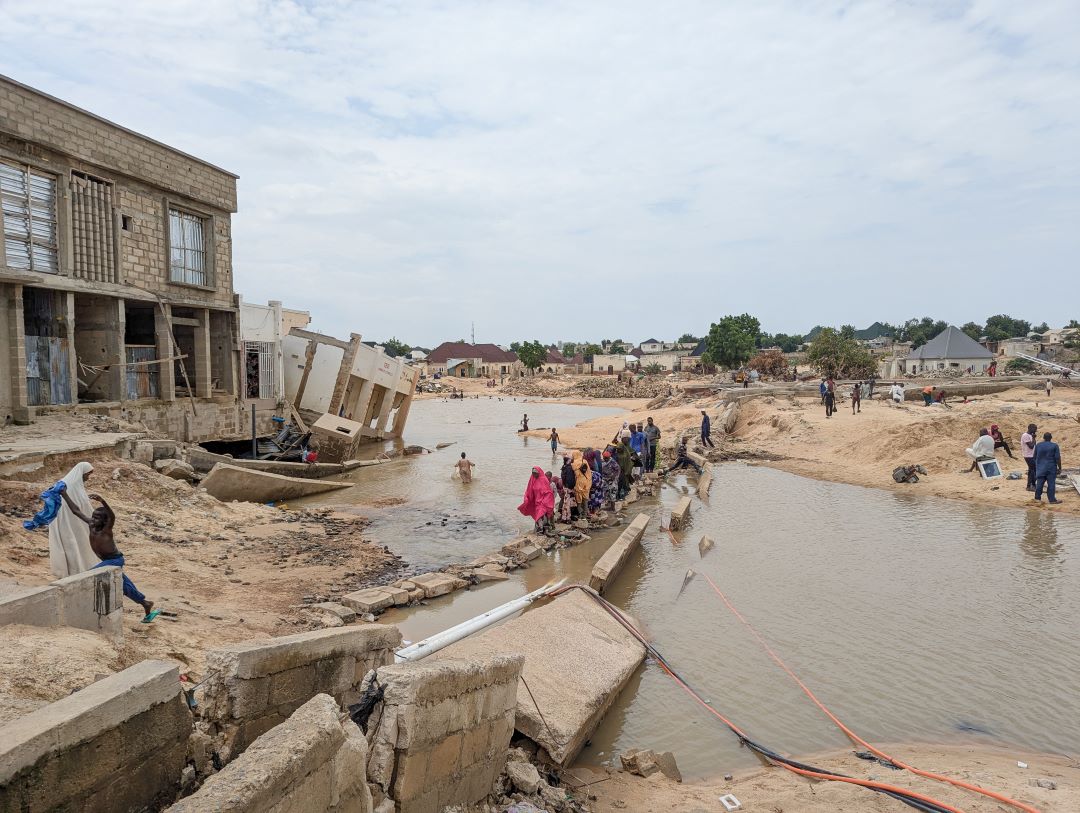
People walk through floodwaters in Nigeria. (Photo: IOM/Elijah Elaigwu)
Sub-Saharan Africa is particularly susceptible to climate-induced disasters, including droughts, floods, and storms, which exacerbate existing vulnerabilities and contribute to displacement both internally and internationally. Disasters displace millions of Africans each year, and the World Bank has projected that climate change could force as many as 86 million Africans to be internally displaced by 2050, more than any other region of the globe.
The level and likelihood of this displacement can be affected by several factors, including climate-adaptation strategies and policy frameworks for responding to displaced people. Innovative strategies including early warning systems, ecosystem-based approaches that take advantage of natural defenses, and participatory decision-making processes have been shown to help affected populations adapt to environmental changes rather than being forced to move. These efforts are particularly impactful when they involve community-driven approaches and local knowledge.
This article analyzes the factors driving climate change-related displacement in sub-Saharan Africa, particularly internal displacement, and explores adaptation strategies and policy responses that may reduce the likelihood or duration of displacement. It explores how socioeconomic factors, environmental degradation, and governance structures can affect displacement risks and adaptation efforts.
Climate Change and Displacement
Climate-induced hazards such as droughts and floods can exacerbate existing vulnerabilities and contribute to short-term displacement and permanent migration across sub-Saharan Africa. For example, prolonged droughts can lead to crop failures, water scarcity, and loss of livestock, forcing communities dependent on agriculture or herding to migrate in search of alternative livelihoods and resources. Similarly, extreme-weather events can cause widespread destruction of homes, infrastructure, and agricultural land, displacing large numbers of people and disrupting their lives.
Figure 1. Disaster-Related Internal Displacements in Sub-Saharan Africa, 2014-23
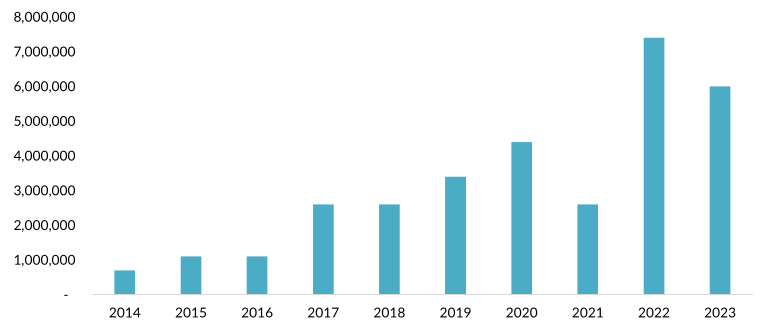
Source: Internal Displacement Monitoring Centre (IDMC), 2024 Global Report on Internal Displacement (Geneva: IDMC, 2024). available online.
The disproportionate impact of climate change on marginalized and vulnerable communities is a critical factor. Rural populations dependent on rain-fed agriculture, for instance, are particularly sensitive to climate variability and extreme-weather events, which can undermine their food security and livelihoods. In addition, low-lying coastal areas and informal settlements near the water are at heightened risk of flooding and sea-level rise, exacerbating displacement risks.
Moreover, in many places, the interplay between climate change and conflict further complicates the situation. Climate-induced stressors can exacerbate underlying sociopolitical tensions, competition over scarce resources, and other conflict dynamics, leading to or aggravating forced displacement and humanitarian crises. For example, competition over water and land resources in the context of shrinking arable land and diminishing water has been shown to escalate tensions between pastoralists and farmers in places such as West Africa, resulting in violent clashes and displacement.
Vulnerabilities and Impacts
The impacts of displacement in the context of environmental change can be profound and far-reaching, affecting communities across the region. One significant vulnerability lies in the region's heavy reliance on rain-fed agriculture. Agriculture, forestry, and fishing account for approximately 17 percent of the gross domestic product (GDP) of sub-Saharan Africa, compared to 4 percent globally and about 1 percent in countries of the Organization for Economic Cooperation and Development (OECD), according to World Bank data. Climate variability and extreme-weather events pose significant challenges to agricultural productivity and food security, which can lead to displacement and increased vulnerability among farming communities. For example, researchers have shown that prolonged droughts in East Africa have led to crop failures, livestock deaths, and food shortages, forcing many families to abandon their homes and migrate in search of food and water. These displacements often result in overcrowded camps and strained humanitarian resources, exacerbating vulnerabilities and increasing the risks of malnutrition, disease, and insecurity.
Moreover, the impacts of climate change can have long-term socioeconomic consequences. Displaced people often face challenges accessing essential services, livelihood opportunities, and adequate housing, leading to prolonged vulnerability and marginalization. For instance in the Lake Chad region, climate change has contributed to shrinking water supplies, desertification, and displacement, and has led to competition over scarce resources and increased tensions between host communities and new arrivals, straining social cohesion and exacerbating conflict dynamics. In situations such as this, the International Organization for Migration (IOM) has emphasized the need for comprehensive responses that address both immediate humanitarian needs and long-term development challenges.
Additionally, sub-Saharan Africa is characterized by a high prevalence of informal settlements and inadequate housing, which can exacerbate residents’ vulnerability to climate-related disasters. Residents of slums and other informal urban settlements are at particular risk of flooding, landslides, and other climate-induced hazards due to inadequate housing, poor drainage systems, and lack of access to basic services. For example, thousands of residents of informal settlements of Nairobi were displaced in 2024 when neighborhoods flooded during the rainy season. The flooding caused significant economic losses, further compounding residents’ troubles.
Furthermore, vulnerable groups—including women, children, and Indigenous communities—are disproportionately affected by climate-induced displacement in sub-Saharan Africa. Women often bear primary responsibility for household food security and caregiving, and as such are disproportionately affected by the loss of livelihoods and resources resulting from climate-related disasters. Similarly, children are at heightened risk of malnutrition, disease, and forced labor exploitation in the aftermath of displacement. Indigenous communities, which tend to have close connections to natural resources and ecosystems, face unique challenges adapting to climate change impacts and, because many have been marginalized by the state, often lack access to government support and resources to cope with displacement.
Advocates insist these kinds of dynamics underscore the need for comprehensive and inclusive approaches that address the root causes of vulnerability, enhance communities’ adaptive capacity, and promote resilience among affected populations.
Special Issue: Climate Change and Migration
This article is part of a special series about climate change and migration.

Climate-Adaptation Strategies to Prevent or Mitigate Displacement
Adaptation strategies can enhance resilience and mitigate the adverse impacts of environmental hazards on affected populations, including by preventing displacement or making it easier for displaced people to quickly return to their homes. One key adaptation strategy is the implementation of early warning systems to forecast and respond to climate-related disasters. Early warning systems provide timely information and alerts to at-risk communities, enabling them to take proactive measures to prepare for and mitigate the impacts of impending disasters. For example, in Malawi, the government has implemented a community-based flood early warning system that uses hydrological and meteorological data to monitor river levels and rainfall patterns, allowing communities to evacuate before floodwaters rise.
Community-based adaptation initiatives such as this play a critical role in building resilience among internally displaced persons (IDPs). These initiatives empower communities to identify and implement context-specific adaptation measures that address their unique needs. For instance, in Ethiopia, the government and humanitarian organizations have supported the construction of multipurpose community centers in drought-prone areas to provide shelter, water, and livelihood support to displaced communities during crises.
Furthermore, ecosystem-based adaptation approaches offer sustainable and cost-effective solutions for addressing climate impacts, thereby reducing the likelihood of displacement. These initiatives focus on restoring and conserving ecosystems such as forests, wetlands, and coastal areas to enhance natural resilience. One example is Uganda’s restoration of degraded wetlands and forests, which has helped reduce the risk of flooding and landslides, improve water availability, and provide alternative livelihood opportunities for displaced communities.
Policy Frameworks and Governance Models for Displaced People
Once displacement occurs, policy frameworks and governance structures can help displaced individuals and mitigate challenges that might arise both within and between governments. Mechanisms focused on increasing community resilience may also help people easily return to their homes once it is safe to do so.
While no government offers humanitarian protection for international migrants based solely on environmental conditions, the Organization of African Unity’s refugee convention extends the status to people fleeing “events seriously disturbing public order,” which is wider than the 1951 Refugee Convention’s definition limiting protection to individuals fleeing persecution based on race, religion, nationality, membership of a particular social group, or political opinion. As such, people fleeing crises such as recent catastrophic drought in the Horn of Africa have tended to find safety in neighboring countries.
For addressing internal displacement, sub-Saharan African countries’ legal frameworks vary. Some have specific laws and policies in place, while others lack comprehensive legislation. Uganda is an example of the former; its National Policy for Internally Displaced Persons and National Policy for Disaster Preparedness and Management provide a legal framework for addressing the needs of IDPs and promoting their rights.
Still, coordinating and implementing responses to displacement can be a challenge, particularly in the context of climate change. In many sub-Saharan African countries, responsibility for addressing internal displacement often falls under the purview of multiple federal agencies, humanitarian organizations, and local authorities, leading to coordination challenges and gaps in service delivery. Some government agencies, such as Kenya’s National Drought Management Authority, have sought to strengthen institutional coordination and collaboration to ensure a coherent and integrated approach to displacement management. The government office collaborates with various government ministries, UN agencies, and nongovernmental organizations (NGOs) to coordinate drought response efforts and assist affected populations.
Moreover, regional and international cooperation can help address cross-border displacement and regional issues such as climate change and conflict. Regional organizations including the African Union and the Economic Community of West African States (ECOWAS) play a role facilitating dialogue, encouraging cooperation, and sharing information among Member States. ECOWAS’s Protocol on Free Movement of Persons, Right of Residence, and Establishment, for example, includes provisions protecting the rights of IDPs and facilitating their access to humanitarian assistance.
International Cooperation
Some governments have sought to enhance their capacity to respond to displacement crises, assist affected populations, and promote durable solutions by cooperating with other countries, international organizations, and humanitarian actors. One key aspect of international cooperation is the provision of financial and technical assistance. Donors and NGOs often mobilize resources and provide funding for humanitarian assistance, shelter, food, water, and health-care services to displaced populations.
Furthermore, organizations such as IOM raise awareness and engage with governments and stakeholders to shape policy, laws, and institutions. IOM in particular advocates for including displacement considerations in national development plans, climate change adaptation strategies, and disaster risk reduction initiatives, emphasizing the importance of addressing the root causes of displacement and building resilience among affected populations.
By leveraging these resources, expertise, and networks, countries in the region are often able to enhance their capacity to respond to displacement crises, protect the rights of affected populations, and build more resilient communities in the face of climate change.
Tapping Community Engagement and Local Knowledge
Engaging affected communities—including both displaced populations and hosts—in decision-making processes and incorporating their perspectives into displacement responses has been shown to ensure that interventions and policies remain relevant, effective, and sustainable. This includes involving community members in the design, implementation, and monitoring of displacement-related initiatives.
For example, in Somalia, where a mix of conflict and environmental factors have displaced millions internally and into neighboring countries, peace committees, women's groups, youth networks, and other community-led initiatives have been shown to facilitate community engagement and participation in displacement responses. Through these initiatives, communities have been empowered to identify their needs and propose solutions to displacement challenges. By fostering dialogue, collaboration, and social cohesion, these grassroots initiatives contribute to building resilience and promoting sustainable development.
Furthermore, traditional and Indigenous knowledge can offer valuable insights and strategies for addressing displacement. Indigenous communities often possess a deep understanding of local environments and adaptation strategies, which can inform displacement responses and resilience-building efforts. By integrating traditional knowledge into activities that help displaced people, practitioners can improve interventions while also promoting cultural sensitivity and respect for Indigenous rights. For example, in Nigeria, traditional leaders and elders play a central role mediating conflicts and promoting reconciliation among displaced communities.
Moreover, inclusive and participatory decision-making processes can benefit from the voices of marginalized and vulnerable groups, including women, youth, and people with disabilities. Promoting gender equality, youth empowerment, and social inclusion can help address power imbalances, amplify diverse perspectives, and lead to more equitable and sustainable outcomes. For example, South Sudan emerged from civil war only in 2020 and has recently experienced devastating flooding that has affected hundreds of thousands of residents annually. In part because women and girls have been particularly likely to be displaced, South Sudanese women's groups have advocated for including gender-sensitive provisions in displacement programs, including access to reproductive health services, livelihood support, and protection from gender-based violence.
A Future Still Uncertain
The impacts of climate change are projected to lead to increasing displacement and other harms, but the future is far from certain. Effective planning, implementation of adaptation measures, and other strategies can both prevent displacement and reduce the challenges for people who are displaced. Solutions have often been shown to be most effective when they include the voices of marginalized community members as well as local, national, and international partners.
The challenges of climate-linked displacement are particularly acute in sub-Saharan Africa, given the region’s high reliance on agriculture, low levels of development, and the recent and ongoing conflicts that can work in tandem with environmental factors to compel displacement. However, the lessons from this region may be nonetheless useful elsewhere where similar dynamics are at work.
Sources
Intergovernmental Panel on Climate Change (IPCC). 2022. Climate Change 2022: Impacts, Adaptation and Vulnerability. Cambridge, UK: Cambridge University Press. Available online.
Internal Displacement Monitoring Centre (IDMC). 2024. 2024 Global Report on Internal Displacement. Geneva: IDMC. Available online.
International Organization for Migration (IOM). 2020. Internal Displacement in the Context of the Slow-Onset Adverse Effects of Climate Change: Submission by the International Organization for Migration to the Special Rapporteur on the Human Rights of Internally Displaced Persons. Geneva: IOM. Available online.
Kumssa, Asfaw, Aloysius C. Mosha, Isaac M. Mbeche, and Enos H. N. Njeru. 2015. Climate Change and Urban Development in Africa. In Handbook of Climate Change Adaptation, ed. Walter Leal Filho. Berlin: Springer.
Nzeribe, Samson Akpati, Akuro Diepriye, and Lucius C. Ekechukwu. 2023. The Impact of Climate Change in Africa: Its Effects on Migration and Refugee. International Journal of Academic Pedagogical Research 7 (2): 88-97. Available online.
Rigaud, Kanta Kumari et al. 2018. Groundswell: Preparing for Internal Climate Migration. Washington, DC: World Bank. Available online.
United Nations Environment Program (UNEP). 2023. UN Agencies Call for Climate Change Policies to Consider Displaced Persons. August 30, 2023. Available online.
United Nations Office for Disaster Risk Reduction (UNDRR). N.d. Ethiopia: National Policies, Plans and Risk and Governance Profile(s). Accessed January 24, 2025. Available online.
---. N.d. Uganda: National Policies, Plans and Risk and Governance Profile(s). Accessed January 24, 2025. Available online.
World Bank. 2024. Agriculture, Forestry, and Fishing, Value Added (% of GDP). Updated December 16, 2024. Available online.