Transatlantic Council on Migration

The Transatlantic Council on Migration is a unique, deliberative body, launched in 2008, that supports pragmatic, evidence-based migration and integration policymaking across Europe and North America through essential analysis, high-level convenings, and cutting-edge policy advice to senior leaders.
The Council aims to help inform the transatlantic agenda and promote better-informed policymaking by proactively identifying critical policy issues, analyzing them in light of the best research, and bringing them to public attention. At the same time, it aims to serve as a resource for governments as they grapple with the challenges and opportunities associated with international migration. The Council’s goal is to support pragmatic and evidence-based policymaking that can adapt to evolving needs and changing political realities. Learn more about the Council here.



Showing 31–40 of 185 results
When Facts Don’t Matter: How to Communicate More Effectively about Immigration’s Costs and Benefits
Facts about immigration fail to persuade skeptical publics because human psychology and media fragmentation are more powerful forces than evidence alone.

Shifting Tides: Radical-Right Populism and Immigration Policy in Europe and the United States
Radical-right populism has reshaped immigration debates in Europe and the United States—but has operated mainly through agenda influence, not direct governance.
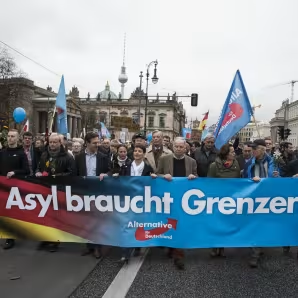
The Impact of Populist Radical-Right Parties on Immigration Policy Agendas: A Look at the Netherlands
Populist radical-right parties in Western Europe shape migration agendas more durably from opposition than from government, where they typically fail to deliver.

U.S. Immigration Policy under Trump: Deep Changes and Lasting Impacts
President Donald Trump has driven deep changes to U.S. immigration in his first year, but courts, Congress, and state and local resistance have blocked the most ambitious aims.

The Growth of the Radical Right in Nordic Countries: Observations from the Past 20 Years
Radical-right parties in the Nordic countries commanded close to 20 percent or more of the vote, and mainstream parties have yet to find a counterstrategy that works.

Migration in Europe: What trends to watch in 2018?
This webinar looks ahead to what the major external and internal events affecting migration in Europe may be in 2018, and whether the European Union will be able to overcome internal challenges to emerge as a leader on migration policy on the world stage.

In the Age of Trump: Populist Backlash and Progressive Resistance Create Divergent State Immigrant Integration Contexts
U.S. states are diverging sharply on enforcement, health access, and education in response to federal immigration changes, widening integration gaps for immigrants and refugees.

EU Migration Partnerships: A work in progress
The European Union's 2016 Migration Partnership Framework is a step forward. But a deep mismatch between EU goals and partner-country interests threatens its effectiveness.

Building Partnerships to Respond to the Next Decade’s Migration Challenges (Transatlantic Council Statement)
Migration partnerships are growing in scale but remain mixed in results. Destination countries must look beyond short-term enforcement to build durable cooperation.

Beyond Transactional Deals: Building lasting migration partnerships in the Mediterranean
Migration partnerships built on shared objectives and legal channels—such as the Spain-Morocco arrangement—prove far more durable than enforcement-first transactional deals.