Shifting Tides: Radical-Right Populism and Immigration Policy in Europe and the United States
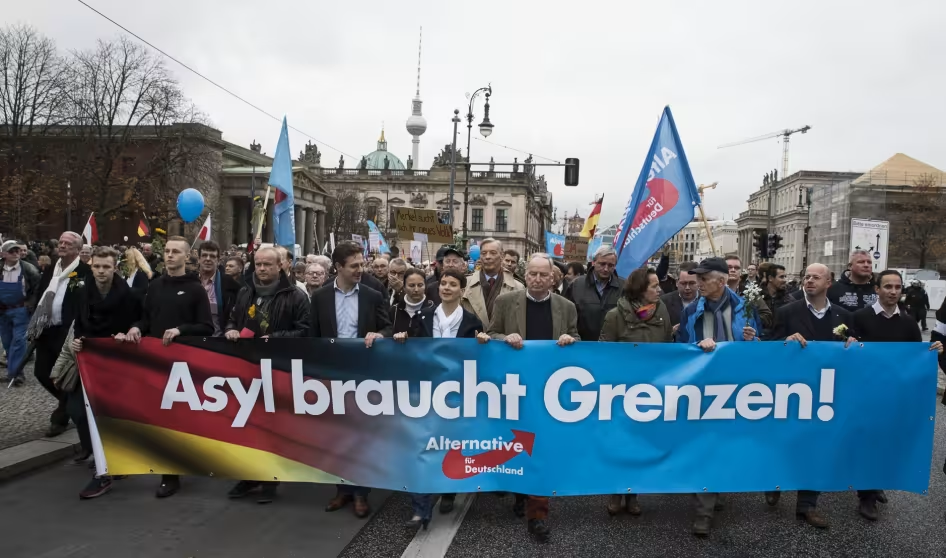
Radical-right populism has reshaped immigration debates in Europe and the United States—but has operated mainly through agenda influence, not direct governance.
Recent elections in Europe and the United States have seen a rise in support for candidates touting populist radical-right policies, particularly in the area of immigration and asylum. While these platforms vary from country to country, they are often imbued with a sense of exclusive nationalism, distrust of elites, and desire to tighten borders and cut immigration. The politicians who espouse these positions have seen mixed electoral results, but whether in office or in the opposition, they have played a pronounced role in reshaping policy agendas, public discourse, and the priorities of more mainstream political actors.
This Transatlantic Council on Migration report examines the (re-)emergence of radical-right populism in countries across Western Europe and in the United States. Taking a comparative approach, it highlights some of the similarities and key differences in the factors driving its support and in its impact on political systems and immigration policymaking. “It is striking,” the author notes, “that the United States—a country without a dedicated populist radical-right party—has under the Trump administration seen the implementation of immigration policies more strongly inspired by this ideology than many enacted in Europe.”
In many countries, more established political actors have attempted (with often limited success) to curb support for populist radical-right opponents, whether by banding together to exclude them from government or co-opting elements of their platforms. Other strategies centered around addressing the economic and social concerns that underpin this support, this analysis concludes, may prove more effective.
Table of Contents
I. Introduction
II. What Drives Support for Radical-Right Populism?
A. Economic Instability
B. Immigration and the Diversity Dilemma
C. Migration, Security, and “Crisis”
D. Politics and Voter Realignment
III. Electoral Breakthroughs and Establishment
IV. Gauging Influence over Immigration Policy and Policymaking
A. Impact on the Party Itself
B. Impact on the Party System and Agenda Formation
C. Impact on Policy
V. Prospects for Future Impact
VI. Policy Recommendations
A. Potential for Participation
B. Immigration and Political Mobilization
C. A “Whole-of-Society” Approach
D. Rebuild Economic Confidence
About the Transatlantic Council on Migration
Through rigorous research, high-level convenings, and tailored policy advice, the Council provides policymakers with essential analysis and cutting-edge policy recommendations to help tackle the most vexing policy questions.
About the U.S. Immigration Policy Program
The U.S. Immigration Policy Program provides analysis of U.S. immigration pathways, the impacts of enforcement and other policies, and the characteristics of immigrant populations.
About the Global Program
The Global Program bridges policy advice, research, and candid dialogue to design effective migration policies, drawing on global evidence and anticipating the forces reshaping how people move.


Related Content