Transatlantic Council on Migration

The Transatlantic Council on Migration is a unique, deliberative body, launched in 2008, that supports pragmatic, evidence-based migration and integration policymaking across Europe and North America through essential analysis, high-level convenings, and cutting-edge policy advice to senior leaders.
The Council aims to help inform the transatlantic agenda and promote better-informed policymaking by proactively identifying critical policy issues, analyzing them in light of the best research, and bringing them to public attention. At the same time, it aims to serve as a resource for governments as they grapple with the challenges and opportunities associated with international migration. The Council’s goal is to support pragmatic and evidence-based policymaking that can adapt to evolving needs and changing political realities. Learn more about the Council here.



Showing 51–60 of 185 results
Integrating Refugees into Host Country Labor Markets: Challenges and Policy Options
Refugees have the worst employment outcomes of any immigrant group, a gap that takes over a decade to close without early, coordinated investment in skills and employment.
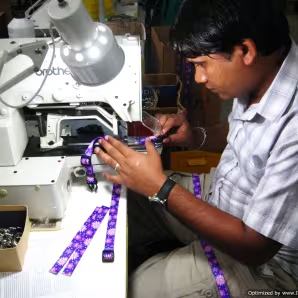
Moving Beyond Crisis: Germany’s New Approaches to Integrating Refugees into the Labor Market
Despite political commitment, oversubscribed language courses and a hard-to-penetrate vocational training system constrain refugee labor market integration in Germany.

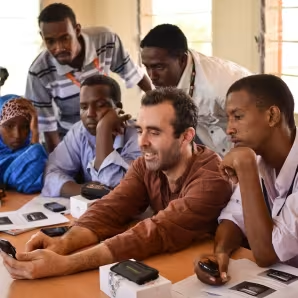
Digital Humanitarianism: How Tech Entrepreneurs Are Supporting Refugee Integration
Digital tools to support refugee integration have multiplied rapidly. Still, most are hampered by duplication, weak ties to mainstream services, and funding instability.
New Approaches to Refugee Crises in the 21st Century: The Role of the International Community
International summits and conferences in 2016 produced real pledges on refugee funding and resettlement. Translating them into sustained action remains the central challenge.
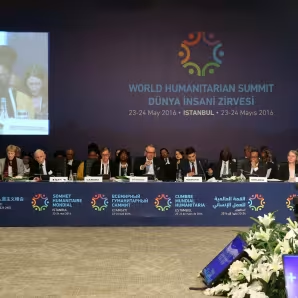
The UN Refugee Summit: What Can Be Achieved?
Ahead of the September 2016 UN summit, a draft outcome document reaffirms key refugee rights but falls short on responsibility sharing, root causes, and binding commitments.
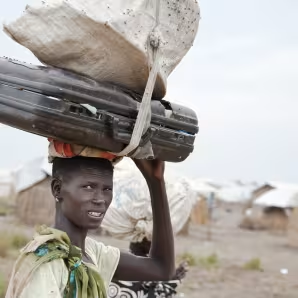
Protection on the Move: Eritrean Refugee Flows through the Greater Horn of Africa
Eritrean refugees' frequent onward movement challenges traditional protection frameworks and exposes serious gaps in asylum systems from the Horn of Africa to Europe.
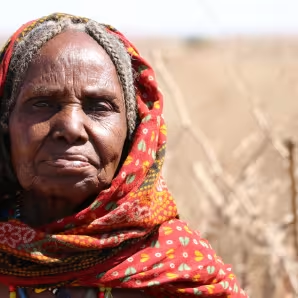
Global Refugee Summits Offer Reasons for Both Disappointment and Hope
UN and U.S.-led refugee summits in September 2016 produced real but modest funding and resettlement pledges, deferring a binding responsibility-sharing compact to 2018.
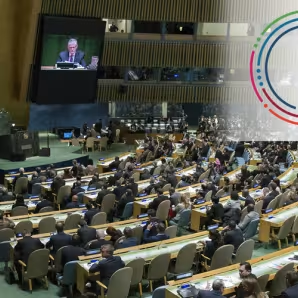
Building Livelihood Opportunities for Refugee Populations: Lessons from Past Practice
Refugee livelihood programs hold real promise but underperform due to poor context mapping, weak coordination, insufficient evaluation, and chronic underfunding.
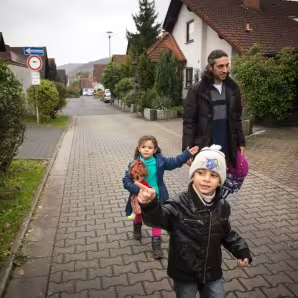
The Evolving Approach to Refugee Protection in Turkey: Assessing the Practical and Political Needs
Turkey hosts more refugees than any other country but faces structural barriers to durable integration. The EU-Turkey deal is an uncertain basis for sustained cooperation.
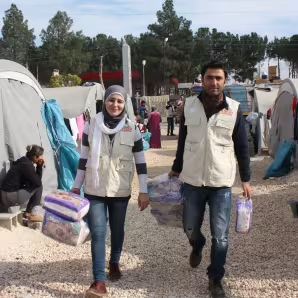
Resolving Policy Conundrums: Enhancing Humanitarian Protection in Southeast Asia
The May 2015 Rohingya maritime crisis exposed Southeast Asia's missing protection infrastructure and underscored the need for regional responses that connect protection with livelihoods.