EU Migration Partnerships: A work in progress
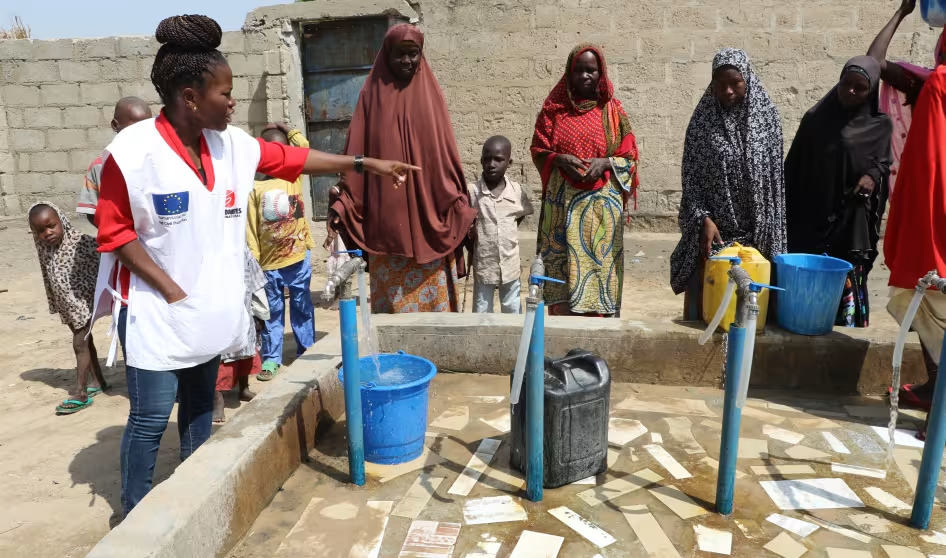
The European Union's 2016 Migration Partnership Framework is a step forward. But a deep mismatch between EU goals and partner-country interests threatens its effectiveness.
While EU ambitions to cooperate with migrants’ countries of origin and transit stretch back more than two decades, they took on fresh urgency following the 2015–16 European migrant and refugee crisis, when migration management rocketed to the top of the policy agenda. In 2016, the European Union introduced the Migration Partnership Framework to guide EU and Member State engagement with third countries and embed migration objectives within broader foreign and development policy domains. In addition to sharpening existing tools for collaboratively tackling migration objectives, the framework draws on the strength of bilateral relationships between Member States and third countries and reorganizes the bloc’s financial commitments.
This report critically examines whether this approach has put the European Union on track to reach the framework’s stated aims—strengthening borders, stepping up the return of migrants without authorization to stay in Europe, and addressing the root causes of migration—and, if not, what adjustments are needed.
By taking a close look at the migration landscapes in four partner countries (Afghanistan, Ethiopia, Mali, and Niger) and how key socioeconomic and political factors in each affect EU engagement, the report illustrates some of the challenges inherent to this new generation of partnerships. Chief among them are identifying the right partners, reconciling divergent EU and partner-country priorities, setting clear benchmarks and conducting robust evaluation, and modulating how progress is communicated to European publics. While EU policymakers acted quickly to launch the framework following the crisis, the authors find a number of areas in need of review if these migration partnerships are to have the desired lasting impact.
Table of Contents
I. Introduction
II. The Second-Generation Partnership Approach
A. A More Dynamic Two-Tier Approach
B. A Shift in Geography and Focus
C. Mainstreaming Migration Objectives
D. Additional Resources
III. Who Are the Partners?
A. Western Sahel
B. Horn of Africa
C. Central Asia
IV. Paradoxes of Partnership
A. Erecting Border Controls and Protecting Border Economies
B. Choosing Strategic Partners and Strategic Alternatives
C. Loud Diplomacy and Bad Publicity
D. Conditionality
E. Throwing Money into the Darkness
V. Expanding Priorities
A. Addressing Partners’ Priorities
B. Engaging the Right Actors
C. Aligning Goals
VI. Conclusions
About the Moving Europe Beyond Crisis Project
As the systems designed to process migration flows to Europe buckled in 2015-16, this project offered new ideas to manage mixed flows and create sustainable long-term solutions for refugees.
About the Transatlantic Council on Migration
Through rigorous research, high-level convenings, and tailored policy advice, the Council provides policymakers with essential analysis and cutting-edge policy recommendations to help tackle the most vexing policy questions.
About the Global Program
The Global Program bridges policy advice, research, and candid dialogue to design effective migration policies, drawing on global evidence and anticipating the forces reshaping how people move.