National Center on Immigrant Integration Policy

The National Center on Immigrant Integration Policy serves as a crossroads for policymakers, community and system leaders, and others looking to understand ways to support successful integration of immigrants and their children into U.S. classrooms, workplaces, and civic spaces.
It produces evidence-informed, nonpartisan policy research and data, and provides technical assistance and cross-state learning opportunities for state and local leaders. By engaging with stakeholders across the early childhood, education, workforce, health, and civic sectors, the Center builds a more coherent, knowledge-driven field. It shines a spotlight on integration issues often overlooked in national debates and promotes solutions that can lift the integration trajectories of immigrant families while also fueling the vibrancy of the communities and local economies where they live. For more about the Center, click here.



More Featured Work




- General Inquiries
Showing 261–270 of 375 results
Cross-Cutting Needs and Opportunities: Language Access, Funding, Multi-Level Partnerships, and Planning for the Long Term
Part of a series exploring issues likely to be addressed by the new National Integration Plan, this webinar, with perspectives from the cities of New York and Seattle and others delves into possible recommendations on federal coordination of local government immigrant integration initiatives, including language access.

Integration Challenges and Opportunities in the Economic Development and Refugee Resettlement Arenas
Part of a series exploring recommendations likely to be addressed by the new National Integration Plan, this webinar, with perspectives from MPI, the WE Global Network, and Lutheran Immigrant and Refugee Services, examines the role of economic development initiatives and refugee resettlement programs/infrastructure in immigrant integration.

Adult Education, English and Skills Training: Opportunities for Action and Investment in the Most Vital Integration Services
Part of a series exploring issues likely to be addressed by the new National Integration Plan, this webinar, with perspectives from MPI, the National Partnership for New Americans, and the National Skills Coalition, looks at the role of adult education and English language and skills training in the immigrant integration process.
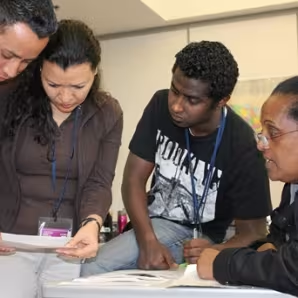
A Profile of Immigrants in Houston, the Nation's Most Diverse Metropolitan Area
Houston's immigrant population of 1.4 million as of 2013 was growing at twice the national rate. But low incomes and large unauthorized shares left hundreds of thousands in difficult conditions.

The Skills of Immigrants: What PIAAC Tells Us
A report release examining PIAAC data on the skills of U.S. immigrant adults and how these skills are related to key immigrant integration outcomes such as employment, income, access to training, and health.

Through an Immigrant Lens: PIAAC Assessment of the Competencies of Adults in the United States
Immigrants make up a disproportionate share of low-skilled U.S. adults, yet limited training access leaves this human-capital potential unrealized.

The County-Level View of Unauthorized Immigrants and Implications for Executive Action Implementation
A webinar showcasing MPI's profiles of unauthorized immigrants in the 94 U.S. counties with the largest populations potentially eligible for DACA or DAPA, and the implications of the data for implementation of the DACA and DAPA programs.

Lessons from DACA’s Implementation and its Impact on Education and Training
A webinar releasing an MPI report that examines the outreach and initiatives by educational institutions and other community stakeholders in seven states—California, Florida, Georgia, Illinois, Maryland, New York, and Texas—to support the education and training success of grantees of the Deferred Action for Childhood Arrivals program.
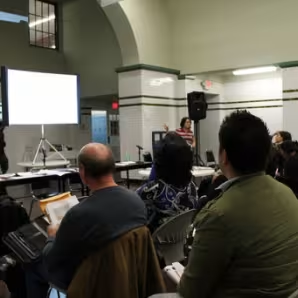
Lessons from the Local Level: DACA's Implementation and Impact on Education and Training Success
DACA created new education-immigration partnerships, but financial barriers and strained adult education capacity limit grantees' academic progress.
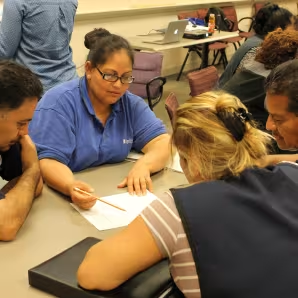
Digging Deeper Into Executive Action: A Further Examination of the Impacts
A discussion of some of the less examined aspects of President Obama's executive actions on immigration, with respect to immigration enforcement, legal immigration, and immigrant integration.