National Center on Immigrant Integration Policy

The National Center on Immigrant Integration Policy serves as a crossroads for policymakers, community and system leaders, and others looking to understand ways to support successful integration of immigrants and their children into U.S. classrooms, workplaces, and civic spaces.
It produces evidence-informed, nonpartisan policy research and data, and provides technical assistance and cross-state learning opportunities for state and local leaders. By engaging with stakeholders across the early childhood, education, workforce, health, and civic sectors, the Center builds a more coherent, knowledge-driven field. It shines a spotlight on integration issues often overlooked in national debates and promotes solutions that can lift the integration trajectories of immigrant families while also fueling the vibrancy of the communities and local economies where they live. For more about the Center, click here.



More Featured Work




- General Inquiries
Showing 251–260 of 375 results
DACA at the Three-Year Mark: High Pace of Renewals, But Processing Difficulties Evident
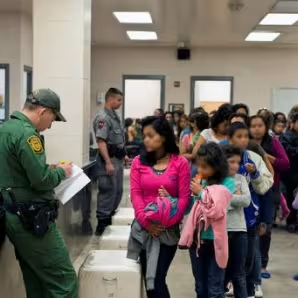
By March 2015, 83 percent of eligible DACA beneficiaries had renewed. But processing delays and outreach gaps at USCIS raised the risk of coverage lapses for many recipients.
An Analysis of Unauthorized Immigrants in the United States by Country and Region of Birth
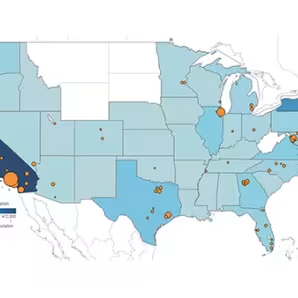
While Mexico still accounts for more than half of unauthorized immigrants in the United States, Central American and Asian populations tripled after 2000.
Resettling Increasingly Diverse Refugee Populations in the United States: Integration Challenges and Successes
A discussion of the findings of a new MPI report examining refugee characteristics at arrival for the ten largest national-origin groups resettled between 2002-2013, as well as their integration outcomes with respect to employment and incomes, English proficiency and education levels, and public benefit use.

Top Languages Spoken by English Language Learners Nationally and by State
Spanish is spoken by 71 percent of English Learner students in the United States, but wide state variation makes a uniform language instruction strategy inadequate for many.

States and Districts with the Highest Number and Share of English Language Learners
California led English Learner (EL) concentration in 2012–13, and the top 25 school districts enrolled nearly one-quarter of all EL students nationwide.
The Integration Outcomes of U.S. Refugees: Successes and Challenges
U.S. refugees become self-sufficient over time, but growing diversity and low literacy among recent arrivals strain a system with flat funding and focus on rapid employment.

Ready to Meet the Needs of All Children? A Closer Look at Diversity in the Early Childhood Workforce
A webinar marking the launch of MPI's report on immigrant and refugee workers in the early childhood field.

The New National Integration Plan: Making the Most of a Historic Opportunity
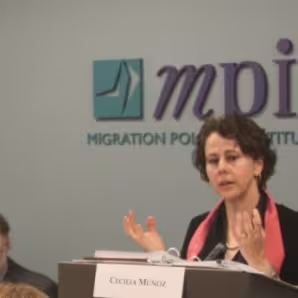
A discussion with the Director of The White House Domestic Policy Council on the content of the new National Integration Plan delivered to the President by the recently created White House Task Force on New Americans, along with the plan for implementation.
Immigrant and Refugee Workers in the Early Childhood Field: Taking a Closer Look
Immigrant workers fill nearly one-fifth of U.S. early childhood jobs but cluster in lower-skilled roles, mismatched with the language needs of the immigrant children they serve.

Child and Family Migration to the United States: Continuing Flows and Evolving Responses
A webinar examining the shifting pattern of Central American migration between 2011 and 2014 and expectations for 2015, why inflows in this period present a particularly acute policy challenge, and how states, localities, the U.S. government, and other countries in the region are responding to the crisis.