Paving the Way for Secondary Bilingual Education Programs: An Analysis of Policy and Practice

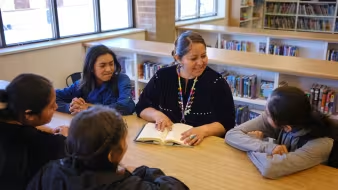
A teacher helping high school students.
Credit: iStock.com/FatCamera
Related Content
Highlights
Secondary schools need tailored policies, strong coordination tools, and teacher pipelines to expand bilingual education opportunities.
- For multilingual learners—a group encompassing English Learners (ELs), former ELs, and students who were never ELs but speak multiple languages—bilingual programming may be available in elementary grades but is scarce at the secondary level, despite proven benefits.
- Secondary schools' unique scheduling, teacher credentialing, and content demands contribute to this gap, and mean elementary program models cannot simply be replicated.
- Education experts highlight three elements of bilingual program success: strong policy and leadership, proactive planning and partnerships, and robust development of the teacher workforce and instructional materials.
- States and districts have considerable autonomy to design, scale, and sustain bilingual programs to support their students' academic success, while reaffirming the value of bilingualism.
Executive Summary
Bilingual education has been widely recognized as effective in supporting English Learners (ELs) by developing their language skills, affirming their cultural identities, and producing stronger long-term academic outcomes than English-only instructional models. A range of instructional models carry the name “bilingual education,” which describes their use of two languages (typically English and a partner language) to deliver academic content and instruction. To date, bilingual programs have been heavily concentrated in the elementary grades, likely due to implementation challenges in secondary schools. This results in a significant gap: More than 2.3 million ELs are enrolled in secondary schools across the United States, and in states such as California, nearly 43 percent of all ELs are in grades 6 through 12, or the secondary grades. Consequently, many secondary-level multilingual learners (MLs)—including ELs, newcomers, and students who have been in dual language programs since kindergarten—lack access to programs that could help them stay on track in building their language skills while also mastering grade-level content and meeting course requirements for graduation.
"To date, bilingual programs have been heavily concentrated in the elementary grades, likely due to implementation challenges in secondary schools."
Secondary schools are unique environments with individualized student pathways, specialized content offerings, and specific teacher credentialing requirements, which create challenges for bilingual program implementation that elementary-based bilingual program models cannot address. Designing, implementing, and sustaining secondary bilingual programs therefore requires a systems approach that responds to the distinct secondary school context.
This report highlights key characteristics of bilingual education programs in secondary schools and relevant state and local policies in California, Illinois, New Mexico, and New York—states with long and unique histories with developing bilingual programs. The analysis draws on 29 interviews with bilingual education policy experts, teacher preparation faculty, and district leaders across the four states. In addition to examples of promising practices and challenges, interviewees identified three core components essential to secondary-level program success:
- Policy, capacity, and perseverance create the conditions for successful and sustainable secondary bilingual programs. These can be achieved through clear, actionable policies guiding program design and accountability mechanisms, coupled with dedicated funding streams to ensure effective programs are created and sustained. Experienced leaders with expertise in bilingual education policy and program development are also needed. Interviewees reported that the absence of either policies or skilled leaders can create significant challenges and leave districts to navigate program development questions on their own or forgo a program altogether. Effective solutions included developing district policies and guidance and establishing statewide peer learning networks to build leadership capacity.
- Effective planning and partnerships can help address declining enrollment in dual language programs during transitions to middle and high school, when scheduling conflicts, transportation challenges, and adjustments to a new method of content delivery contribute to attrition. Programs that proactively reduce attrition invest in vertical planning across feeder schools, outreach to students and families in elementary schools, and linguistically and culturally responsive engagement strategies. Interviewees also emphasized the value of partnerships among institutes of higher education (IHEs), foreign consulates, and research institutions to improve programs and support educator recruitment.
- Robust pathways and pipelines are critical to addressing some of the most prominent barriers to secondary bilingual education: shortages of secondary bilingual educators, lack of high-quality instructional materials, and constraints on students’ master schedules. Most bilingual teacher preparation programs are designed for elementary environments and do not fully prepare candidates to deliver bilingual instruction at the secondary level. After entering the classroom, bilingual teachers often must adapt or develop their own curricula without adequate support. At the same time, MLs enrolled in dual language programs often face scheduling conflicts due to graduation requirements and must choose between required bilingual coursework and electives, all while taking general education classes. Innovative solutions include teacher credentialing programs delivered in the partner language, continued mentorship for teaching candidates, coordinated advocacy efforts to increase the availability of instructional materials designed for secondary bilingual classrooms, and opportunities for assessments in the partner language to count toward program requirements.
States and districts have considerable autonomy to pursue policies that can better support the diverse learning needs and academic success of MLs in secondary schools, while also reaffirming the value of bilingualism. This report identifies the following opportunities for action:
Invest Strategically in the Secondary Bilingual System
Strategic investments are needed to support the entire secondary bilingual education system, including actors and institutions beyond school grounds. Approaches include:
- States should develop and enact precise, actionable policies that establish clear program model definitions and measurable goals; create accountability structures; align with applicable federal laws and uphold federal civil rights protections for ELs; and allocate appropriate resources at the state or regional level to provide technical assistance to school districts.
- Districts can establish clear, comprehensive local bilingual program policies that provide stable program funding; articulate bilingual pathways for students; allocate appropriate resources and staffing at all program levels; outline professional development for staff; and establish accountability systems and measures in English and partner languages.
- States should appropriate stable, dedicated funding streams for secondary bilingual education programs that are not tied to students’ EL identification status since not all students enrolled in secondary bilingual programs are classified as ELs.
- States could establish creative, competitive grants to fund the various actors, institutions, and resources needed across the secondary bilingual education system.
Scaffold the Translation of Policy into Practice
States can support local leaders’ implementation of bilingual education policies through the following recommendations:
- State education agencies (SEAs) and districts should conduct an analysis of existing policies that apply to secondary bilingual education programs to identify barriers or inequities in system procedures or other areas that could impede effective programming and revise or update those as needed.
- State and regional education agencies, such as county offices of education, could also seek to build internal capacity in secondary bilingual education sufficient to effectively oversee and monitor secondary programs and provide technical assistance.
- SEAs can publish timely, accessible guidance to support local actors in implementing and sustaining programs.
Recognize the Potential of Secondary Contexts
The secondary school context presents unique challenges but also creates opportunities for innovation and creative problem-solving. Approaches to addressing common challenges include:
- SEAs and districts can apply an equity lens to master schedules, content and extracurricular offerings, and graduation credit requirements to integrate bilingual coursework in core subjects into students’ academic and career and technical education pathways and ensure equitable access to elective courses.
- SEAs and districts can prioritize collaborative opportunities for bilingual staff to connect with other programs and work with general education teachers to reduce isolation.
- Districts can plan proactively for students’ transitions to secondary schools and carefully consider potential transportation challenges.
- Districts and IHEs could work strategically to align secondary-level content and extracurricular offerings with postsecondary pathways that recognize and build on students’ bilingual skill set.
- Districts could pursue creative partnerships with IHEs, consulates, and research organizations to recruit and retain secondary bilingual educators.
- Districts can conduct outreach beginning in the early grades to sustain student and family engagement.
Take a Pipeline Plus Approach
Such an approach seeks to build development pipelines for teachers and other actors with vital roles in the secondary bilingual education system. Elements include:
- States and districts should invest in strengthening the full ecosystem of bilingual program staff, including counselors, administrators, paraprofessionals, and community liaisons.
- Districts and IHEs can develop structured pathways that prepare strong bilingual educators for leadership roles.
- SEAs, IHEs, and districts can collaborate to redesign teacher preparation and credentialing programs to respond more effectively to the secondary context and better prepare future educators.
- SEAs could offer alternative certification pathways for bilingual educators to mitigate teacher shortages.
- SEAs, IHEs, and districts can invest in scholarships, certification fee exemptions, and personal grants during student teaching to support and sustain future bilingual teachers.
Growing and sustaining secondary bilingual programs that can support successful education trajectories for a range of ML needs requires coordinated, system-wide action grounded in a deep understanding of the secondary context. The promising practices identified in this report, along with the examples of state-level policies that support secondary bilingual education, show that meaningful progress is not only possible but necessary in order to ensure effective, high-quality programming.
1. Introduction
The United States is home to large numbers of both recent immigrant students1 and English Learners (ELs), the latter population comprised of a mix of U.S.-born and immigrant children. In the 2022–23 school year, 1.2 million recent immigrant students attended U.S. schools, a 20.4 percent increase over the previous five years. That same school year, the number of ELs reached nearly 5.6 million, a 10.9 percent increase over the same period. Of those ELs, 2.3 million were enrolled in grades 6–12, or secondary grades (see Tables 1 and 2).
Table 1. U.S. Department of Education Counts of English Learners and Recent Immigrant Students, School Years 2014–15 to 2022–23
|
School Year |
English Learners |
Recent Immigrant Students |
|---|---|---|
| 2014–15 |
4,808,758 |
725,912 |
| 2015–16 |
4,855,837 |
806,540 |
| 2016–17 |
4,950,400 |
951,908 |
| 2017–18 |
5,011,462 |
994,137 |
| 2018–19 |
5,024,177 |
1,171,043 |
| 2019–20 |
5,155,887 |
1,176,093 |
| 2020–21 |
4,963,907 |
990,449 |
| 2021–22 |
5,264,304 |
1,070,113 |
| 2022–23 |
5,558,716 |
1,196,505 |
Table 2. U.S. Department of Education Counts of English Learners, by Grade, School Year 2022–23
| Grade |
English Learners |
|---|---|
| Kindergarten |
550,459 |
| Grade 1 |
555,591 |
| Grade 2 |
535,043 |
| Grade 3 |
526,638 |
| Grade 4 |
495,473 |
| Grade 5 |
452,020 |
| Grade 6 |
405,699 |
| Grade 7 |
384,380 |
| Grade 8 |
367,428 |
| Grade 9 |
404,980 |
| Grade 10 |
351,912 |
| Grade 11 |
272,950 |
| Grade 12 |
244,541 |
| Grade 13 |
35 |
| Ungraded |
11,567 |
| Total |
5,558,716 |
Although many students would benefit from bilingual programming—instructional models that use two languages to deliver academic content and instruction—most such programs remain concentrated in the elementary grades (grades K–5), partly due to implementation challenges at the secondary level.2 For example, in California, the state with the largest EL population, 42.9 percent of all ELs are enrolled in grades 6–12 (see Table 3), yet many California school districts do not offer secondary bilingual education programs. This creates a significant gap in bilingual education opportunities for older students, who may be recent immigrant students with limited English skills or those who have followed bilingual education trajectories, or pathways, since kindergarten and aspire to continue developing their bilingualism and biliteracy. For the large number of secondary-age newcomer students,3 access to grade-level content courses through these programs could help ease their transition into U.S. schools.
Table 3. California Department of Education Counts of English Learners and the Share of ELs in Each Grade, School Year 2025–26
|
Grade |
Number of English Learners |
Share of All ELs |
|---|---|---|
| Kindergarten |
83,316 |
9.0% |
| Grade 1 |
94,336 |
10.2% |
| Grade 2 |
90,094 |
9.7% |
| Grade 3 |
90,173 |
9.7% |
| Grade 4 |
89,270 |
9.6% |
| Grade 5 |
81,724 |
8.8% |
| Grade 6 |
71,025 |
7.7% |
| Grade 7 |
63,445 |
6.9% |
| Grade 8 |
58,183 |
6.3% |
| Grade 9 |
54,155 |
5.8% |
| Grade 10 |
51,121 |
5.5% |
| Grade 11 |
49,087 |
5.3% |
| Grade 12 |
49,952 |
5.4% |
| Total |
925,881 |
100% |
Students in secondary bilingual programs are a highly diverse group of multilingual learners (MLs)—an umbrella term encompassing students who are identified as ELs, whether new to the country or U.S. born; former ELs who have been reclassified as fluent in English; and students who were never ELs but speak multiple languages. Within this last group, secondary bilingual programs sometimes serve children who speak English at home who have been enrolled in dual language programs since kindergarten. As this report will discuss, secondary bilingual programs often serve some or all of these groups simultaneously, despite their differing needs.
Secondary-age newcomers, including those who are students with limited or interrupted formal education, are expected to develop English proficiency, English literacy skills, and content knowledge, often with only a few years before graduation. Ideally, these students would have access to core content courses offered through secondary bilingual programs, but there are few programs tailored to their needs. Schools often place such students instead in newcomer programs that emphasize English language acquisition because of the students’ language proficiency or academic background.4
Research finds a direct relationship between strong performance in bilingual programs during primary grades and success at the secondary level, emphasizing the importance of intentional alignment of programming from kindergarten through high school.5 However, many students lack access to that continuity because the secondary context differs considerably from bilingual programming in elementary settings. Secondary bilingual programming presents a specific environment that cannot simply replicate approaches that work in earlier grades and requires innovative solutions that respond to students’ and programs’ individualized needs. Although limited research directly examines the impact of participation in secondary bilingual programs, existing evidence suggests that the benefits of fully developing students’ first language extend to the secondary level.6
"Secondary bilingual programming presents a specific environment that cannot simply replicate approaches that work in earlier grades and requires innovative solutions that respond to students’ and programs’ individualized needs."
This report examines the key characteristics of bilingual programs in secondary schools in California, Illinois, New Mexico, and New York. These states were selected because of their extensive history with bilingual education, with California in the process of actively rebuilding its bilingual education system following the repeal of its English-only laws,7 making it an instructive example for states that seek to increase their capacity to support MLs. The report highlights policies and promising practices that support secondary bilingual education as well as persistent challenges and obstacles that can hinder program implementation and sustainability. In doing so, it identifies the essential components of secondary bilingual education programs and how states and school districts can better create, implement, and sustain them. The report begins with a brief overview of bilingual education program models and the policy landscape that provides context for this work. It then presents research findings and examples of challenges and promising practices from the field, before concluding with recommendations for state and local policymakers.
2. Bilingual Education Program Models
Decades of research have found that bilingual education benefits students, particularly ELs, by supporting cognitive development, strengthening language skills, and affirming cultural and linguistic identities.8 Bilingual programs that begin in kindergarten and continue through 12th grade produce stronger long-term academic results for MLs and non-EL students than English-only programs. MLs enrolled in bilingual programs may also be more likely to enroll in postsecondary education.9 ELs in bilingual programs are more likely to reclassify as English proficient by high school than peers in English-only settings.10 And ELs in two-way immersion (TWI) programs demonstrate faster English language acquisition, higher math and reading scores on statewide assessments, and earlier exit from EL status than students in other EL program types.11
Bilingual education includes a range of instructional models that use two languages, typically English and a partner language (for example, Spanish), to deliver academic content and instruction. Dual language programs are considered additive bilingual education models, meaning that students develop proficiency and literacy skills in a new language while continuing to develop their home language.12 This program model affirms students’ cultural and linguistic identities, which encourages a sense of belonging and meaningful engagement that benefits academic achievement and long-term outcomes.
"Bilingual education program models differ in their language goals, design, and target population."
However, bilingual education program models differ in their language goals, design, and target population, as Table 4 shows. Dual language programs aim for full bilingualism and biliteracy in English and a partner language using either the one-way immersion model, which enrolls students from a shared language background, or TWI, which integrates native English speakers and native speakers of the partner language. Among one-way program types, the developmental or maintenance model is designed for students who speak the same partner language and aims to maintain their proficiency while developing English skills. Heritage language immersion programs primarily serve English speakers with some proficiency in or a cultural connection to the partner language, while enrichment immersion programs serve students from various backgrounds who want to develop proficiency in a new language. By contrast, transitional bilingual education uses students’ native language as the foundation for English language acquisition and gradually transitions to all-English instruction, typically within one to three years. As subsequent sections of this report discuss, secondary bilingual programs most commonly deliver language arts, history, and social sciences instruction in partner languages and teach other content areas in English.13
Table 4. Key Components of Bilingual Education Models
|
Dual Language Education |
Transitional Bilingual Education |
||
|---|---|---|---|
| What are the language goals? | Full bilingualism and biliteracy in English and a partner language | Proficiency and literacy in English | |
|
One-Way Immersion |
Two-Way Immersion |
||
| Which students are being served? |
Developmental: Students are primarily native speakers of the partner language and maintain their proficiency while developing their literacy and oral skills in English. Heritage Language Immersion: Students are primarily English speakers with some proficiency in or a cultural connection to the partner language. Enrichment Language Immersion: Students are from various backgrounds and want to develop proficiency in a new language. |
Both native English speakers and native speakers of the partner language are enrolled, and neither group makes up more than two-thirds of the student population. | This program type is designed for English Learners and is focused on using students’ native language as the foundation for English learning. |
| What percentage of instruction is in the partner language? | The partner language is used for at least 50 percent of instruction in elementary school and at least two periods per day in secondary school. | The students’ native language is used for 50–90 percent of instruction for one to three years and gradually transitions to all-English instruction. | |
| Are students integrated regardless of native language? | No, students who speak the same native language are taught together. | Yes, students with different native languages are taught together. | No, students who speak the same native language are taught together. |
| What is the model’s relationship with general education? | All classes and content areas are covered by dual language programs in elementary school; this varies by model and staffing in secondary school. | Programming varies but typically comprises all or most classes and content areas. | |
3. Policy Landscape for Secondary Bilingual Education Programs
The history of bilingual education policy and practice at the state and local level dates to the colonial period.14 However, at the federal level, the Bilingual Education Act of 1968 marked the first federal education policy to address the needs of language minority students. Throughout the years, federal policy has essentially eliminated references to bilingual education and shifted its emphasis to English language acquisition, but federal legal protections provide opportunities for states and districts to establish policies that support bilingual education.
A. Federal Landscape
A key function of federal education policy is to ensure that all students, regardless of background, have equal access to education. From the Elementary and Secondary Education Act (ESEA) of 1965 through its subsequent reauthorizations, including the Every Student Succeeds Act (ESSA) of 2015, federal education policy has focused on addressing educational inequality. Federal civil rights laws expand on the concept of equal access by protecting ELs’ rights to meaningful participation in education.15 Essentially, state education agencies (SEAs), districts, and schools must take steps to overcome language barriers that impede ELs’ equal and meaningful participation in educational programs and services. Table 5 highlights key laws and court rulings that form the federal legal umbrella under which bilingual programs have taken root across the country.
Table 5. Key Federal Laws and Court Rulings
|
Law or Court Ruling |
Key Takeaways |
|---|---|
| Title VI of the Civil Rights Act of 1964 | Commonly referred to as Title VI, this law prohibits recipients of federal funding, including state education agencies (SEAs) and school districts, from discriminating based on race, color, or national origin. Ignoring or not addressing language barriers is considered a form of discrimination based on national origin. |
| Lau v. Nichols (1974) | This landmark, unanimous Supreme Court ruling delivered a powerful message to SEAs and school districts: Simply providing English Learners (ELs) with opportunities to attend the same classes and use the same curricular materials as their English-speaking peers does not mean they are receiving an equal education. The court related discrimination based on language to discrimination based on national origin, which is prohibited under Title VI. |
| Equal Educational Opportunities Act of 1974 (EEOA) | The EEOA codifies the finding of Lau v. Nichols into federal law. It requires SEAs and school districts to take appropriate action to overcome language barriers that prevent ELs from equal and meaningful participation in their education. |
| Castañeda v. Pickard (1981) |
Another landmark case regarding the education of ELs, this ruling is significant because it established a concrete framework consisting of three standards that define what appropriate action means when implementing instructional programs that help students overcome language barriers. The framework can be used to evaluate whether districts and schools are meeting their obligation for appropriate action under the EEOA and Title VI.
The “Castañeda Standards” require schools to use instructional programs that are (1) based on sound educational theory, (2) implemented effectively with sufficient resources and personnel, and (3) able to demonstrate that students are overcoming language barriers. |
| Every Student Succeeds Act of 2015 (ESSA) | ESSA does not mandate a specific EL program model or instructional approach. Title III of the law defines “language instruction educational program” as a program of instruction “(A) in which an English Learner is placed for the purpose of developing and attaining English proficiency, while meeting challenging state academic standards; and (B) that may make instructional use of both English and a child’s native language to enable the child to develop and attain English proficiency, and may include the participation of English proficient children if such course is designed to enable all participating children to become proficient in English and a second language.” This definition creates a window of opportunity for bilingual education because it states that native language instruction may be used. In short, ESSA permits but does not require bilingual education. |
Several threats loom over the civil rights and education of MLs, including immigrant-background students and ELs, creating uncertainty in the current federal landscape. For example, the dismantling of the U.S. Department of Education, cuts to its Office for Civil Rights, rescission of federal guidance on ELs’ civil rights, and dissolution of the department’s Office for English Language Acquisition have left many in the field uncertain about the future of education for this student population.16 Still, SEAs and school districts can build on existing federal legal protections to enact state and local policies that support bilingual education.
B. State Landscape
Federal policy allows the seeds of bilingual education programs to be planted and take root, while state and local policies and practices help them grow and flourish. States vary greatly in their approaches to and support for bilingual education. For example, only five states—Connecticut, Illinois, New Jersey, New York, and Texas—require districts with 20 or more ELs in the same grade and from the same language background to provide bilingual education programs.17 Yet as of 2024, all 50 states and the District of Columbia had adopted the Seal of Biliteracy, an award for graduating seniors who have studied and attained proficiency in two or more languages.18 To provide context for the findings of this study, this section features policies in the four focal states (California, Illinois, New Mexico, and New York) that emerged as examples of policies that help design, implement, or sustain secondary bilingual programs. Box 1 provides high-level summaries of bilingual education policies from Connecticut, New Jersey, and Texas as additional examples.
California
Since the passage of the California Education for a Global Economy Initiative (Proposition 58) in 2016, which repealed California’s decades-old English-only laws, the state’s education policy landscape has shifted to embrace and promote multilingualism.19 Two prominent examples of California state policy initiatives include:
- The California English Learner Roadmap State Board of Education Policy: Educational Programs and Services for English Learners (EL Roadmap Policy), adopted by the California State Board of Education in 2017, provides a framework to guide schools and districts in creating inclusive and effective learning environments for ELs. Grounded in research that frames bilingualism as an asset, the EL Roadmap establishes a vision for EL students that includes opportunities to develop bilingualism and a mission that calls on public schools to prepare students with the knowledge, skills, and competencies needed to navigate a global, multilingual world.20 In 2024, the state passed a bill requiring the California Department of Education to develop a statewide EL Roadmap implementation plan by Fall 2026. Among other provisions, the plan must include measurable implementation goals and a monitoring and accountability system.21
- The Global California 2030 Initiative, launched by the California Department of Education in 2018, builds on the EL Roadmap and Proposition 58 by setting two ambitious but measurable goals: (1) by 2030, half of all K-12 students will participate in classes, programs, or experiences that lead to proficiency in two or more languages; and (2) by 2040, three out of four students will be proficient in two or more languages and earn a State Seal of Biliteracy. The initiative proposes strategies to meet the goals, such as building the bilingual teacher pipeline and providing funding to expand bilingual programs in pre-kindergarten (pre-K) through 12th grade.22
Illinois
In 1973, Illinois passed the Transitional Bilingual Education Act, which requires districts to establish bilingual education programs when 20 or more ELs from the same language background are enrolled in the same attendance center (school).23 State law defines full-time transitional bilingual education programs as programs that provide core academic instruction (e.g., math, language arts, science, social studies) in English and the native language; teach the history and culture of the United States and the history and culture that reflect students’ backgrounds; and deliver English as a Second Language (ESL) services to ELs in the program.24
In 2009, Illinois became the first state in the nation to require bilingual education in public pre-K programs serving 3- and 4-year-olds that meet the same EL enrollment threshold as K-12 systems.25 The state established requirements governing the implementation and operation of pre-K-12 EL programs, including requirements for program entry, assessment, data collection and reporting, personnel qualifications, and professional development, among others.26 Under the state’s requirement for transitional bilingual education programs, districts have the flexibility to implement dual language program models, such as TWI.
More recently, Illinois passed the Dual Language Education Act in 2025,27 requiring the Illinois State Board of Education to (1) adopt comprehensive guidance for school districts on establishing and expanding dual language bilingual education programs by December 15, 2026; (2) establish recognition pathways for biliteracy at various grades before high school (e.g., pre-K or kindergarten, 5th grade, and 8th grade) by July 1, 2027; and (3) incorporate dual language bilingual education and provisions for dual language teachers into the state’s Equity Journey Continuum, a data tool that applies an equity lens to the analysis of district data, by July 1, 2029.28
New Mexico
New Mexico has multiple policies that protect bilingual education programs and the state’s multicultural heritage. In 1973, New Mexico became the first state to enact a bilingual multicultural education law with the passage of the Bilingual Multicultural Education Act. A primary goal of the landmark policy is for all students in the state to become bilingual and biliterate in English and a second language, such as Spanish or a Native American language. The act provides funding for school districts to support bilingualism, biliteracy, and culturally responsive learning and establishes requirements for state-funded bilingual multicultural education programs. The requirements include addressing students’ linguistic and cultural needs; using two languages to teach part or all of the curriculum; staffing programs with teachers licensed in bilingual education; emphasizing students’ histories and cultures; establishing a parent advisory committee; and notifying parents when their children are placed in a program.29
Building on the law, the Indian Education Act, passed in 2003, aims to ensure that Native American students have access to an equitable, culturally and linguistically responsive education that preserves their native languages and cultural identities.30 Similarly, the Hispanic Education Act, signed into law in 2010, aims to protect the state’s heritage Spanish language and culture, promote family engagement, and strengthen partnerships among diverse stakeholder groups to improve Hispanic students’ academic achievement.31
New York
The 1974 ASPIRA Consent Decree established the right of non-English-speaking students in New York City, particularly Spanish-speaking students, to access transitional bilingual education programs. Under the agreement, bilingual programs were required to provide content-area instruction in Spanish (e.g., math, science, and social studies), Spanish reading comprehension, and ESL instruction.
In 1981, the Commissioner’s Regulations Part 154 were enacted to govern the provision of EL programs statewide and establish the conditions under which bilingual education programs must be provided. Under the regulations, when a school district enrolls an estimated 20 or more ELs of the same grade level and language background, the district must provide sufficient bilingual programs for those students. The regulations define “sufficient” as enough bilingual education programs to serve 70 percent of the identified EL population of the same grade and home language. In New York City, the ASPIRA Consent Decree establishes a lower threshold, requiring bilingual education programs in grades K-8 if 15 or more students who speak the same home language are enrolled in one or two contiguous grades. The regulations also establish ELs’ entitlement to program continuity by requiring districts to provide EL students with the same instructional program type in which they were initially enrolled for as long as they are designated as ELs. As in many states, including California, New York has experienced continued growth and expansion in its bilingual education programs.32
Box 1. Additional Examples of State Policy Mandating Bilingual Education Programs
Connecticut: Any K-12 public school that enrolls 20 or more ELs with the same home language must provide those students with a bilingual education program the next school year. However, ELs can remain in a bilingual education program for only up to 30 months, with the possibility of extension. If an EL does not meet the English mastery standard after 30 months or an approved extension, the school must provide alternative English language learning programming, including ESL, sheltered English, English immersion, or other research-based language development programs.
New Jersey: K-12 public schools that enroll 20 or more ELs with the same home language in the same district, regardless of grade, must create a bilingual education or dual language immersion program for those students. Additionally, if 20 or more ELs of the same home language are enrolled in a K-12 school district, regardless of grade, the language instruction educational program for the students must include a bilingual education or dual language immersion program unless the requirement is waived. If a district enrolls ten or more ELs in K-12, the district must provide an ESL program.
Texas: Any district that enrolls 20 or more ELs with the same home language in the same grade across the district must offer one of the following bilingual programs for the ELs in kindergarten through 6th grade in that district: transitional bilingual education/early exit, transitional bilingual education/late exit, dual language immersion/one-way, or dual language immersion/two-way. Texas school districts can also create bilingual programs even if they enroll fewer than 20 ELs with the same home language in the same grade or at grade levels for which the state does not require a bilingual program, such as grades 7 through 12.
Sources: State of Connecticut, Duties of Boards of Education Regarding Bilingual Education Programs and Development of State English Mastery Standard, 2024 Connecticut General Statutes Title 10, Chapter 164, Section 10, Subsection 17F (2024); State of New Jersey, District Board of Education Requirements, Including LIEPs for Multilingual Learners, New Jersey Administrative Code Title 6A, Chapter 15, Subchapter 1, Part 4 (2023); State of Texas, Required Bilingual and English as a Second Language (ESL) Programs, Texas Administrative Code Title 19, Part 2, Chapter 89, Subchapter BB, § 89.1205 (2025).
4. Paving the Way for Program Growth
This section draws on insights and experiences shared in 29 interviews conducted in 2026 with bilingual education policy experts, faculty with expertise in bilingual teacher preparation programs, and district-level bilingual program leaders from California, Illinois, New Mexico, and New York. The data illustrate longstanding obstacles that secondary bilingual programs face, but they also reveal promising practices that programs have implemented to support their students despite those challenges—efforts that could help pave the way for state and local leaders looking to establish or expand bilingual programs in their states or communities.
The interview findings point to a set of three integrated, interdependent aspects of program success: policy, capacity, and perseverance; planning and partnerships; and pathways and pipelines. The following subsections elaborate on each component through examples of challenges and promising practices, which paint a picture of secondary bilingual education as a complex system of actors, policies, and resources that shape program implementation.
A. Policy, Capacity, and Perseverance
According to policy experts and district-level bilingual staff, actionable policy and local leaders with capacity and perseverance are essential elements of longstanding secondary bilingual education programs. Clear, actionable state and district policies that establish measurable goals, define accountability structures, and include dedicated funding streams are vital to the long-term success of bilingual programs spanning K-12 systems. Interviewees often described actionable policy as “policy with teeth.” Because local leaders implement policy, district and school leaders must have the capacity and perseverance to champion bilingual education policies, translate policy into practice, spearhead program implementation and expansion efforts, and uphold equitable access to the programs for ELs, immigrant students, and newcomers. Interviewees often identified the absence of actionable policy and of leaders with capacity and perseverance as the foremost challenges facing secondary bilingual education programs.
"Clear, actionable state and district policies that establish measurable goals, define accountability structures, and include dedicated funding streams are vital to the long-term success of bilingual programs spanning K-12 systems."
Interviewed policy experts and district-level bilingual leaders in California most prominently identified challenges caused by a lack of clear, actionable policy. Although interviewees frequently cited the California EL Roadmap Policy of 2017 and the Global California 2030 Initiative as examples of state policies that support bilingual education, they also described the policies as lacking clear directives for school districts, program accountability measures, and oversight mechanisms. The gaps are unsurprising, given that the EL Roadmap and Global California 2030: Speak. Learn. Lead. are nonbinding guidance documents that establish ambitious goals for helping students achieve bilingualism and provide information to guide program implementation.33 Therefore, the lack of directives, accountability measures, and oversight mechanisms often leaves school districts to navigate secondary program development on their own, which can result in districts choosing to wait for clearer state mandates or simply choosing not to implement a secondary bilingual program, thereby limiting bilingual pathway options for students transitioning to middle and high school or arriving in U.S. schools in adolescence.
Given the role of local leaders in translating policy into practice, interviewees identified a lack of leadership capacity-building for district administrators, school board members, and school principals as another challenge. Beyond strengthening traditional education leadership skills, building the capacity to lead secondary bilingual education programs also calls for local leaders to demonstrate perseverance. One common challenge involves local leaders, such as school board members, making program implementation decisions without a solid understanding of current bilingual education research and practice or prior training in the field. Another challenge involves the large number of school principals without backgrounds in bilingual education who lack the preparation to serve as instructional leaders for bilingual program staff or strong program advocates, often leaving staff feeling isolated and unsupported. Interviewees also reported that many local leaders could not challenge deficit-oriented beliefs about bilingual education and ELs.
In interviews, policy experts and district-level bilingual leaders stated that capacity-building efforts must include technical assistance and ongoing professional development that help local leaders (1) understand legal protections for ELs and how bilingual education programs uphold those protections; (2) develop knowledge of bilingual education program design and pedagogy; (3) strengthen skills to advocate for and support program implementation; and (4) improve their ability to engage effectively with diverse stakeholders, including students and families, about the benefits of bilingualism and bilingual pathways available through the program. Local leaders must also have a belief system that values bilingualism as an asset, recognizes the need for equitable access to bilingual education, and views bilingual education as a high-quality learning opportunity that will help students succeed in the 21st century. In short, secondary bilingual education programs need champions with a core set of knowledge, beliefs, and skills. Knowledge and skills can be taught in a workshop or graduate course, but perseverance stems from internal values and belief systems that require sustained critical self-reflection and independent learning.
"In short, secondary bilingual education programs need champions with a core set of knowledge, beliefs, and skills."
Promising practices described in interviews can help address these issues. For example, many district-level bilingual leaders described local district policies that establish eligibility criteria for newcomers to enroll in dual language programs in response to the lack of clear policy or guidance from the state. These policies range from prioritizing enrollment in secondary dual language programs for newcomers who speak the partner language (Spanish, for example) to requiring newcomers to meet language proficiency or literacy skill criteria in the program partner language. However, such criteria can prevent newcomers with limited or interrupted education backgrounds from accessing courses available through the dual language program. For many secondary newcomers identified as ELs, English language acquisition often takes priority over developing proficiency in the program’s partner language, limiting their opportunities to enroll in all courses available through the program. When full program enrollment is not feasible, some districts offer newcomers partial access by allowing them to enroll in certain content courses taught in Spanish, such as Spanish language arts or Spanish for heritage speakers, as a bridging strategy. However, the success of the placements varies considerably based on newcomers’ academic backgrounds and literacy levels in the partner language. Interviewees implementing TWI models recognized the challenges of enrolling middle or high school newcomers in TWI if the students lack comparable proficiency in both languages, which interviewees reported is often the case for newcomers. With the increase in secondary newcomers in recent years,34 many districts continue to struggle to determine how best to meet the students’ needs.
Promising practices for strengthening local leaders’ capacity include establishing statewide peer learning networks that build leadership skills through an EL lens. In California, for example, Californians Together, a statewide coalition that advocates for MLs, supports the District English Learner Administrator Advocacy Network, a statewide network that convenes three to four times per year and advocates for state- and local-level changes that improve policies and practices for MLs. Similarly, the Illinois State Board of Education, in partnership with the Illinois Resource Center, supports the New Multilingual Directors’ Alliance, a statewide network that holds regular convenings to provide leaders with professional learning, safe spaces for reflection, and networking opportunities. Another promising practice is an Illinois handbook for school board members, district administrators, and principals35 that presents best practices for ELs, extensive research, and legal guidance. Interviewees also reported that statewide organizations—such as the California Association for Bilingual Education, New York State Association for Bilingual Education, Illinois Resource Center, and Dual Language Education New Mexico—provide valuable capacity-building opportunities for local leaders.
Policy, local leader capacity, and perseverance in program implementation represent only part of the secondary bilingual education system, but they provide a foundational element. Without one or more, secondary programs will founder.
B. Planning and Partnerships
Designing and maintaining a successful secondary bilingual program requires coordination across grades, districts, institutions, and other stakeholders. Programs should build strong relationships between schools and the programs that develop their staff, align programming across pre-K through grade 12, and engage families and communities meaningfully. Interviewees often identified planning and partnerships as crucial to program implementation and reported that the absence of either one hinders program development and sustainability.
District-level bilingual leaders identified managing transitions from elementary school to middle school to high school as a significant planning challenge. Transitions can be difficult for families whose children have participated in dual language programs since elementary school, especially when secondary programs operate outside the students’ local school zones or neighborhoods. In such cases, many families cannot arrange transportation for their children to attend programs outside their school zones, creating an equity issue that limits program access based on where students live. Misalignment between students’ and families’ experiences with elementary dual language programs, such as partner language instruction and course selection, and the transition to secondary schools adds to the challenge because instructional delivery and context differ greatly.
Mitigating teacher shortages at the secondary level also requires significant planning and partnerships. Policy experts, faculty, and district bilingual staff emphasized the challenge of identifying and recruiting teachers who are bilingual and credentialed in a specific content area. Anticipating staffing needs and building innovative relationships with institutes of higher education (IHEs), consulate offices, and research organizations to identify and recruit candidates are essential to supporting existing school staff. However, different hiring needs and qualifications for middle and high school bilingual teachers add another layer of complexity to recruitment. Interviewees reported that bilingual teachers, staff, and administrators often face unsustainable workloads after being hired, with individuals stretched across multiple roles without the support they need. This structural challenge contributes to high staff turnover, and research finds higher-than-average turnover rates among bilingual and ESL educators compared with the broader teaching workforce.36 The additional time educators often spend translating and developing curricula and teaching multiple courses in the partner language leaves many feeling overworked and with few sources of support. Even efforts to support bilingual teachers through mentorship programs can prove difficult because potential mentors lack capacity or insufficient incentives to add responsibilities to their existing workloads.
Interviews with district-level bilingual leaders also highlighted a lack of collaboration between bilingual and general education teachers, schools and districts, and districts and SEAs as a barrier to program quality and longevity. Bilingual educators and staff often felt isolated in their work environments and lacked opportunities to connect with others facing similar challenges. At the state level, the absence or shortage of dedicated bilingual staff members left schools and districts without implementation support or technical assistance.
Family and student engagement emerged as the final prominent theme in interviews with policy experts and district staff. Some families, especially those in non-English-speaking communities, might hold misconceptions about bilingual education, including the belief that developing their home language will negatively affect English language development. Outreach that is not linguistically or culturally responsive can leave those beliefs unaddressed. As a result, students who choose to leave the program when they transition to secondary school lose access to the benefits of bilingual education, deepening existing equity issues. Student engagement at the secondary level also requires distinct planning and partnership efforts because students gain more autonomy in selecting coursework and can decide whether to remain in dual language programs. Enrollment often declines as students enter middle and high school, potentially because students lack an understanding of the long-term benefits of bilingualism and biliteracy, have competing academic and extracurricular interests, or lack sufficient incentives to stay enrolled in the programs.
"Enrollment often declines as students enter middle and high school, potentially because students lack an understanding of the long-term benefits of bilingualism and biliteracy, have competing academic and extracurricular interests, or lack sufficient incentives to stay enrolled in the programs."
Despite these challenges, interviewed district-level bilingual leaders shared strategies they have implemented to encourage strategic planning and use the partnerships that secondary programs need for long-term sustainability. Several districts have developed intentional partnerships across the K-12 continuum and arranged for secondary principals to visit feeder schools to speak directly with students and families about the dual language program pathway into secondary schools. The visits excite students and set clear expectations for them and their families while helping districts anticipate enrollment trends and plan for future needs. Interviewees emphasized the need to establish formal vertical and horizontal communication structures and common planning time, especially when programs do not operate within a unified school district.
Policy experts, faculty, and district bilingual staff reported that partnerships with IHEs, nonprofit organizations, and foreign consulates were especially effective in addressing teacher shortages. Some districts worked with nearby colleges and universities to help shape bilingual teacher preparation programs that better respond to local needs, while others worked with consulate offices to recruit international teachers through visa sponsorships. Other efforts included partnering with IHE language divisions to hire educators with specific language backgrounds, such as Korean or Vietnamese, to offer more robust dual language programs. Districts also offered dual-enrollment courses at the high school level to expose secondary students to asset-based views of bilingualism and the teaching profession and to help develop a local pipeline of future teachers. Partnerships with nonprofit research organizations also provided districts with grant funding for teacher recruitment and credentialing efforts and supported advocacy for additional funding and resources to help teachers earn bilingual endorsements or credentials. Some districts even relied on parent networks to identify qualified bilingual educators in their communities.
To address isolation and workload challenges that bilingual staff experience, some districts have invested in collective learning opportunities such as convening teachers, coordinators, and administrators across sites to share effective practices, discuss common challenges, and disseminate resources and best practices. Bilingual staff have also used state bilingual education associations as resources and value the dedicated space the associations provide. District-level bilingual leaders also said that a state-level staff member responsible for overseeing bilingual education would be particularly helpful in answering technical assistance questions, facilitating coordination and collaboration across districts and sites, and providing intentional professional development. One district reported working with principals and course assistants to ensure that teachers have reasonable work schedules that include time for curriculum development and planning. The district sought to protect teacher capacity to make programs more sustainable, retain experienced staff, and ensure that program success does not depend on only a few educators.
Family and community engagement is also essential to program success. Students come from families of diverse backgrounds, including immigrants, newcomers, and second- and third-generation individuals who might or might not have limited English proficiency. The diversity adds depth to an already complex issue, but adequate planning can help programs conduct outreach that meets families’ needs. Some districts highlighted initiatives such as creating dual language and EL advisory councils at the school and district levels to give families a voice in planning and advocacy. Others hosted workshops and informational meetings specifically for immigrant and non-English-speaking families, conducting sessions and providing materials in families’ home languages. Districts also organize cultural events, such as Spanish spelling bees, bilingual portfolio presentations, and language celebrations, that engage families and affirm students’ language skills. Some programs have offered students additional incentives to remain enrolled, including advanced placement language courses for college credit and translation and interpretation certification through local IHEs with reduced or waived fees. If students express a desire to leave the program, some school sites require the students and their families to meet with a school administrator. The meetings aim to provide information to help students and families make fully informed decisions, not to pressure them.
Secondary bilingual programs benefit from layered planning and partnership efforts. Initiatives to increase engagement among prospective dual language students and teacher candidates support program success and longevity but also require partnerships among diverse stakeholder groups.
C. Pathways and Pipelines
Students need clear pathways to, through, and beyond secondary bilingual programs, which depend on a pipeline of strong bilingual educators and high-quality instructional materials. However, interviewees explained that the absence of both pathways and pipelines created particularly difficult challenges for their districts, consistent with much of the existing research.37 Strengthening student pathways and the pipelines that support them requires sustained investment and strong partnerships among multiple system actors at the state, IHE, district, and school levels.
The bilingual education teacher pipeline is widely understood as one of the field’s greatest challenges. Secondary programs require educators who are bilingual, hold credentials in specific content areas, and understand how to use the partner language as a learning tool. Educators are so critical to program success that their departure can significantly limit the courses available to students, make it difficult for students to plan their course sequences over time, and potentially destabilize a program entirely. In interviews, faculty and district-level staff also reported that many bilingual educators feel their partner language skills are insufficient, especially for the academic language proficiency needed to teach rigorous secondary content. The concern points to the need for bilingual teacher preparation programs to help teacher candidates develop and sustain positive bilingual identities.
"The bilingual education teacher pipeline is widely understood as one of the field’s greatest challenges."
Teacher preparation programs are a foundational part of the broader pipeline. Interviewees consistently identified a disconnect between the focus of preparation programs and the demands on educators in secondary dual language classrooms. Most bilingual teacher preparation programs focus on elementary education, leaving candidates without sufficient exposure to secondary dual language learning environments, content area instruction in the partner language, or the bilingual pedagogical background needed to support older students. Many candidates complete their training without even observing a secondary dual language classroom. Candidates who have classroom observation opportunities often do so at the elementary level, a substantially different environment. This gap in preparation programs exacerbates another issue that faculty with expertise in bilingual teacher preparation programs discussed: limited opportunities for teacher candidates to apply their training in real-world settings, which then restricts the pipeline of educators to staff secondary bilingual classrooms. Misalignment of preparation program content can make it difficult for teacher candidates to apply their training after entering the classroom. Examples include separating bilingual coursework from methods classes and faculty teaching bilingual candidates in English to prepare them for English-only state licensure exams. High tuition costs for credentialing programs create another barrier and can discourage potential candidates from enrolling.
Once in the classroom, many dual language educators write or translate their own curriculum without dedicated time, guidance, or additional compensation. Although Spanish-language materials are available, publishers often translate English curricula directly rather than intentionally developing bilingual content, and Spanish-language editions consistently lag English-language editions by several years. Materials developed abroad do not meet state- or district-specific standards and might not be culturally responsive for U.S. students. As a result, districts or teachers must often develop curricula independently, which duplicates efforts across individuals.
Student pathways in secondary dual language programs add another layer of complexity because students can select their own courses. They often must choose between remaining in the dual language program and pursuing electives, specialty concentrations, or advanced coursework. Many district-level bilingual leaders shared that students lacked sufficient incentives to continue in dual language programs after entering secondary school. Schools often do not count bilingual coursework toward graduation requirements or offer advanced placement options, making it difficult for students to manage conflicting class schedules.
Despite existing challenges, districts reportedly implemented a variety of strategies to strengthen student pathways and teacher pipelines. Several programs successfully elevated bilingual pathways by celebrating key milestones at transition points in elementary, middle, and high school to demonstrate students’ progress and reinforce their commitment to bilingualism. Celebrations included special regalia for students, separate graduation ceremonies, and the Seal of Biliteracy on diplomas. Some sites also host bilingual portfolio presentations in which students share their language development journeys and lived experiences with bilingual educators, peers, and family members, recognizing their dedication to the program.
Scheduling conflicts require structural solutions to encourage students to remain in bilingual programs while taking courses that interest them. Interviewees described various workarounds, including conducting courses before or after school so that students have space in their schedules for electives, dual-enrollment partnerships with community colleges to offer credit for bilingual coursework, and opportunities for assessments in the partner language to count toward program requirements. Some dual language programs have also built in flexibility for students who will not reach the target number of credits before graduation, because of scheduling conflicts or competing interests, but want to remain in the program. Under the protocol, students submit an exception form and work with counselors to meet the program’s minimum credit requirements while enrolling in other courses. In one district, when a target language teacher was unavailable, leaders partnered with an IHE to develop an apprenticeship program for students. Master schedule constraints will continue to create challenges unless SEAs reconsider graduation requirements to better align with bilingual coursework, because all students benefit from high-quality, rigorous instruction.
Interview data also show that financial incentives such as stipends, tuition reimbursement, and reduced credentialing costs were important for attracting and retaining bilingual teachers. Some districts identified existing staff who spoke the partner language and funded additional certification coursework to recruit candidates internally, while others found that sponsoring international educators through visa processes was a beneficial solution.38
Faculty members also shared several promising teacher preparation models in which IHEs redesigned credentialing programs to address the secondary context and required authorizations, delivered coursework entirely in the partner language, and paired candidates with bilingual supervisors who had a more nuanced understanding of the demands of secondary bilingual instruction. Some programs even begin outreach at the undergraduate or high school level to help students develop positive associations with their bilingualism and build an early interest in teaching. One especially strong pipeline model in California recruits bilingual undergraduate students with migrant backgrounds and places them part-time in bilingual classrooms with strong educators while providing ongoing professional development and support until they formally begin the credentialing process. Students then enter credentialing programs with many hours of hands-on classroom experience and a strong understanding of what they want to teach, helping them excel in their coursework. The model also creates an extensive alumni network that helps mitigate the shortage of mentor teachers available to support the next generation of educators.
To address the gap in high-quality instructional materials, district-level bilingual staff identified collective advocacy efforts as a potential solution. In one example, a group of district leaders worked with a national education organization to write a statement calling on publishers to develop high-quality, authentic bilingual curricula and instructional materials. Some programs have also integrated bilingual material standards into their curriculum adoption policies to establish clear expectations for publishers. Although occurring at the local level, the efforts represent a meaningful shift from individuals working independently to a coordinated response aimed at filling a systemic gap.
Secondary bilingual programs require attainable pathways and pipelines with appropriate support. Efforts to celebrate bilingualism and build flexibility into programs encourage students to remain engaged, while restructuring teacher preparation programs and developing educators into leaders provide a solid foundation for success.
5. Recommendations for the Path Forward
Designing, implementing, and sustaining middle and high school bilingual programs requires a systems approach grounded in the secondary context. Secondary contexts differ greatly from elementary contexts in teacher preparation requirements, master schedules, student learning needs (e.g., those of newcomers) and goals (e.g., postsecondary pathways), course requirements, teacher-student relationships, and expectations for student independence. A bilingual program model, such as the TWI 50/50 model, that works in an elementary setting is not guaranteed to work in a middle or high school setting. Several leaders and experts interviewed for this project reiterated this point. A systems approach provides a holistic view of the complexity of secondary bilingual programs and highlights the interconnected and interdependent relationships among system actors, such as leaders, faculty, teachers, students, and families; institutions, such as SEAs, school districts, and IHEs; and resources, such as funding and curricular materials.39
Secondary bilingual education programs also call for innovative solutions to help states and school districts overcome persistent challenges in program design and implementation. Innovative solutions help ensure that secondary students reach the end of their bilingual pathways—an important achievement, given the investments that states and school districts make and the sacrifices of students and families during the transition from elementary to secondary programs.40 Innovative solutions could also create flexible program entry points for newcomer students enrolling in secondary schools that could benefit from courses taught in their native language while they acclimate to U.S. school systems and develop English proficiency.
Despite current challenges at the federal level,41 state and local actors can support secondary bilingual education programs in several important ways:
Invest Strategically in the Secondary Bilingual System
A common recommendation is to increase funding to support program implementation directly at the district or school level. The following recommendations instead call for strategic investments to support the entire secondary bilingual education system, including actors and institutions beyond school grounds.
- States should work to develop and enact precise, actionable policies that establish clear program model definition and measurable goals; create accountability structures; align with applicable federal laws and uphold federal civil rights protections for ELs; and allocate appropriate resources at the state or regional level to provide technical assistance to school districts.
- Districts can establish clear, comprehensive local bilingual program policies. Examples include policies that (1) provide stable funding streams, including funding to support teachers in earning bilingual credentials; (2) articulate bilingual pathways available to students; (3) allocate appropriate and equitable resources to programs, including effective professional development to strengthen bilingual staff members’ ability to teach in partner languages; (4) establish a program department with specialists who support school leaders and program teachers; (5) outline a master plan for in-service professional development focused on bilingual pedagogy; and (6) establish program accountability systems and measures in both English and the partner language or languages.
- States should appropriate stable, dedicated funding streams for secondary bilingual education programs that are not tied to students’ EL identification status. Not all students enrolled in secondary bilingual programs are classified as ELs, so EL funding streams do not apply to all program participants. Interviewees reported a need for dedicated funding to support program implementation and sustainability costs, including curricular materials in partner languages; stipends for staff who translate or develop curricular materials in partner languages; bilingual professional development for staff; recruitment incentives for bilingual teachers; tuition assistance for teachers earning bilingual credentials; and transportation costs for families when secondary programs are not available in their neighborhood schools. Very few states provide additional funding to bilingual programs on an ongoing basis, although some have grants solely for program start-up. One notable outlier is Texas, which provides an additional 5 percent weight to the per-pupil allocation for each student—whether EL or not—enrolled in a dual language program.42
- States could establish innovative, competitive grants to fund leaders, faculty, teachers, and other various actors; institutions such as SEAs, IHEs, and school districts; and resources such as curricular materials and professional development needed across the secondary bilingual education system. Examples include grants to support (1) new program development; (2) expansion of effective programs that demonstrate strong outcomes for students enrolled in secondary bilingual programs; (3) local grow-your-own partnerships and initiatives to strengthen the teacher pipeline; (4) local curriculum development and alignment across program languages; (5) research, such as participatory action research, in which researchers partner with state and local actors, including secondary students enrolled in bilingual programs, to investigate program challenges and identify practical solutions that can be shared statewide; and (6) the design and delivery of statewide professional development for leaders and teachers.
Scaffold the Translation of Policy into Practice
Leaders have a critical role in translating policy into practice. The findings of this project indicate that district and school leaders need support to implement bilingual education policy effectively. Just as classroom teachers provide scaffolds to support student learning, state agencies can provide scaffolds to local leaders through the following recommendations:
- SEAs and districts can conduct an analysis of existing policies that apply to secondary bilingual education programs to identify barriers or inequities in system procedures or other areas that need revision or updates. For example, SEAs and districts could review graduation requirements to ensure that they account for content courses completed in languages other than English to avoid penalizing students for taking content courses in the partner language. Additionally, they can examine trends in state Seal of Biliteracy completion to ensure that all MLs have equitable opportunities to earn the Seal of Biliteracy.
- State and regional education agencies, such as county offices of education, could seek to build internal capacity in secondary bilingual education to oversee and monitor secondary programs and provide technical assistance. Education agency staff could also compile standardized information on existing programs and maintain a statewide program directory or inventory as a resource for districts seeking to implement a new program or expand an existing one.
- SEAs can publish timely, accessible guidance to support local actors in implementing and sustaining programs. Research participants identified a need for state guidance on (1) secondary bilingual program design and implementation; (2) analyzing student outcome data through a bilingual lens; (3) adopting high-quality materials for secondary bilingual programs and using curricular materials from foreign countries where the partner language is spoken; (4) planning program transitions into middle and high school; (5) engaging with families about program goals, benefits, and pathways to state biliteracy seals; and (6) using funding strategically and effectively to support local program needs.
Recognize the Potential of Secondary Contexts
Interviewees repeatedly emphasized that secondary contexts differ from elementary settings and that programs cannot simply “copy and paste” elementary bilingual program models into middle and high schools. Secondary contexts present unique challenges but also create opportunities for innovation and creative problem-solving. The following recommendations offer approaches to common challenges in secondary contexts:
- SEAs and districts should apply an equity lens to master schedules, content and extracurricular offerings, and graduation credit requirements to integrate bilingual coursework in core subjects into students’ academic and career and technical education pathways and ensure equitable access to elective courses. For example, interviewees commonly raised an equity concern about conflicts among required bilingual coursework, required English language development courses, and electives for EL students enrolled in secondary bilingual programs. Students often felt they had few or no opportunities to enroll in electives that interested them. To address the conflicts, districts have offered classes before or after school, dual-enrollment partnerships, flexible enrollment options, and language assessment opportunities for credit to reduce potential scheduling conflicts.
- SEAs and districts can prioritize collaborative opportunities for bilingual staff to connect with other programs and work with general education teachers to reduce isolation. Examples include external site visits, recurring districtwide meetings, and common planning time.
- Districts can proactively plan for students’ transitions to secondary schools, including by carefully considering transportation and other potential challenges. Because dual language program enrollment declines when students enter middle and high school, principals found that visiting elementary feeder schools to speak with students and families about the benefits of bilingualism and the opportunity to earn the Seal of Biliteracy can help sustain interest and clarify expectations.
- Districts and IHEs could work strategically to align secondary-level content and extracurricular offerings with postsecondary pathways that recognize and build on students’ bilingual skill set. Connecting graduates to certificate programs, trades, and degree pathways that build on their learning and value their bilingualism strengthens the case for enrolling and remaining in bilingual programs. Building postsecondary pathways for MLs can also help states develop bilingual workforce pipelines that support their economies.
- Districts could pursue creative partnerships with IHEs, consulates, and research organizations to recruit and retain secondary bilingual educators. The partnerships have enabled districts to tailor teacher preparation programs to better respond to local needs, hire educators with specific language backgrounds, and secure additional funding.
- Districts can conduct outreach beginning in the early grades to sustain student and family engagement. Initiatives such as dual language and EL advisory councils, information sessions designed for immigrant and non-English-speaking families, presentations by secondary bilingual students to parents and students in lower grades, bilingual portfolio presentations, and language celebrations have been particularly helpful for secondary bilingual programs.
Take a Pipeline Plus Approach
Building the teacher pipeline has been and remains a major focus for bilingual education advocates. However, teachers are not the only actors in the secondary bilingual education system. A pipeline “plus” approach builds the teacher pipeline along with pipelines for other actors with vital roles in the secondary bilingual education system. Recommended efforts include:
- States and districts should invest in strengthening the full ecosystem of bilingual program staff, including counselors, administrators, paraprofessionals, and community liaisons. Programs that distribute leadership responsibilities and equip staff with appropriate training and information can better sustain quality over time.
- Districts and IHEs can develop structured pathways that prepare strong bilingual educators for leadership roles. Pipeline models in which IHEs begin recruiting and supporting teacher candidates at the undergraduate or even high school level have successfully prepared preservice educators for credentialing programs and built strong alumni networks that can provide future mentors. A high school career and technical education pathway to education could be a valuable way to begin developing local teachers and allow students to establish relationships with bilingual teacher preparation faculty.
- SEAs, IHEs, and districts should collaborate to redesign teacher preparation and credentialing programs to respond more effectively to the secondary context and better prepare future educators. Such efforts include delivering instruction entirely in the partner language, pairing candidates with bilingual supervisors, and integrating bilingual authorizations into teacher certification programs.
- SEAs could offer alternative certification pathways for bilingual educators to help mitigate teacher shortages. Two of the most common strategies are granting preliminary licenses and emergency certifications to candidates who either have not yet completed all requirements but plan to complete them in the near future or who have qualifications to teach specific courses.43
- SEAs, IHEs, and districts can invest in scholarships, certification fee exemptions, and personal grants during student teaching to support and sustain future bilingual teachers. Districts that recruit and support the candidates should develop an intent-to-hire policy for those who complete their credentialing program to help alleviate bilingual teacher shortages.
6. Conclusion
Effective and sustainable implementation of secondary bilingual education programs remains a puzzle to be solved. The findings presented in this report contribute to recent literature on bilingual education44 and underscore the need to examine the entire secondary bilingual education system to identify innovative solutions to the many longstanding challenges that hinder program progress and expansion. Federal policy and civil rights laws create opportunities for programs to take root. States and school districts can build on federal policies and laws to develop the policy infrastructure needed to make bilingual pathways through 12th grade a reality in all 50 states. Without state policy, districts can act by establishing clear, actionable local policies that provide bilingual pathways for their students.
Secondary programs do not yet exist in many communities, are few in number, or face many—often longstanding—challenges. In states such as California, for example, which has ambitious goals for the number of students achieving proficiency in two or more languages by 2030 and 2040,45 the current secondary bilingual education system will pose many obstacles to achieving those goals. The pathway forward for secondary bilingual education programs will therefore require system actors to demonstrate persistence and patience. The road ahead will not be easy, but the benefits that bilingual education promises students and their communities make the effort worthwhile.
"The findings presented in this report ... underscore the need to examine the entire secondary bilingual education system to identify innovative solutions to the many longstanding challenges that hinder program progress and expansion."
Acknowledgments
This research report was produced with support from the Sobrato Family Foundation. The authors are grateful to Migration Policy Institute (MPI) colleagues for their assistance with this project, including Margie McHugh, Julie Sugarman, and Delia Pompa for their review and guidance; Zoe Lehmann for her review and feedback; and Lauren Shaw and the MPI Communications team for their assistance with production and outreach. They also thank Sue Kovach for her expert editing. Finally, the authors thank the interviewees who shared time, experiences, and knowledge that enriched this analysis.
MPI is an independent, nonpartisan policy research organization that adheres to the highest standard of rigor and integrity in its work. All analysis, recommendations, and policy ideas advanced by MPI are solely determined by its researchers.
About the National Center on Immigrant Integration Policy
The Center is a national hub connecting policymakers, educators, community leaders, and service providers with evidence-informed policy research, technical assistance, and data to advance effective immigrant integration at U.S., state, and local levels.
Notes
-
1
“Recent immigrant students” are children ages 3 to 21 who were not born in any U.S. state, the District of Columbia, or Puerto Rico and who have not attended U.S. schools for more than three full academic years. See Elementary and Secondary Education Act of 1965, as amended through the Every Student Succeeds Act, Public Law 114–95, U.S. Statues at Large 129 (2015): 1802–2192.
-
2
Marco A. Bravo and Claudia Rodriguez-Mojica, “Bilingual Teaching Practices: Meeting the Needs of Latina/o Youth in Secondary Schools,” Journal of Leadership, Equity, and Research 7, no. 2 (July 2021): 1–20.
-
3
The term “newcomer” is typically used in research and in school systems to refer to immigrants who have arrived in the United States recently and have little or no English language proficiency.
-
4
Author interviews with district-level bilingual program leaders, May 2026.
-
5
Gabriel Gonzales, “Bilingual Education at Two Urban High Schools: A Cross Case Analysis” (doctoral dissertation, University of New Mexico, June 9, 2016).
-
6
National Academies of Sciences, Engineering, and Medicine (NASEM), Promoting the Educational Success of Children and Youth Learning English: Promising Futures (Washington, DC: The National Academies Press, 2017).
-
7
Ashley Hopkinson, “A New Era for Bilingual Education: Explaining California’s Proposition 58,” EdSource, January 6, 2017.
-
8
NASEM, Promoting the Educational Success of Children and Youth Learning English.
-
9
Lorna Porter, Manuel Vazquez Cano, and Ilana Umansky, Bilingual Education and America’s Future: Evidence and Pathways (Los Angeles: The Civil Rights Project, 2023); Viorica Marian, Anthony Shook, and Scott R. Schroeder, “Bilingual Two-Way Immersion Programs Benefit Academic Achievement,” Bilingual Research Journal 36, no. 2 (2013): 167–86; Virginia P. Collier and Wayne P. Thomas, “Validating the Power of Bilingual Schooling: Thirty-Two Years of Large-Scale, Longitudinal Research,” Annual Review of Applied Linguistics 37 (2017): 203–17.
-
10
Ilana M. Umansky and Sean F. Reardon, “Reclassification Patterns among Latino English Learner Students in Bilingual, Dual Immersion, and English Immersion Classrooms,” American Educational Research Journal 51, no. 5 (2014): 879–912.
-
11
Ellen J. Serafini, Nadine Rozell, and Adam Winsler, “Academic and English Language Outcomes for DLLs as a Function of School Bilingual Education Model: The Role of Two-Way Immersion and Home Language Support,” International Journal of Bilingual Education and Bilingualism 25, no. 2 (2022): 552–70.
-
12
Julie Sugarman, “A Matter of Design: English Learner Program Models in K-12 Education” (issue brief, Migration Policy Institute, Washington, DC, June 26, 2018).
- 13
-
14
James Crawford, “Bilingual Education Traces Its U.S. Roots to the Colonial Era,” Education Week, April 1, 1987.
-
15
The U.S. Department of Education formally rescinded this “dear colleague” letter, but it remains available for historical use. U.S. Department of Justice and U.S. Department of Education, Dear Colleague Letter: English Learner Students and Limited English Proficient Parents (document, U.S. Department of Education, Washington, DC, January 7, 2015).
-
16
See, for example, Ileana Najarro, “Democrats Challenge Plan to Dismantle Office for English Learners,” Education Week, May 13, 2026; Naaz Modan, “Trump’s FY 2027 Budget Would Slash $8.5B from Selected K-12 Programs,” K-12 Dive, April 3, 2026; Arthur Jones II, “‘It’s Alarming’: Education Department Revokes Guidance on English Learning Services,” ABC News, August 21, 2025.
-
17
U.S. Department of Education, Office of English Language Acquisition, Dual Language Education Programs: Current State Policies and Practices (Washington, DC: U.S. Department of Education, 2015).
-
18
Seal of Biliteracy, “Frequently Asked Questions,” accessed May 29, 2026.
- 19
-
20
Kenji Hakuta, California English Learner Roadmap: Strengthening Comprehensive Educational Policies, Programs, and Practices for English Learners (Sacramento, CA: California Department of Education, 2018), 2.
-
21
State of California, An Act to Add Chapter 4 (Commencing with Section 360) to Part 1 of Division 1 of Title 1 of the Education Code, Relating to Pupil Instruction, AB2074, California Statutes of 2024 Chapter 946 (2024).
-
22
California Department of Education, Global California 2030: Speak. Learn. Lead. (Sacramento, CA: California Department of Education, 2019).
-
23
State of Illinois, Transitional Bilingual Education, 2025 Illinois Compiled Statutes Chapter 105, 5/School Code, Article 14C, accessed June 18, 2026.
- 24
-
25
Tara Malone and Chicago Tribune, “In Illinois, Bilingual Learning for Non-English Speakers Now Starts in Preschool,” Chicago Tribune, September 13, 2010.
- 26
-
27
State of Illinois, Dual Language Education, 2025 Illinois Compiled Statutes Chapter 105, 5/School Code, Article 14D, accessed June 18, 2026.
-
28
Illinois State Board of Education, “Dual Language Guidance,” accessed June 1, 2026; Illinois State Board of Education, “Introducing the Equity Journey Continuum” (informational flyer, Illinois State Board of Education, Springfield, IL, August 2025).
-
29
State of New Mexico, Bilingual Multicultural Education, New Mexico Statutes Annotated 1978 Chapter 22, Article 23 (1978); State of New Mexico, “Guidelines for Implementing Bilingual Multicultural Education Programs,” New Mexico Administrative Code Title 6, Chapter 32, Part 2 (2018).
-
30
State of New Mexico, Indian Education Act, SB115, New Mexico Statutes Annotated 1978, Chapter 22, Article 23A (2003).
-
31
State of New Mexico, Hispanic Education Act, HB150, New Mexico Statutes Annotated 1978, Chapter 22, Article 23B (2010).
-
32
New York State Education Department, “Bilingual Education Toolkit: Policy and Regulations” (topic brief no. 1, Office of Bilingual Education and World Languages, New York State Education Department, Albany, NY, n.d.); New York State Education Department, “Regulations Concerning English Language Learners and Multilingual Learners,” accessed June 1, 2026; State of New York, Services for English Language Learners for Programs Operated in the 2015–16 School Year and Thereafter, New York Codes, Rules, and Regulations 8 Chapter 2, Subchapter 1, Part 154, Subpart 2.3 (2015); Aspira of NY v. Board of Education of City of New York, No. 72 Civ. 4002, Federal Supplement 423, page 647 (Southern District Court of New York, October 22, 1976).
-
33
Hakuta, California English Learner Roadmap; California Department of Education, Global California 2030.
-
34
Julie Sugarman, “Recent Immigrant Children: A Profile of New Arrivals to U.S. Schools” (fact sheet, Migration Policy Institute, Washington, DC, October 2023).
-
35
Rebecca Vonderlack-Navarro and Karen Garibay-Mulattieri, Illinois English Learner Handbook for School Board Members, District Administrators, and Principals (Chicago: Latino Policy Forum, 2020).
-
36
Tiffany Tan, Wesley Wei, Desiree Carver Thomas, and Emma García, “Teacher Turnover in the United States: Who Moves, Who Leaves, and Why” (brief, Learning Policy Institute, Washington, DC, March 2026).
-
37
Porter, Vazquez Cano, and Umansky, Bilingual Education and America’s Future; Bravo and Rodriguez-Mojica, “Bilingual Teaching Practices.”
-
38
Interviewees noted that sponsoring international educators requires special considerations for potential deficit perspectives of students and orienting international teachers to U.S. educational contexts and bilingual program pedagogies.
-
39
University of Cambridge, “Improving Improvement: A Toolkit for Engineering Better Care—What Is a Systems Approach,” accessed June 9, 2026.
-
40
For example, this research found that students and families have to make tough decisions about course options in secondary schools when electives compete with required bilingual program courses.
-
41
See, for example, Alexis Agathocleous, Kim Conway, and ReNika Moore, Trump on DEI and Anti-Discrimination Law: Rolling Back the Clock on Racial Justice (Washington, DC: American Civil Liberties Union, 2024); Najarro, “Democrats Challenge Plan”; Modan, “Trump’s FY 2027 Budget”; Jones II, “‘It’s Alarming.’”
-
42
State of Texas, “Bilingual Education Allotment,” 2025 Texas Statutes Education Code Title 2, Subtitle I, Chapter 48, Subchapter C, Section 48, Subsection 105 (2025).
-
43
Sara Rutherford-Quach et al., “Leveraging Flexible Teacher Certification Policies to Address the Bilingual Teacher Shortage” (brief, Comprehensive Center Network Region 4, Washington, DC, April 2021).
-
44
For example, see Conor P. Williams and Jonathan Zabala, Moving from Vision to Reality: Establishing California as a National Bilingual Education and Dual-Language Immersion Leader (Washington, DC: The Century Foundation, 2023); Conor P. Williams, Shantel Meek, Maggie Marcus, and Jonathan Zabala, Ensuring Equitable Access to Dual-Language Immersion Programs: Supporting English Learners’ Emerging Bilingualism (Washington, DC: The Century Foundation, 2023); Porter, Vazquez Cano, and Umansky, Bilingual Education and America’s Future; Bravo and Rodriguez-Mojica, “Bilingual Teaching Practices.”
- 45