Language Access
Practitioner's Corner: Advice and Insight from the Language Access Field
Columns to assist those looking for ways to provide high-quality and cost-effective translation and interpretation services.

All Content
Showing 1–10 of 62 results
Secondary Schools' Bilingual Gap: Promising Practices and a Path Forward
How can states and districts expand bilingual education access and better serve English Learner students in secondary schools?

State and Local Language Access Efforts Amid Federal Policy Shifts
This webinar focused on the role of state and local language access policies in a rapidly changing federal policy context.

New Frameworks for Language Access: Tracking the Expansion and Features of State and Local Laws and Policies
Since 2000, many state and local governments expanded language access policies for residents with limited English proficiency. With growing cracks in the federal policy framework, their efforts will be even more key.

All in for a Thriving Connecticut: Opportunities to Support Upward Mobility for the State’s Immigrant Families
With immigrants driving all population growth since 2006, Connecticut has opportunities to promote the upward mobility of immigrant families for overall societal benefit.

Behind the Scenes: Mapping How State and Local Governments Implement Language Access Measures
More than 27 million U.S. residents had limited English proficiency in 2023; state and local governments offer varied models for delivering language access.

In First 100 Days, Trump 2.0 Has Dramatically Reshaped the U.S. Immigration System, but Is Not Meeting Mass Deportation Aims
President Donald Trump's second term has produced the most sweeping U.S. immigration changes since 9/11, but some deportation goals remain out of reach.


Shifting Priorities: How the Official English Executive Order Could Affect Language Access Efforts
President Trump’s executive order proclaiming English the country's official language marks a major shift in federal language access policy—revoking longstanding mandates and leaving federal agencies with broad discretion in provision of information and services in other languages. The action raises questions about how federal, state, and local agencies administering federally funded programs will adapt to ensure language barriers do not impede public access to essential services.
Emerging and Established Efforts by States to Expand Language Access
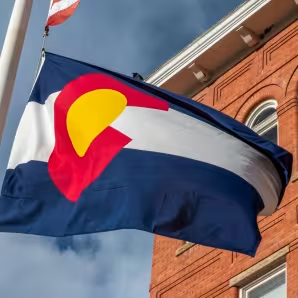
Colorado, Michigan, and New York officials discussed how states’ language access efforts have evolved and innovative approaches to reduce linguistic barriers for more than 25 million U.S. residents who have limited proficiency in English.

Language Access in Colorado State Agencies: Existing Efforts and Opportunities for Expansion
Colorado state agencies offer uneven language access. Creation of a statewide policy and cross-agency coordination would improve the provision of information and services to Limited English Proficient residents.