National Center on Immigrant Integration Policy

The National Center on Immigrant Integration Policy serves as a crossroads for policymakers, community and system leaders, and others looking to understand ways to support successful integration of immigrants and their children into U.S. classrooms, workplaces, and civic spaces.
It produces evidence-informed, nonpartisan policy research and data, and provides technical assistance and cross-state learning opportunities for state and local leaders. By engaging with stakeholders across the early childhood, education, workforce, health, and civic sectors, the Center builds a more coherent, knowledge-driven field. It shines a spotlight on integration issues often overlooked in national debates and promotes solutions that can lift the integration trajectories of immigrant families while also fueling the vibrancy of the communities and local economies where they live. For more about the Center, click here.


More Featured Work




- General Inquiries
Showing 241–250 of 375 results
Growing Up in America: The Extent and Impacts of Discrimination on Young Children from Immigrant Families
In this webinar, researchers will explore the educational, psychological, and social impact of discrimination on immigrant-origin children from birth to age 10.
Danger Ahead for Aspiring Citizens as New Federal Workforce Law Is Implemented
Federal workforce regulations changes in 2015 threaten to cut off English and civics instruction for millions of immigrants seeking citizenship and basic integration support.

The Educational, Psychological, and Social Impact of Discrimination on the Immigrant Child
Teacher discrimination reduces immigrant children's academic self-concept and school belonging, independently of actual performance, and raises dropout risk.
The Impact of Discrimination on the Early Schooling Experiences of Children from Immigrant Families
Personal and structural discrimination in early schooling damages the development, academic trajectories, and sense of belonging of young children from immigrant families.

Economic, Social, and Health Effects of Discrimination on Latino Immigrant Families
Discrimination against Latino immigrant families produces cascading economic, health, and social harms. Still, strong ethnic identity can buffer these effects.

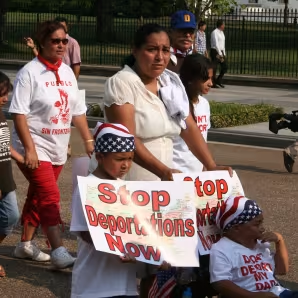
Health and Social Service Needs of U.S.-Citizen Children with Detained or Deported Immigrant Parents
U.S.-citizen children of deported parents face cascading harm—hardship, mental health crises, and instability. Schools represent the most trusted site for delivering services.
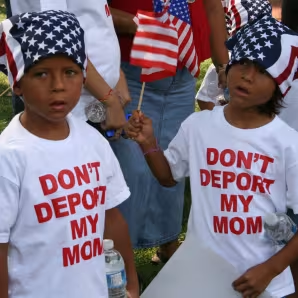
Implications of Immigration Enforcement Activities for the Well-Being of Children in Immigrant Families: A Review of the Literature
Parental deportation inflicts trauma and family dissolution on children of unauthorized immigrants. For many, health and social services remain structurally out of reach.
The Unauthorized Population in the United States: New Data Trends
Marking the release of a report examining recent trends regarding the unauthorized immigrant population in the United States at national, state, and county levels, this webinar answers the questions of which countries the unauthorized are from, where they have settled in the United States, and how these patterns have changed over the last two decades.
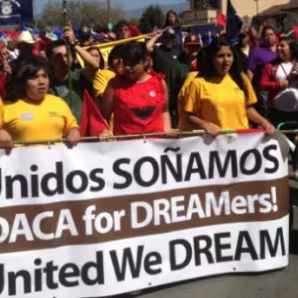
DACA at Three: New Data on Potential Applicants and Analysis of the Renewal Process
On this webinar, MPI experts provide data on characteristics of the potential applicant pool for the Deferred Action for Childhood Arrivals (DACA) program, and examine who is signing up for DACA renewal. The webinar also focuses on some of the administrative difficulties surrounding the renewal program.
Repealing Birthright Citizenship: The Unintended Consequences
Repealing birthright citizenship would grow the U.S. unauthorized population, contrary to its stated aims, and would create a self-perpetuating underclass excluded from social membership for generations.