Global Program

The Global Program acts as a policy laboratory for innovative, evidence-based, and politically feasible solutions to migration policy challenges. From direct policy advice to deep comparative research, its work interrogates policy design and effectiveness, helps countries newer to immigration learn from innovation and evidence in other regions, and anticipates how demographic, economic, and technological shifts will reshape migration in the years ahead. It supports governments in responding to crises with greater coordination and foresight, and provides a trusted off-the-record space for engaging with sensitive topics. Its main geographical focus is Europe, the Americas, and Australia, but it increasingly works with governments and other partners worldwide, including in East Africa and Asia. For more on the Global Program, click here.
Featured
How Europe Was Transformed by the 2015-16 Migration and Refugee Crisis
Ten years after the 2015-16 migration and refugee crisis, the European Union has reshaped its process for dividing up asylum claims and controlling…

The Shifting Financing of Responses to Venezuelan Displacement
Financing for Latin American responses to Venezuelan displacement has changed over the years, and new approaches are needed in light of foreign aid…
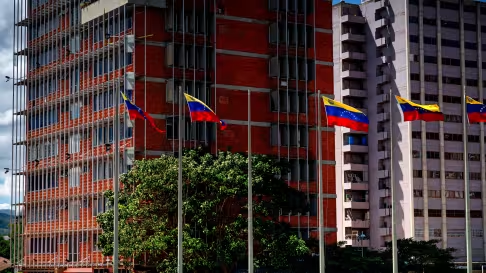
Migration Diplomacy in an Age of Transactionalism
As international cooperation frays, balanced diplomacy—rather than coercive dealmaking—promises the most effective approach to emerging migration…
More Featured Work




Key Statistics
International migrants comprise 3.7 percent of the global population. Learn more about them
304 million
The number of migrants globally in 2024
50.6 million
The number who as of 2025 were refugees or asylum seekers
94 million
The number of international migrants in Europe—the top destination globally


Showing 331–340 of 702 results
An Overheated Narrative Unanswered: How the Global Compact for Migration Became Controversial
Adopted by 164 governments in December 2018, the Global Compact for Migration saw opposition grow from one to a dozen nations, driven by nationalism and misinformation.

Understanding the Policy Context for Migrant Return and Reintegration
In advance of the December 2018 adoption of the Global Compact for Safe, Orderly, and Regular Migration and its commitment to facilitate the return, readmission, and reintegration of migrants, this webinar examines the policies, practices, and contextual factors that make compulsory returns such a difficult issue for international cooperation, and the programs that are being implemented to make reintegration of returnees sustainable.

The Future of Migration Policy in a Volatile Political Landscape (Transatlantic Council Statement)
Nativist populism has reached a tipping point in Western democracies and reclaiming the political center requires addressing the inequality and loss that fuel it.

In Search of a New Equilibrium: Immigration Policymaking in the Newest Era of Nativist Populism
Nativist populism's most lasting impact is not electoral but indirect—reshaping immigration agendas and pulling mainstream parties to the right across liberal democracies.

The End of the Retirement Dream? British pensioners in the European Union after Brexit
Brexit put roughly 229,000 British pensioners in EU Member States at risk of pension stagnation, higher taxes, and health-care loss, with lifestyle retirees most vulnerable.

When Facts Don’t Matter: How to Communicate More Effectively about Immigration’s Costs and Benefits
Facts about immigration fail to persuade skeptical publics because human psychology and media fragmentation are more powerful forces than evidence alone.

After the Divorce: British families living in the EU-27 post-Brexit
Brexit put British families in EU Member States at risk of losing rights already difficult to secure, with mixed-status, same-sex, and hyper-mobile families most exposed.

The Next Frontier in Immigrant Integration Policy? Using Behavioral Insights to Foster Social Cohesion
Speakers on this webinar explore what untapped potential behavioral insights may hold for immigrant integration policy, and how policymakers can start fitting this approach into their work.

Balancing Acts: Policy Frameworks for Migrant Return and Reintegration
Compulsory returns pit rule of law against humanitarian and development goals—making reintegration assistance the clearest lever for sustainable returns.
Making the Global Compact on Migration a Reality: Ideas for Enhancing Regular Migration Pathways at All Skill Levels
As the final phase of preparations for the historic adoption of a Global Compact for Safe, Orderly, and Regular Migration approaches, this webinar explores two central objectives of the compact: enhancing the availability and flexibility of pathways for regular migration, and investing in skills development.
