Refugee Livelihoods
All Content
Showing 1–10 of 11 results
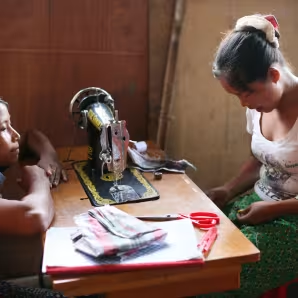
Syrian Women in Turkey Face Intersecting Barriers to Employment
Syrian women in Turkey face overlapping barriers to employment that training alone rarely resolves.
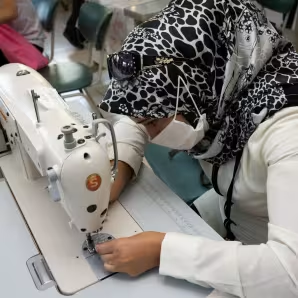
Creating Inclusive Urban Economies for Migrants and Refugees
Cities hold powerful levers to turn migrants' and refugees' underused talent into economic growth—but doing so requires moving beyond first-job placement toward durable inclusion.
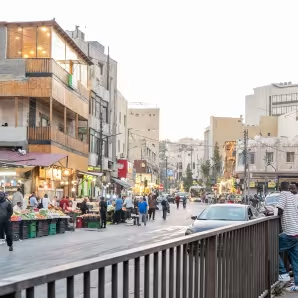
Migration, Integration, and Development in Secondary Cities
This webinar examined challenges refugees and other migrants face in—and place on—secondary cities, municipal responses, the types of support required at national and other levels, and how development actors can improve partnerships with cities and local actors.
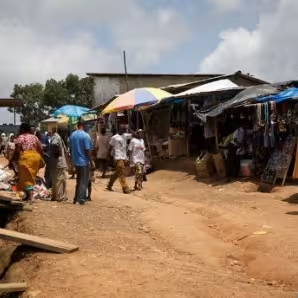
Migration and Displacement in Secondary Cities: Insights from Côte d’Ivoire and Uganda
Research examining Côte d’Ivoire and Uganda finds smaller cities lack the data, capacity, and coordination needed to support migrant integration.
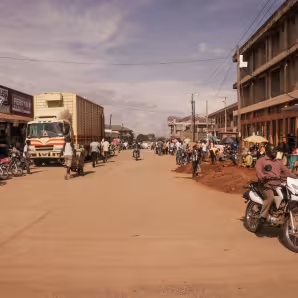
Making Refugee Participation in Protection Community Dialogues Meaningful
In the run-up to the 2023 Global Refugee Forum, this discussion examined efforts at facilitating refugee participation and meaningful engagement in policy conversations at global and other levels.
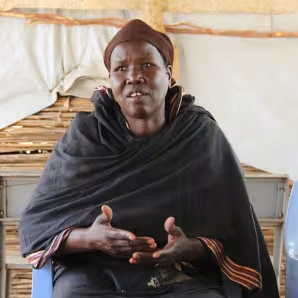
How Can Europe Address Its Labour Market Needs at a Time of Upheaval?
This conversation explored how Europe could potentially address its labor market needs and how immigration and immigrant integration policy might help propel Europe’s economic recovery.

A Bridge to Firmer Ground: Learning from International Experiences to Support Pathways to Solutions in the Syrian Refugee Context
This report draws on international cases to highlight models that could expand Syrian refugees’ access to protection, social safety nets, and education.

Beyond Care and Maintenance: Rebuilding Hope and Opportunity for Refugees (Transatlantic Council Statement)
The global "care and maintenance" model fails most displaced people. Solutions require expanded support, self-reliance opportunities, and investment in host countries.
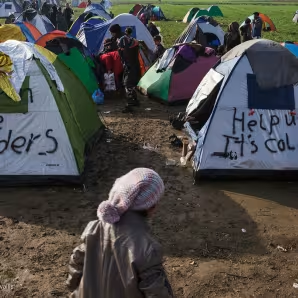
Building Livelihood Opportunities for Refugee Populations: Lessons from Past Practice
Refugee livelihood programs hold real promise but underperform due to poor context mapping, weak coordination, insufficient evaluation, and chronic underfunding.
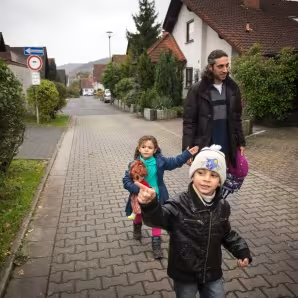
From Dependence to Self-Reliance: Changing the Paradigm in Protracted Refugee Situations
Protracted refugee dependency is neither inevitable nor acceptable. Self-reliance demands work rights, better livelihoods programs, and development actor engagement.