
Ariel G. Ruiz Soto

Ariel G. Ruiz Soto is a Senior Policy Analyst at MPI, where he works in the U.S. Immigration Policy Program and the Latin America and Caribbean Initiative.
His mixed-methods research examines how governments across the Western Hemisphere design, coordinate, and implement migration policies, as well as how those policies affect foreign- and native-born populations. He also analyzes sociodemographic trends used to estimate the unauthorized immigrant population in the United States, helping to inform evidence-based policy debates.
He writes regularly on immigration enforcement, migrant reception and reintegration, and asylum and refugee policy in the United States, Mexico, and Central America. He is a co-author of On the Move: Migration Policies in Latin America and the Caribbean (Stanford University Press, 2025), which examines how host countries in Latin America and the Caribbean have responded to large-scale and uneven migration flows.
Mr. Ruiz Soto holds a master’s degree from the University of Chicago’s School of Social Service Administration with a focus on immigration policy and service provision, and a bachelor’s degree in sociology from Whitman College.
- Media Inquiries
-
Michelle Mittelstadt
202 266 1910 [email protected]
Explore Content by Ariel G. Ruiz Soto
Showing 71-80 of 86 total results
Revving Up the Deportation Machinery: Enforcement under Trump and the Pushback
Interior immigration arrests rose 42 percent during Donald Trump's first eight months, but “sanctuary” policies limited enforcement and created uneven outcomes nationwide.

Trump Administration Makes Down Payment on Campaign Pledges to Address Illegal Immigration
In 2017, the Trump administration expanded interior enforcement in U.S. communities, sharply raising immigration arrests and pursuing border wall funding.

A Profile of Current DACA Recipients by Education, Industry, and Occupation
DACA holders are a largely middle-skilled, economically integrated population. Under the Trump DACA termination, they would lose work permits at an average pace of 915 per day starting March 2018.

MPI Estimates of Potential Beneficiaries under the 2017 DREAM Act and the Recognizing America’s Children Act
These MPI estimates provide a sense of the unauthorized populations that could potentially gain legal status under proposed legislation.

Differing DREAMs: Estimating the Unauthorized Populations That Could Benefit under Different Legalization Bills
The five DREAM Act-type bills introduced in 2017 differed sharply in scope, with MPI estimating eligible pools ranging from 2 million to 3.6 million, depending on each bill's requirements.
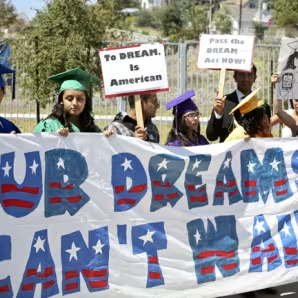
Protecting the DREAM: The Potential Impact of Different Legislative Scenarios for Unauthorized Youth
The 2017 legislative proposals to grant status to Dreamers could cover up to 2.1 million conditional status holders and 1.7 million eventual green-card recipients, MPI estimates.
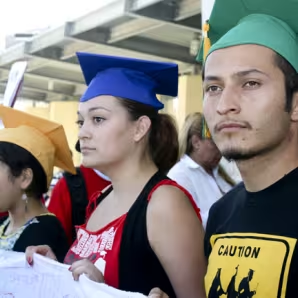
MPI Estimates of Who Might Benefit under 2017 DREAM Act Bills in Congress
Learn which unauthorized immigrant populations could potentially be covered under the DREAM Act.
A Revolving Door No More? A Statistical Profile of Mexican Adults Repatriated from the United States
Repeat unauthorized migration by Mexicans is declining sharply: the share intending to return to the United States fell from 95 percent in 2005 to 49 percent in 2015.
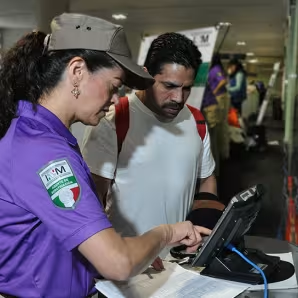
Migrants and Smugglers Get Creative to Circumvent Immigration Enforcement
In 2016, route closures in Europe and the Americas shifted migrants onto deadlier paths, with Central Mediterranean deaths reaching approximately 4,200 by November, up from 2,900 in all of 2015.

The Costs of Brain Waste among Highly Skilled Immigrants in Select States
Brain waste among highly skilled immigrants costs U.S. states billions in forgone earnings annually, with Florida posting the highest underutilization rate, as these state fact sheets show.