
Ariel G. Ruiz Soto

Ariel G. Ruiz Soto is a Senior Policy Analyst at MPI, where he works in the U.S. Immigration Policy Program and the Latin America and Caribbean Initiative.
His mixed-methods research examines how governments across the Western Hemisphere design, coordinate, and implement migration policies, as well as how those policies affect foreign- and native-born populations. He also analyzes sociodemographic trends used to estimate the unauthorized immigrant population in the United States, helping to inform evidence-based policy debates.
He writes regularly on immigration enforcement, migrant reception and reintegration, and asylum and refugee policy in the United States, Mexico, and Central America. He is a co-author of On the Move: Migration Policies in Latin America and the Caribbean (Stanford University Press, 2025), which examines how host countries in Latin America and the Caribbean have responded to large-scale and uneven migration flows.
Mr. Ruiz Soto holds a master’s degree from the University of Chicago’s School of Social Service Administration with a focus on immigration policy and service provision, and a bachelor’s degree in sociology from Whitman College.
- Media Inquiries
-
Michelle Mittelstadt
202 266 1910 [email protected]
Explore Content by Ariel G. Ruiz Soto
Showing 21-30 of 86 total results
U.S. Legal Pathways for Mexican and Central American Immigrants, by the Numbers
Family ties, H-2 seasonal work visas, and humanitarian parole are the main U.S. legal pathways for Mexican and Central American immigrants.

Diverse Flows Drive Increase in U.S. Unauthorized Immigrant Population
MPI estimates 11.3 million unauthorized immigrants lived in the United States as of mid-2022, up from 11.2 million a year earlier. While the country has witnessed high levels of arrivals at the U.S.-Mexico border, the unauthorized population also has been marked by significant ongoing declines in the unauthorized from Mexico and other exits, as this analysis explains.

Building on Regular Pathways to Address Migration Pressures in the Americas
Despite a rich history of regular immigration pathways, the Americas still struggle with irregular migration. Hemispheric cooperation and reformed mobility agreements are needed.

Construyendo vías regulares para abordar presiones migratorias en el hemisferio occidental
A pesar de una rica historia de vías regulares, el hemisferio sigue luchando con la migración irregular. Se necesitan cooperación hemisférica y acuerdos reformados.
Shifting Realities at the U.S.-Mexico Border: Immigration Enforcement and Control in a Fast-Evolving Landscape
Nearly 2.5 million encounters at the U.S.-Mexico border in fiscal year 2023 exposed a system reacting to rather than managing realities at the border. Real control will require multiagency investment.
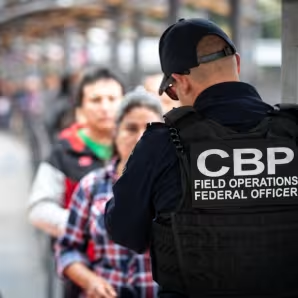
Shifting Patterns and Policies Reshape Migration to U.S.-Mexico Border in Major Ways in 2023
There is a deeper story behind the U.S. government's fiscal 2023 border encounters numbers than that the year marked a new record high. The pivot from the pandemic-era Title 42 expulsions policy and sharp diversification in nationalities have reshaped migrant arrivals unlike any year before. This commentary goes beyond the headlines to focus on the more enduring—and challenging—realities occuring at the U.S.-Mexico border.

A Shrinking Number of DACA Participants Face Yet Another Adverse Court Ruling
The DACA program has received another blow to its survival, with a federal court once again ruling that the executive branch exceeded its authority in creating the program. But with litigation likely to continue for years, it is attrition that is actively reducing the program. This commentary examines the shrinking population of DACA holders, as well as those who have been locked out from participating.
A Turning Point for the Unauthorized Immigrant Population in the United States
The unauthorized immigrant population in the United States stood at approximately 11.2 million people in mid-2021, with larger annual growth than at any point since 2015, according to MPI's latest estimates. Even as the Mexican unauthorized immigrant population continued its decade-long decline, there were new entrants from a growing array of other countries.

Migration Narratives in Northern Central America
Experts examined migration narratives from 2018-2023 and how they have been used to justify policy approaches or incentivize mobility decisions.
Narrativas Migratorias en el Norte de Centroamérica
Los expertos analizaron las narrativas sobre migración de 2018 a 2023 y cómo se usaron para justificar enfoques de políticas o incentivar decisiones de movilidad.