U.S. Immigration Policy Program

The U.S. Immigration Policy Program provides thought leadership on ways to improve the U.S. immigration system so that it works most effectively in the national interest. To that end, its work focuses on immigration pathways to the United States and immigration enforcement policies and their impacts. It examines the complex demographic, economic, social, political, foreign policy, and other forces that shape U.S. immigration.
Program staff produce data and analyses of immigration trends and the characteristics of U.S. immigrant populations, including unauthorized immigrants. And they conduct original research on the impacts of policy change and the experiences of immigrant populations in diverse parts of the country. This work is frequently informed by private convenings of policymakers and key stakeholders. For more, click here.
The Latest Research
U.S. Deportations and “Self-Deportations” in the First 18 Months of the Second Trump Term
Filling a gap amid a slowdown in official data reporting from the federal government, this analysis offers a window into deportation and "self…

Featured
Physicians in an Era of Changing Immigration Policy: The Case of Nephrology
The care of kidney disease in the United States relies heavily on international medical graduates (IMGs). Recent policy changes could deepen…

Temporary Visa Holders in the United States
The number of U.S. temporary visas plummeted during the COVID-19 pandemic, rebounded, and then fell again in fiscal year (FY) 2025. Preliminary data…

Following Years of High Border Arrivals, the U.S. Unauthorized Immigrant Population Hits New Peak
MPI estimates the U.S. unauthorized immigrant population reached a new peak of 15.8 million as of mid-2024, after holding steady at around 11 million…

More Featured Work
From Counterterrorism to Immigration Enforcement: 25 Years On, Post-9/11 U.S. Changes Have Been Repointed
Post-9/11 national security tools have been repurposed for immigration, expanding the U.S. government’s capacity for surveillance, data sharing, and…

Attacked as "De Facto Amnesty," U.S. Temporary Protected Status Is Abruptly Eroded
The Trump administration moved to terminate most of the 17 Temporary Protected Status (TPS) designations in place when its second term began,…

Though Rare, Birth Tourism to the United States Sparks Outsized Concern
While rare, birth tourism has become a central but contested justification in the Trump administration's push to end the guarantee of birthright…

Key Statistics
Learn more about immigrants and immigration to the United States
14.8%
The immigrant share of the total U.S. population
Learn how this share has evolved (opens in a new tab)50.2 million
The number of immigrants in the United States
Explore Data Profiles by State (opens in a new tab)18.4%
The share of workers in the U.S. civilian labor force who are immigrants
Get the data at U.S. and state levels (opens in a new tab)
Showing 451–460 of 824 results
Unaccompanied Child Migrants in U.S. Communities, Immigration Court, and Schools
The U.S. immigration court system has failed to resolve most unaccompanied children's legal status, leaving communities and schools with minimal federal support.
The Immigration Act of 1965: Then and Now
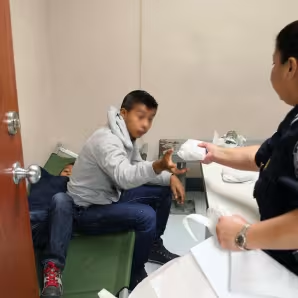
Commemorating the 50th anniversary of passage of the Immigration Act of 1965, a symposium with distinguished experts on the political and policy dynamics that came together to make the law possible, how it changed the U.S. legal immigration system and the country's demographics, and what these and other changes mean for the nation’s future.

Left Behind: How the Well-Being of Children Is Affected by Parental Deportation
Report release where authors discuss the effects of parental deportation on the children of immigrants, the related needs for health and social services, and U.S. policy responses to protect these children.
What's New in Farm Labor? Immigration and the Agricultural Sector
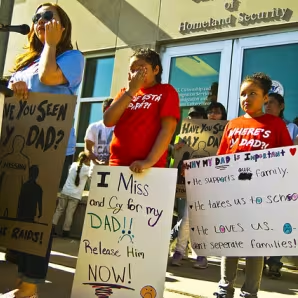
An expert discussion on the findings of the National Agricultural Workers Survey (NAWS) related to immigrants, along with an overview of farm labor in 2015 and discussion on how current and possible future immigration policies might impact immigrant workers in the agricultural sector.

Fierce Opposition, Court Rulings Place Future of Family Immigration Detention in Doubt
Court rulings and advocacy have raised new questions about the future of U.S. family immigration detention.
Regional Enforcement: A Profile of Migrants Deported from the United States and Mexico to the Northern Triangle
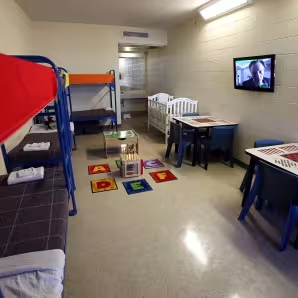
Marking the release of an MPI report, speakers on this webinar present an overview of regional immigration enforcement trends, including U.S. and Mexican apprehensions and deportations of both children and adults, along with a demographic, socioeconomic, and criminal profile of child and adult deportees.
Migrants Deported from the United States and Mexico to the Northern Triangle: A Statistical and Socioeconomic Profile
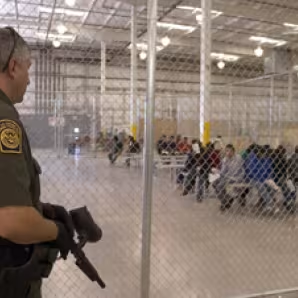
Mexico is intercepting more northern Central American migrants before the U.S. border. But shifting flows without addressing root causes is not a lasting solution.

Health and Social Service Needs of U.S.-Citizen Children with Detained or Deported Immigrant Parents
U.S.-citizen children of deported parents face cascading harm—hardship, mental health crises, and instability. Schools represent the most trusted site for delivering services.
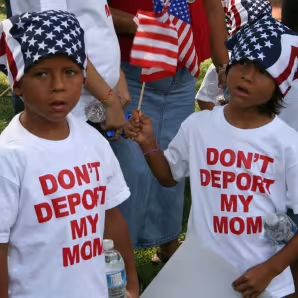
Implications of Immigration Enforcement Activities for the Well-Being of Children in Immigrant Families: A Review of the Literature
Parental deportation inflicts trauma and family dissolution on children of unauthorized immigrants. For many, health and social services remain structurally out of reach.
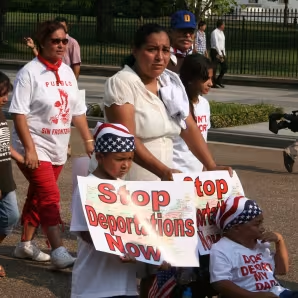
Sanctuary Cities Come Under Scrutiny, As Does Federal-Local Immigration Relationship
The killing of Kathryn Steinle exposed deep fractures in federal-local immigration enforcement and thrust sanctuary policies into the 2016 presidential campaign.


- General Inquiries
- Media Inquiries
-
Michelle Mittelstadt
202 266 1910 [email protected]