U.S. Immigration Policy Program
The U.S. Immigration Policy Program provides thought leadership on ways to improve the U.S. immigration system so that it works most effectively in the national interest. To that end, its work focuses on immigration pathways to the United States and immigration enforcement policies and their impacts. It examines the complex demographic, economic, social, political, foreign policy, and other forces that shape U.S. immigration.
Program staff produce data and analyses of immigration trends and the characteristics of U.S. immigrant populations, including unauthorized immigrants. And they conduct original research on the impacts of policy change and the experiences of immigrant populations in diverse parts of the country. This work is frequently informed by private convenings of policymakers and key stakeholders. For more, click here.
The Latest Research
U.S. Deportations and “Self-Deportations” in the First 18 Months of the Second Trump Term
Filling a gap amid a slowdown in official data reporting from the federal government, this analysis offers a window into deportation and "self…

Featured
Physicians in an Era of Changing Immigration Policy: The Case of Nephrology
The care of kidney disease in the United States relies heavily on international medical graduates (IMGs). Recent policy changes could deepen…

Temporary Visa Holders in the United States
The number of U.S. temporary visas plummeted during the COVID-19 pandemic, rebounded, and then fell again in fiscal year (FY) 2025. Preliminary data…

Following Years of High Border Arrivals, the U.S. Unauthorized Immigrant Population Hits New Peak
MPI estimates the U.S. unauthorized immigrant population reached a new peak of 15.8 million as of mid-2024, after holding steady at around 11 million…

More Featured Work
From Counterterrorism to Immigration Enforcement: 25 Years On, Post-9/11 U.S. Changes Have Been Repointed
Post-9/11 national security tools have been repurposed for immigration, expanding the U.S. government’s capacity for surveillance, data sharing, and…

Attacked as "De Facto Amnesty," U.S. Temporary Protected Status Is Abruptly Eroded
The Trump administration moved to terminate most of the 17 Temporary Protected Status (TPS) designations in place when its second term began,…

Though Rare, Birth Tourism to the United States Sparks Outsized Concern
While rare, birth tourism has become a central but contested justification in the Trump administration's push to end the guarantee of birthright…

Key Statistics
Learn more about immigrants and immigration to the United States
14.8%
The immigrant share of the total U.S. population
Learn how this share has evolved (opens in a new tab)50.2 million
The number of immigrants in the United States
Explore Data Profiles by State (opens in a new tab)18.4%
The share of workers in the U.S. civilian labor force who are immigrants
Get the data at U.S. and state levels (opens in a new tab)
Showing 331–340 of 824 results
U.S. Immigration Policy under Trump: Deep Changes and Lasting Impacts
President Donald Trump has driven deep changes to U.S. immigration in his first year, but courts, Congress, and state and local resistance have blocked the most ambitious aims.
In Upholding Travel Ban, Supreme Court Endorses Presidential Authority While Leaving Door Open for Future Challenges
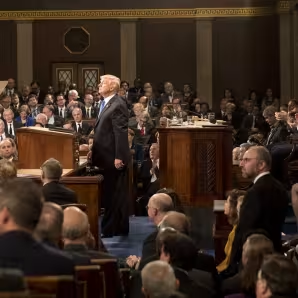
A divided U.S. Supreme Court upheld the Trump first-term travel ban. But the justices said they would require future bans be grounded in an evidentiary finding of harm.

Chilling Effects: The Expected Public-Charge Rule and Its Impact on Immigrant Families
MPI experts discuss an expected Trump administration public-charge rule that could have wide-reaching effects on the ability of immigrants legally present in the country to get a green card as well as who could qualify to enter the United States. The webinar focuses on an MPI report assessing how the proposed rule could affect future benefits usage by immigrants and their U.S.-citizen children.

Vanishing Frontiers: The Forces Driving Mexico and the United States Together
Mexico's economic and cultural transformation has created deep, mutually beneficial interdependencies with the United States that no border wall can undo, this book by MPI’s president argues.

Crisis at the Border? Not by the Numbers
Despite the declaration of crisis at the U.S.-Mexico border, May 2018 apprehensions matched levels from 2013 to 2016, as flows shifted toward families and asylum seekers.

House Bills Would Largely Dismantle Asylum System at U.S.-Mexico Border
Two 2018 House Republican bills would sharply curtail the U.S. asylum system by declaring Mexico a safe third country and eliminating protections for unaccompanied minors.

A Narrower Path in the House for Most DREAMers
Covering fewer Dreamers than Senate proposals, a pair of 2018 House bills would protect anywhere from 590,000 to 1.25 million young unauthorized immigrants, MPI estimates.
Far from a Retreat, the Trump Administration’s Border Policies Advance its Enforcement Aims
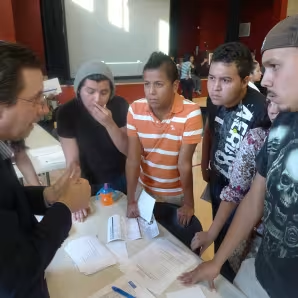
President Donald Trump's June 2018 order ending family separation advanced a broader strategy to detain all asylum-seeking families and narrow credible-fear claim grounds.

Chilling Effects: The Expected Public Charge Rule and Its Impact on Legal Immigrant Families’ Public Benefits Use
The proposed 2018 public-charge rule would affect 47 percent of noncitizens, according to MPI analysis, producing chilling effects on benefits use and reshaping legal immigration.
Family Separation and “Zero-Tolerance” Policies Rolled Out to Stem Unwanted Migrants, But May Face Challenges
The April 2018 “zero-tolerance” policy criminalizing all irregular border crossers will strain courts and detention, with little evidence it will deter unauthorized arrivals.

- General Inquiries
- Media Inquiries
-
Michelle Mittelstadt
202 266 1910 [email protected]