U.S. Immigration Policy Program
The U.S. Immigration Policy Program provides thought leadership on ways to improve the U.S. immigration system so that it works most effectively in the national interest. To that end, its work focuses on immigration pathways to the United States and immigration enforcement policies and their impacts. It examines the complex demographic, economic, social, political, foreign policy, and other forces that shape U.S. immigration.
Program staff produce data and analyses of immigration trends and the characteristics of U.S. immigrant populations, including unauthorized immigrants. And they conduct original research on the impacts of policy change and the experiences of immigrant populations in diverse parts of the country. This work is frequently informed by private convenings of policymakers and key stakeholders. For more, click here.
The Latest Research
U.S. Deportations and “Self-Deportations” in the First 18 Months of the Second Trump Term
Filling a gap amid a slowdown in official data reporting from the federal government, this analysis offers a window into deportation and "self…

Featured
Physicians in an Era of Changing Immigration Policy: The Case of Nephrology
The care of kidney disease in the United States relies heavily on international medical graduates (IMGs). Recent policy changes could deepen…

Temporary Visa Holders in the United States
The number of U.S. temporary visas plummeted during the COVID-19 pandemic, rebounded, and then fell again in fiscal year (FY) 2025. Preliminary data…

Following Years of High Border Arrivals, the U.S. Unauthorized Immigrant Population Hits New Peak
MPI estimates the U.S. unauthorized immigrant population reached a new peak of 15.8 million as of mid-2024, after holding steady at around 11 million…

More Featured Work
From Counterterrorism to Immigration Enforcement: 25 Years On, Post-9/11 U.S. Changes Have Been Repointed
Post-9/11 national security tools have been repurposed for immigration, expanding the U.S. government’s capacity for surveillance, data sharing, and…

Attacked as "De Facto Amnesty," U.S. Temporary Protected Status Is Abruptly Eroded
The Trump administration moved to terminate most of the 17 Temporary Protected Status (TPS) designations in place when its second term began,…

Though Rare, Birth Tourism to the United States Sparks Outsized Concern
While rare, birth tourism has become a central but contested justification in the Trump administration's push to end the guarantee of birthright…

Key Statistics
Learn more about immigrants and immigration to the United States
14.8%
The immigrant share of the total U.S. population
Learn how this share has evolved (opens in a new tab)50.2 million
The number of immigrants in the United States
Explore Data Profiles by State (opens in a new tab)18.4%
The share of workers in the U.S. civilian labor force who are immigrants
Get the data at U.S. and state levels (opens in a new tab)
Showing 271–280 of 824 results
From Control to Crisis: Changing Trends and Policies Reshaping U.S.-Mexico Border Enforcement
Punitive enforcement-only measures failed to stem record flows of Central American families at the U.S.-Mexico border in 2019, underscoring the need for a new approach.

Rethinking U.S. Immigration Policy: New Realities Call for New Answers
This policy brief underscores the need for an evidence-driven overhaul of U.S. policy to treat immigration as a strategic national resource and comparative advantage.
Immigration and the U.S. Labor Market: A Look Ahead
As aging and low birth rates drag on U.S. economic growth, expanding legal immigration offers a key tool to bolster the workforce, fill skill gaps, and spur entrepreneurship.

How Does Immigration Fit into the Future of the U.S. Labor Market?
Workforce aging and slowing labor force growth make a compelling case for expanding employment-based immigration as a driver of U.S. economic productivity.

Democrats Under Pressure: Political Calendar Exposes Ideological Differences on Immigration
As 2020 U.S. elections approached, Democrats’ divisions on immigration exposed a growing gap between the party's liberal and centrist factions.

Beyond Walls and Tariffs: Responding to Migration Challenges at the U.S.-Mexico Border
This event organized by the Migration Policy Institute and American Enterprise Institute features a conversation on U.S.-Mexico border conditions, as well as policy responses and regional cooperation on illegal immigration.

Strategic Solutions for the United States and Mexico to Manage the Migration Crisis
MPI and El Colegio de México outline five strategies to address irregular Central American migration through asylum reform, legal pathways, and targeted development aid.

As the Trump Administration Seeks to Remove Families, Due-Process Questions over Rocket Dockets Abound
Accelerated "rocket" dockets for families yielded 80 percent in absentia removal orders by mid-2019, exposing due-process failures around court notice and access to counsel.
Spike in Unaccompanied Child Arrivals at U.S.-Mexico Border Proves Enduring Challenge; Citizenship Question on 2020 Census in Doubt
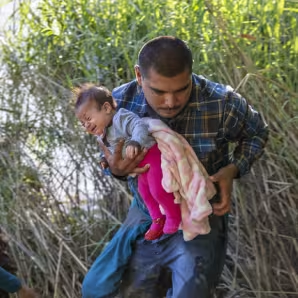
Approximately 11,500 unaccompanied children were apprehended at the U.S.-Mexico border in May, putting this year on track to exceed 2014's surge. As the U.S. government struggles to care for these child migrants, with public outrage mounting over reports of unsafe, filthy conditions in initial Border Patrol custody, the failure of the executive branch and Congress to plan for increased shelter and care demands are increasingly apparent, as this article explores.

Will Immigration Reform Ever Succeed Again? The Legacy of IRCA & Its Enduring Lessons
This provocative discussion showcases Charles Kamasaki's book, Immigration Reform: The Corpse That Will Not Die, and explores the lessons that can be learned from the Immigration Reform and Control Act of 1986, its intended and unintended consequences, and how the law’s legacy has shaped contemporary politics surrounding immigration.

- General Inquiries
- Media Inquiries
-
Michelle Mittelstadt
202 266 1910 [email protected]