U.S. Immigration Policy Program

The U.S. Immigration Policy Program provides thought leadership on ways to improve the U.S. immigration system so that it works most effectively in the national interest. To that end, its work focuses on immigration pathways to the United States and immigration enforcement policies and their impacts. It examines the complex demographic, economic, social, political, foreign policy, and other forces that shape U.S. immigration.
Program staff produce data and analyses of immigration trends and the characteristics of U.S. immigrant populations, including unauthorized immigrants. And they conduct original research on the impacts of policy change and the experiences of immigrant populations in diverse parts of the country. This work is frequently informed by private convenings of policymakers and key stakeholders. For more, click here.
The Latest Research
U.S. Deportations and “Self-Deportations” in the First 18 Months of the Second Trump Term
Filling a gap amid a slowdown in official data reporting from the federal government, this analysis offers a window into deportation and "self…

Featured
Physicians in an Era of Changing Immigration Policy: The Case of Nephrology
The care of kidney disease in the United States relies heavily on international medical graduates (IMGs). Recent policy changes could deepen…

Temporary Visa Holders in the United States
The number of U.S. temporary visas plummeted during the COVID-19 pandemic, rebounded, and then fell again in fiscal year (FY) 2025. Preliminary data…

Following Years of High Border Arrivals, the U.S. Unauthorized Immigrant Population Hits New Peak
MPI estimates the U.S. unauthorized immigrant population reached a new peak of 15.8 million as of mid-2024, after holding steady at around 11 million…

More Featured Work
From Counterterrorism to Immigration Enforcement: 25 Years On, Post-9/11 U.S. Changes Have Been Repointed
Post-9/11 national security tools have been repurposed for immigration, expanding the U.S. government’s capacity for surveillance, data sharing, and…

Attacked as "De Facto Amnesty," U.S. Temporary Protected Status Is Abruptly Eroded
The Trump administration moved to terminate most of the 17 Temporary Protected Status (TPS) designations in place when its second term began,…

Though Rare, Birth Tourism to the United States Sparks Outsized Concern
While rare, birth tourism has become a central but contested justification in the Trump administration's push to end the guarantee of birthright…

Key Statistics
Learn more about immigrants and immigration to the United States
14.8%
The immigrant share of the total U.S. population
Learn how this share has evolved (opens in a new tab)50.2 million
The number of immigrants in the United States
Explore Data Profiles by State (opens in a new tab)18.4%
The share of workers in the U.S. civilian labor force who are immigrants
Get the data at U.S. and state levels (opens in a new tab)
Showing 251–260 of 824 results
Swing State: Immigration's Impact on the 2020 U.S. Election
This event will feature a screening of the short documentary The Fields of Immokalee, and include a discussion on immigration and politics in Florida and other swing states in the run-up to the 2020 election.

Immigrant Workers: Vital to the U.S. COVID-19 Response, Disproportionately Vulnerable
Immigrant workers filled vital COVID-19 frontline roles in 2018 but faced greater economic vulnerability and more limited safety-net access than U.S.-born peers.

The Public-Charge Rule: Broad Impacts, But Few Will Be Denied Green Cards Based on Actual Benefits Use
While the Trump administration public-charge rule is likely to vastly reshape legal immigration based on its test to assess if a person might ever use public benefits in the future, the universe of noncitizens who could be denied a green card based on current benefits use is quite small. That's because very few benefit programs are open to noncitizens who do not hold a green card. This commentary offers estimates of who might be affected.

Coronavirus Is Spreading across Borders, But It Is Not a Migration Problem
Travel bans, border closures, and other migration management tools did not prove effective at blocking COVID-19 from spreading across international borders. Yet as governments have shifted from containment to mitigation with the coronavirus now in community transmission in many countries, these restrictions are a logical part of the policy toolkit in the context of social distancing and restricting all forms of human movement, as this commentary explores.

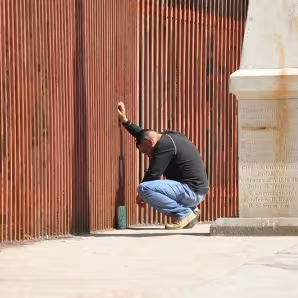
Interlocking Set of Trump Administration Policies at the U.S.-Mexico Border Bars Virtually All from Asylum
Through layered enforcement policies, the Trump administration effectively shut down the U.S. asylum system at the southern border in its first term.
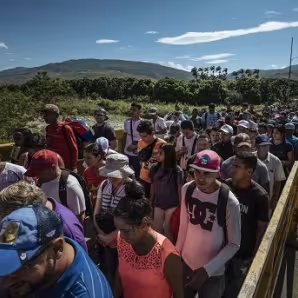
Is the Door Closing? Latin American and Caribbean Responses to Venezuelan Migration
This webinar marks the release of MPI's Latin American and Caribbean Migration Portal that offers up-to-date, authoritative research and data on migration trends and policies, and a report examining the policy responses of 11 countries in Latin America and the Caribbean to increased Venezuelan and Nicaraguan migration.
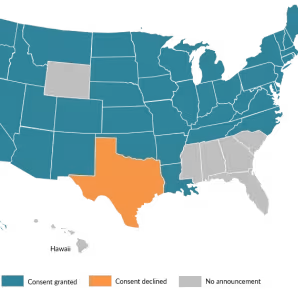
Despite Trump Invitation to Stop Taking Refugees, Red and Blue States Alike Endorse Resettlement
Despite record-low refugee ceilings during the first Trump term and a presidential order inviting states to opt out of resettlement, 42 states and 100-plus mayors affirmed their support for refugees.
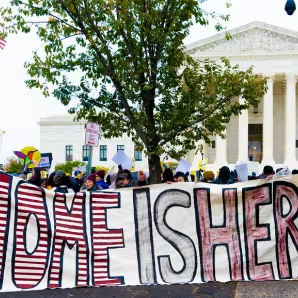
USCIS Fee Increase Proposed Rule Could Represent the Latest Step in Reshaping Immigration to United States
While much attention has been given to the move by U.S. Citizenship and Immigration Services to raise its application fees—including an 83 percent hike to apply for U.S. citizenship—the policy changes embedded in the proposed rule have been less scrutinized. The changes, including the elimination of most fee waivers for lower-income applicants, would likely reduce the number and shift the profile of those getting a green card or other immigration status.

Will Supreme Court Ruling on DACA Finally Force Congress to Break the Ice on Immigration Reform?
As the Supreme Court considered the legality of ending the Deferred Action for Childhood Arrivals (DACA) program, new pressure emerged for Congress to act.
Health Insurance Coverage of Immigrants and Latinos in the Kansas City Metro Area
Latinos and immigrants in the Kansas City metro area were two to four times more likely to be uninsured than the general population, this analysis of 2014–16 census data shows.


- General Inquiries
- Media Inquiries
-
Michelle Mittelstadt
202 266 1910 [email protected]