Health Insurance Coverage of Immigrants and Latinos in the Kansas City Metro Area

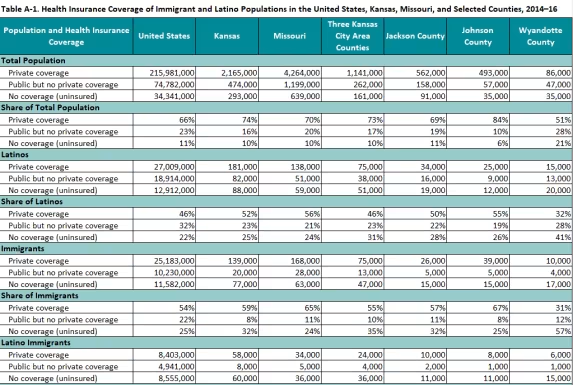
Latinos and immigrants in the Kansas City metro area were two to four times more likely to be uninsured than the general population, this analysis of 2014–16 census data shows.
Latinos and immigrants are at least twice as likely to lack health insurance coverage as the overall population in the Kansas City metropolitan area. This gap that has significant implications for the region, as Latinos and immigrants will form an ever-growing share of the area’s labor force and tax base amid anticipated declines in the native-born, non-Latino population.
This brief offers a demographic profile of the immigrant and U.S.- and foreign-born Latino populations in the three Kansas City-area counties with the largest immigrant populations: Missouri’s Jackson County and Johnson and Wyandotte counties in Kansas. The brief also examines these populations’ health insurance coverage and gaps.
Overall, 161,000 residents in the three Kansas City metro counties with the largest immigrant populations—Johnson County; Jackson County, Missouri; and Wyandotte County, Kansas—are uninsured, with immigrants of all origins and Latinos accounting for 38 percent (61,000) of the total. MPI’s analysis draws on data from the U.S. Census Bureau, county health departments, and local safety-net health-care providers.
“Given the important role immigrants and their U.S.-born children play in Kansas City-area communities and the future of the regional economy, it makes economic sense to maximize health insurance coverage for immigrant and Latino families,” the authors find.
Explore the Data
To dig deeper into the data behind the figures and tables in this brief, check out this data file.
Table of Contents
I. Introduction
II. Latino and Immigrant Populations in the Kansas City Metropolitan Area
Local Population Profiles for Jackson, Johnson, and Wyandotte Counties
III. Health Insurance Coverage among Latinos and Immigrants in the Kansas City Metropolitan Area
A. Immigration Status and Insurance Coverage
B. Latino Residents and Insurance Coverage
IV. Local Population Clusters, Insurance Coverage, and Health-Care Service Use
Local Health-Care Service Use Patterns
V. Recent Coverage Trends and Future Prospects
VI. Conclusions
About the U.S. Immigration Policy Program
The U.S. Immigration Policy Program provides analysis of U.S. immigration pathways, the impacts of enforcement and other policies, and the characteristics of immigrant populations.
About the National Center on Immigrant Integration Policy
The Center is a national hub connecting policymakers, educators, community leaders, and service providers with evidence-informed policy research, technical assistance, and data to advance effective immigrant integration at U.S., state, and local levels.


Related Content