National Center on Immigrant Integration Policy

The National Center on Immigrant Integration Policy serves as a crossroads for policymakers, community and system leaders, and others looking to understand ways to support successful integration of immigrants and their children into U.S. classrooms, workplaces, and civic spaces.
It produces evidence-informed, nonpartisan policy research and data, and provides technical assistance and cross-state learning opportunities for state and local leaders. By engaging with stakeholders across the early childhood, education, workforce, health, and civic sectors, the Center builds a more coherent, knowledge-driven field. It shines a spotlight on integration issues often overlooked in national debates and promotes solutions that can lift the integration trajectories of immigrant families while also fueling the vibrancy of the communities and local economies where they live. For more about the Center, click here.



More Featured Work




- General Inquiries
Showing 31–40 of 375 results
Connecting Immigrant Communities to Infant and Early Childhood Mental Health Services
Speakers discussed the importance of infant and early childhood mental health services and how to better connect immigrant and refugee families to these resources.

Supporting Immigrant and Refugee Families through Infant and Early Childhood Mental Health Services
Immigrant and refugee children face major barriers to mental health services, with screening gaps, insurance disparities, and a shortage of culturally responsive care.

How Immigrants and Their U.S.-Born Children Fit into the Future U.S. Labor Market
Immigrants and their U.S.-born children have driven all U.S. labor force growth since 2000 but face the need to upskill as nearly three-quarters of jobs in 2031 will require postsecondary credentials.

Refining State Accountability Systems for English Learner Success
State accountability systems misread English Learner academic progress by omitting language proficiency. This study proposes fixes and program quality indicators.

Immigrants’ Eligibility for U.S. Public Benefits: A Primer
The U.S. 1996 welfare law created a complex patchwork of eligibility for federal supports. This 2024 primer maps which categories of immigrants qualify for 13 U.S. public benefit programs and how some states extend coverage.

The Importance of Community Consultations in the U.S. Refugee Resettlement Network
This conversation considered the importance of community consultation in the U.S. refugee resettlement landscape in 2023, and explored actionable steps toward a more inclusive, collaborative, and adaptable process.

The Unmet Potential of Community Consultations in U.S. Refugee Resettlement
U.S. refugee resettlement consultations with receiving communities fall short of their potential, hampered by the narrowness of their scope and limited meaningful dialogue.

Immigration and Integration in the Ever More Diverse Houston Area
Immigrants help power Houston’s economy. Yet 67,000 college-educated immigrants are underemployed and integration services lag the region’s rapid diversification.
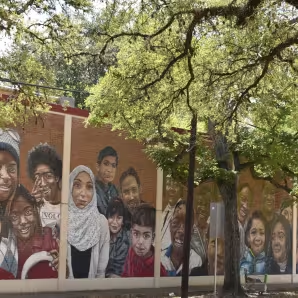
Improving Language Access in Federal Programs: What Is the State of Play?
This event reviewed the Biden administration's language access provision efforts and explored opportunities to improve the provision of information and services in languages other than English in federal programs.
Shared Gains: Immigrant-Origin Students in U.S. Colleges
Immigrant-origin students represent a growing share of U.S. college enrollment, rising from one in five pupils in 2000 to one in three as of 2021—cushioning overall enrollment declines.