Managing International Protection Needs at Borders
Related Content
Highlights
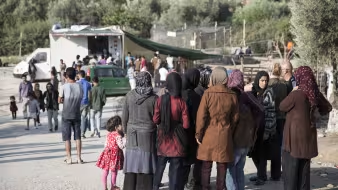
Amid rising mixed migration flows, managing international protection needs at borders requires differentiated screening, flexible surge capacity, interagency coordination, and proactive investment.
- Border systems face four compounding challenges: rapidly shifting arrival volumes and profiles, diverse vulnerabilities among mixed migration flows, remote and complex terrain, and disproportionate pressure on border communities.
- Differentiated procedures—fast-tracking well-founded claims, channeling inadmissible cases to return, and triaging vulnerable individuals to specialized services—can reduce backlogs and improve protection outcomes.
- Co-location of border, asylum, and social service agencies at key entry points improves registration and fingerprinting rates.
- Proactive investment in flexible staffing, digital tools, and physical infrastructure—rather than emergency spending during crises—is more cost-effective and builds the resilience needed to manage future displacement surges.
National borders are one of the primary apertures through which publics perceive and judge migration trends and policy. Dysfunction at borders has implications that go well beyond national security, affecting commerce and trade as well as human mobility of various kinds. For asylum seekers, who generally must reach another country’s territory in order to seek protection, borders can represent the difference between danger and safety.
As publics in many countries become increasingly vocal in their dissatisfaction with the management of their nation’s borders, policymakers face the difficult task of designing border systems that prevent the outbreak (or perception) of chaos, even as major displacement crises and the complexities of mixed humanitarian, economic, and family reunification migration strain outmoded infrastructure.
This report—part of the Beyond Territorial Asylum: Making Protection Work in a Bordered World initiative led by MPI and the Robert Bosch Stiftung—examines the key elements of an effective and protection-sensitive border system. It begins with an overview of what makes border management challenging at the best of times, and particularly so amid acute displacement crises. It then explores the core features of border processes capable of responding to mixed migration while protecting the right to seek asylum, and what conditions need to be in place for these procedures to be successful.
Table of Contents
1 Introduction
2 The Challenges Shaping Asylum and Border Processes
A. Allocating Resources amid Rapidly Changing Arrivals
B. Managing Arrivals with Diverse Profiles and Vulnerabilities
C. Working in Remote and Complex Border Terrain
D. Addressing Arrivals’ Disproportionate Impact on Border Communities
3 Building Effective and Protection-Sensitive Processes at Borders
A. Sufficiently Resourced and Efficient Screening
B. Differentiated Procedures and Triaging Mechanisms
C. In Situ Processing Capacity
4 Creating the Conditions for Successful Border Management
A. Flex Capacity that Can Anticipate and Respond to Shifting Border Needs
B. Strong Coordination and Communication Mechanisms
C. Strategies to Manage Pressure on Border Communities
D. Mechanisms to Improve System Accountability and Address Shortcomings
5 Conclusions
About the Global Program
The Global Program bridges policy advice, research, and candid dialogue to design effective migration policies, drawing on global evidence and anticipating the forces reshaping how people move.
About the Beyond Territorial Asylum Initiative
This MPI-Robert Bosch Stiftung initiative explores innovative approaches to asylum and refugee protection amid growing global pressures.



Related Content