U.S. Immigration Policy Program
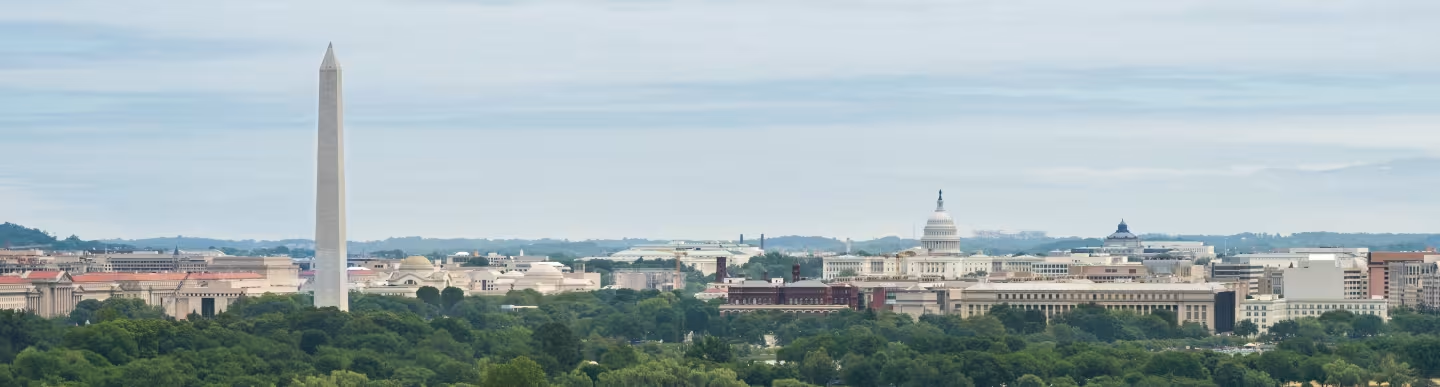
The U.S. Immigration Policy Program provides thought leadership on ways to improve the U.S. immigration system so that it works most effectively in the national interest. To that end, its work focuses on immigration pathways to the United States and immigration enforcement policies and their impacts. It examines the complex demographic, economic, social, political, foreign policy, and other forces that shape U.S. immigration.
Program staff produce data and analyses of immigration trends and the characteristics of U.S. immigrant populations, including unauthorized immigrants. And they conduct original research on the impacts of policy change and the experiences of immigrant populations in diverse parts of the country. This work is frequently informed by private convenings of policymakers and key stakeholders. For more, click here.
The Latest Research
U.S. Deportations and “Self-Deportations” in the First 18 Months of the Second Trump Term
Filling a gap amid a slowdown in official data reporting from the federal government, this analysis offers a window into deportation and "self…

Featured
Physicians in an Era of Changing Immigration Policy: The Case of Nephrology
The care of kidney disease in the United States relies heavily on international medical graduates (IMGs). Recent policy changes could deepen…

Temporary Visa Holders in the United States
The number of U.S. temporary visas plummeted during the COVID-19 pandemic, rebounded, and then fell again in fiscal year (FY) 2025. Preliminary data…

Following Years of High Border Arrivals, the U.S. Unauthorized Immigrant Population Hits New Peak
MPI estimates the U.S. unauthorized immigrant population reached a new peak of 15.8 million as of mid-2024, after holding steady at around 11 million…

More Featured Work
From Counterterrorism to Immigration Enforcement: 25 Years On, Post-9/11 U.S. Changes Have Been Repointed
Post-9/11 national security tools have been repurposed for immigration, expanding the U.S. government’s capacity for surveillance, data sharing, and…

Attacked as "De Facto Amnesty," U.S. Temporary Protected Status Is Abruptly Eroded
The Trump administration moved to terminate most of the 17 Temporary Protected Status (TPS) designations in place when its second term began,…

Though Rare, Birth Tourism to the United States Sparks Outsized Concern
While rare, birth tourism has become a central but contested justification in the Trump administration's push to end the guarantee of birthright…

Key Statistics
Learn more about immigrants and immigration to the United States
14.8%
The immigrant share of the total U.S. population
Learn how this share has evolved (opens in a new tab)50.2 million
The number of immigrants in the United States
Explore Data Profiles by State (opens in a new tab)18.4%
The share of workers in the U.S. civilian labor force who are immigrants
Get the data at U.S. and state levels (opens in a new tab)
Showing 81–90 of 824 results
Biden at the Three-Year Mark: The Most Active Immigration Presidency Yet Is Mired in Border Crisis Narrative
The Biden administration's record-setting pace of immigration actions increased legal admissions and protections, but record border encounters and a swelling backlog defined the narrative.
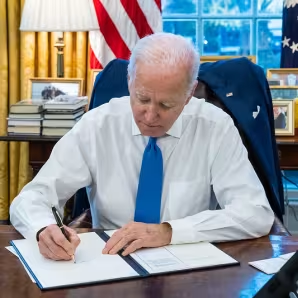
Immigrants’ Eligibility for U.S. Public Benefits: A Primer
The U.S. 1996 welfare law created a complex patchwork of eligibility for federal supports. This 2024 primer maps which categories of immigrants qualify for 13 U.S. public benefit programs and how some states extend coverage.

Shifting Realities at the U.S.-Mexico Border: Immigration Enforcement and Control in a Fast-Evolving Landscape
Nearly 2.5 million encounters at the U.S.-Mexico border in fiscal year 2023 exposed a system reacting to rather than managing realities at the border. Real control will require multiagency investment.
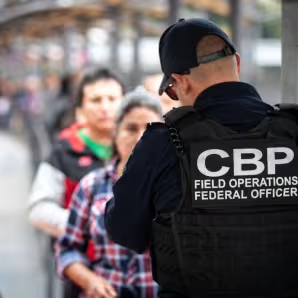
Migration at the U.S.-Mexico Border: A Challenge Decades in the Making
Today’s pressures at the U.S.-Mexico border have been decades in the making. A system built to handle Mexican seasonal migration faltered with the arrival of families and asylum seekers from across the hemisphere.
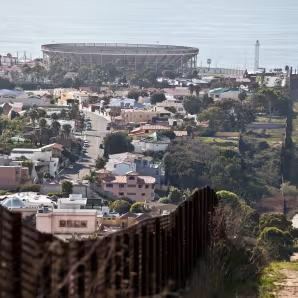
The Importance of Community Consultations in the U.S. Refugee Resettlement Network
This conversation considered the importance of community consultation in the U.S. refugee resettlement landscape in 2023, and explored actionable steps toward a more inclusive, collaborative, and adaptable process.

Antiquated U.S. Immigration System Ambles into the Digital World
Pandemic-era digital reforms gave the U.S. immigration system a long-overdue modernization boost.

Immigration and Integration in the Ever More Diverse Houston Area
Immigrants help power Houston’s economy. Yet 67,000 college-educated immigrants are underemployed and integration services lag the region’s rapid diversification.
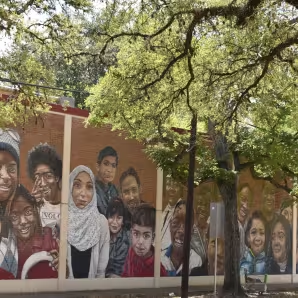
The Unmet Potential of Community Consultations in U.S. Refugee Resettlement
U.S. refugee resettlement consultations with receiving communities fall short of their potential, hampered by the narrowness of their scope and limited meaningful dialogue.

The U.S.-Mexico Border Problem Will Not Be “Solved” Until All Parts of the Border Enforcement System Are Properly Resourced
The $13.6 billion border emergency supplemental spending bill the Biden administration is seeking lays out the elements for resourcing immigration functions to full capacity across the entire border enforcement system. Without resourcing the system across all its parts, including adjudications and management, no administration, present or future, will be able to effectively manage spontaneous border arrivals, this commentary argues.
Can the Biden Immigration Playbook Be Effective for Managing Arrivals via Sea?
Caribbean maritime arrivals to the United States hit the highest levels since the 1990s; the Biden administration is betting on legal pathways and regional cooperation to curb dangerous sea crossings.


- General Inquiries
- Media Inquiries
-
Michelle Mittelstadt
202 266 1910 [email protected]