U.S. Immigration Policy Program
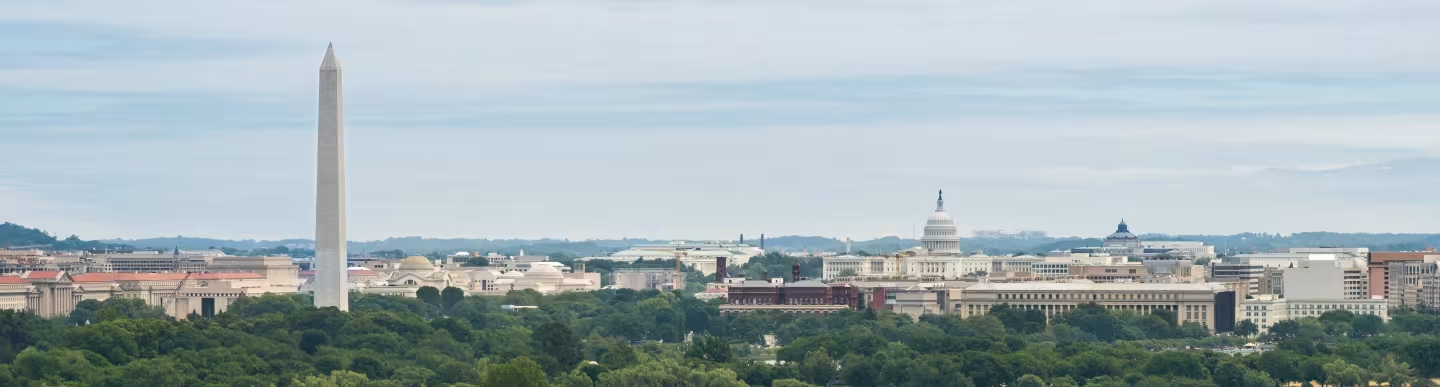
The U.S. Immigration Policy Program provides thought leadership on ways to improve the U.S. immigration system so that it works most effectively in the national interest. To that end, its work focuses on immigration pathways to the United States and immigration enforcement policies and their impacts. It examines the complex demographic, economic, social, political, foreign policy, and other forces that shape U.S. immigration.
Program staff produce data and analyses of immigration trends and the characteristics of U.S. immigrant populations, including unauthorized immigrants. And they conduct original research on the impacts of policy change and the experiences of immigrant populations in diverse parts of the country. This work is frequently informed by private convenings of policymakers and key stakeholders. For more, click here.
The Latest Research
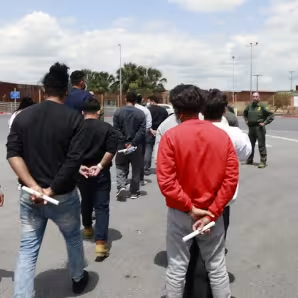
U.S. Deportations and “Self-Deportations” in the First 18 Months of the Second Trump Term
Filling a gap amid a slowdown in official data reporting from the federal government, this analysis offers a window into deportation and "self…

Featured
Physicians in an Era of Changing Immigration Policy: The Case of Nephrology
The care of kidney disease in the United States relies heavily on international medical graduates (IMGs). Recent policy changes could deepen…

Temporary Visa Holders in the United States
The number of U.S. temporary visas plummeted during the COVID-19 pandemic, rebounded, and then fell again in fiscal year (FY) 2025. Preliminary data…

Following Years of High Border Arrivals, the U.S. Unauthorized Immigrant Population Hits New Peak
MPI estimates the U.S. unauthorized immigrant population reached a new peak of 15.8 million as of mid-2024, after holding steady at around 11 million…

More Featured Work
From Counterterrorism to Immigration Enforcement: 25 Years On, Post-9/11 U.S. Changes Have Been Repointed
Post-9/11 national security tools have been repurposed for immigration, expanding the U.S. government’s capacity for surveillance, data sharing, and…

Attacked as "De Facto Amnesty," U.S. Temporary Protected Status Is Abruptly Eroded
The Trump administration moved to terminate most of the 17 Temporary Protected Status (TPS) designations in place when its second term began,…

Though Rare, Birth Tourism to the United States Sparks Outsized Concern
While rare, birth tourism has become a central but contested justification in the Trump administration's push to end the guarantee of birthright…

Key Statistics
Learn more about immigrants and immigration to the United States
14.8%
The immigrant share of the total U.S. population
Learn how this share has evolved (opens in a new tab)50.2 million
The number of immigrants in the United States
Explore Data Profiles by State (opens in a new tab)18.4%
The share of workers in the U.S. civilian labor force who are immigrants
Get the data at U.S. and state levels (opens in a new tab)
Showing 61–70 of 824 results
With New Strategies At and Beyond the U.S. Border, Migrant Encounters Plunge
Encounters of migrants at the U.S.-Mexico border for fiscal 2024 fell to 2.1 million, a 14 percent drop from the prior year as the result of the Biden administration deepening its carrot-and-stick approach alongside increased immigration enforcement throughout the Western Hemisphere, especially from Mexico. September represented the lowest monthly encounters of migrants crossing the U.S.-Mexico border without authorization seen during this administration.
21st Annual Immigration Law & Policy Conference
Featuring keynotes by IOM Director General Amy Pope, Denver Mayor Mike Johnston, and DHS Secretary Alejandro Mayorkas, this conference examined competing U.S. immigration narratives, the global smuggling economy, immigration executive orders and litigation, and more.
Despite Sharply Different Immigration Rhetoric, Democrats and Republicans Now Have a Similar Approach to the Border
Three years of record border arrivals pushed Democrats toward Republican-style enforcement rhetoric, but deep divisions between the political parties remain over deportations and legal immigration.

Noncitizen Voting in U.S. Elections
Get answers to common questions about voting by unauthorized immigrants and other noncitizens, which audits by elections officials and independent research have demonstrated is extremely rare.

After Crisis of Unprecedented Migrant Arrivals, U.S. Cities Settle into New Normal
Two years after Texas began busing migrants to U.S. interior cities, local governments had found a fragile footing, but billions in unmet costs and uncertain federal support left them vulnerable.
U.S. Legal Pathways for Mexican and Central American Immigrants, by the Numbers
Family ties, H-2 seasonal work visas, and humanitarian parole are the main U.S. legal pathways for Mexican and Central American immigrants.

Beyond the “Black Jobs” Controversy: Immigrants and U.S.-Born Black Workers Share a Growing Jobs Pie
The controversy over whether immigrants have taken "Black jobs" obscures the reality that U.S. job growth has been such that foreign-born workers' growing share of the U.S. labor market and expanded presence across industries do not appear to have occurred at the expense of U.S.-born Black workers. This commentary offers analysis of the U.S. prime-age workforce going back to 1990 by race and nativity.

Bridging the Gap between the Gig Economy and Migration Policy
Gig economy growth has outpaced migration policy. Visa frameworks built for traditional employment leave platform workers without protections or legal pathways, requiring the need to bridge the gap.

Diverse Flows Drive Increase in U.S. Unauthorized Immigrant Population
MPI estimates 11.3 million unauthorized immigrants lived in the United States as of mid-2022, up from 11.2 million a year earlier. While the country has witnessed high levels of arrivals at the U.S.-Mexico border, the unauthorized population also has been marked by significant ongoing declines in the unauthorized from Mexico and other exits, as this analysis explains.

Comparing the Biden and Trump Deportation Records
Despite an enforcement record that has surpassed that of the first Trump term, the Biden administration has relied heavily on border returns over interior removals.
- General Inquiries
- Media Inquiries
-
Michelle Mittelstadt
202 266 1910 [email protected]