U.S. Immigration Policy Program

The U.S. Immigration Policy Program provides thought leadership on ways to improve the U.S. immigration system so that it works most effectively in the national interest. To that end, its work focuses on immigration pathways to the United States and immigration enforcement policies and their impacts. It examines the complex demographic, economic, social, political, foreign policy, and other forces that shape U.S. immigration.
Program staff produce data and analyses of immigration trends and the characteristics of U.S. immigrant populations, including unauthorized immigrants. And they conduct original research on the impacts of policy change and the experiences of immigrant populations in diverse parts of the country. This work is frequently informed by private convenings of policymakers and key stakeholders. For more, click here.
The Latest Research
U.S. Deportations and “Self-Deportations” in the First 18 Months of the Second Trump Term
Filling a gap amid a slowdown in official data reporting from the federal government, this analysis offers a window into deportation and "self…

Featured
Physicians in an Era of Changing Immigration Policy: The Case of Nephrology
The care of kidney disease in the United States relies heavily on international medical graduates (IMGs). Recent policy changes could deepen…

Temporary Visa Holders in the United States
The number of U.S. temporary visas plummeted during the COVID-19 pandemic, rebounded, and then fell again in fiscal year (FY) 2025. Preliminary data…

Following Years of High Border Arrivals, the U.S. Unauthorized Immigrant Population Hits New Peak
MPI estimates the U.S. unauthorized immigrant population reached a new peak of 15.8 million as of mid-2024, after holding steady at around 11 million…

More Featured Work
From Counterterrorism to Immigration Enforcement: 25 Years On, Post-9/11 U.S. Changes Have Been Repointed
Post-9/11 national security tools have been repurposed for immigration, expanding the U.S. government’s capacity for surveillance, data sharing, and…

Attacked as "De Facto Amnesty," U.S. Temporary Protected Status Is Abruptly Eroded
The Trump administration moved to terminate most of the 17 Temporary Protected Status (TPS) designations in place when its second term began,…

Though Rare, Birth Tourism to the United States Sparks Outsized Concern
While rare, birth tourism has become a central but contested justification in the Trump administration's push to end the guarantee of birthright…

Key Statistics
Learn more about immigrants and immigration to the United States
14.8%
The immigrant share of the total U.S. population
Learn how this share has evolved (opens in a new tab)50.2 million
The number of immigrants in the United States
Explore Data Profiles by State (opens in a new tab)18.4%
The share of workers in the U.S. civilian labor force who are immigrants
Get the data at U.S. and state levels (opens in a new tab)
Showing 501–510 of 824 results
Detained or Deported: How Parents in the Immigration Enforcement System Can Protect their Children
A discussion on policies regarding immigrant parent detentions and deportations, related child protection issues, and the implications for the immigration enforcement and child welfare systems. This event is also the release of a related Women's Refugee Commission toolkit for detained or deported parents and those who work on the issue.

Dramatic Surge in the Arrival of Unaccompanied Children Has Deep Roots and No Simple Solutions
A surge of Central American unaccompanied children is straining U.S. systems.

What Is the Right Policy Toward Unaccompanied Children at U.S. Borders?
With 60,000 unaccompanied children expected at U.S. borders in fiscal year 2014, MPI outlines a multipart policy plan that balances enforcement with humanitarian protection.

The Deportation Story: Deporter-in-Chief, Releaser-in-Chief, or Reformer-in-Chief?
The release of MPI's report, examining the U.S. deportation system with analysis on migrant apprehensions, removals, and criminal prosecutions, includes discussion on the evolution of the deportation system over the past two decades and some of the leading policy options circulating as the executive branch undertakes a policy review.
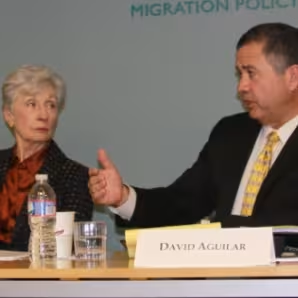
The Current Record on Deportations: What Underlies the "Eye of the Beholder" Dynamic?
A transformed enforcement system under the Obama administration has produced record deportation levels while also drawing criticism it is too lenient.
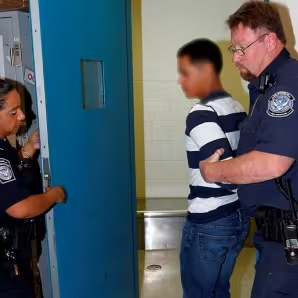
The Deportation Dilemma: Reconciling Tough and Humane Enforcement
U.S. deportation policy has generated more than 4.5 million removals since 1996, but humane enforcement and stricter immigration control remain fundamentally in tension.

Hazleton Immigration Ordinance That Began With a Bang Goes Out With a Whimper
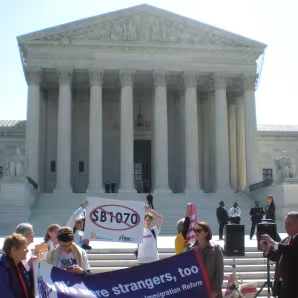
In a decision that received little notice, the Supreme Court in mid-March declined to review federal appellate decisions that struck down controversial local immigration ordinances in Hazleton, Pennsylvania, and Farmers Branch, Texas—bringing to a close a contentious chapter in immigration litigation. This article also explores President Obama’s decision to order a review of deportation policies, Chile’s admission into the Visa Waiver Program, and more.
Children on the Run: An Analysis of First-Hand Accounts from Children Fleeing Central America
This event with UN High Commissioner for Refugees António Guterres includes a discussion on the state of citizen security in Central America and the resulting humanitarian impact, featuring findings from Children on the Run, a UNHCR report based on interviews with more than 400 unaccompanied children from the region.

A Treacherous Journey: Child Migrants Navigating the U.S. Immigration System
Panelists from the Center for Gender & Refugee Studies and Kids in Need of Defense discuss their findings regarding how unaccompanied children are processed through the U.S. immigration system, along with recommendations for improvements in the process to ensure the protection of these minors.

A Transatlantic Conversation: Managing Migration in the Era of Mobility
As the 2014 Greek Presidency of the Council of the European Union works to formulate the European Union’s next five-year program, this transatlantic discussion, presented in cooperation with the Greek Embassy, explores how governments can build a comprehensive migration system that meets humanitarian obligations and nurtures economic growth and social cohesion.

- General Inquiries
- Media Inquiries
-
Michelle Mittelstadt
202 266 1910 [email protected]