U.S. Immigration Policy Program

The U.S. Immigration Policy Program provides thought leadership on ways to improve the U.S. immigration system so that it works most effectively in the national interest. To that end, its work focuses on immigration pathways to the United States and immigration enforcement policies and their impacts. It examines the complex demographic, economic, social, political, foreign policy, and other forces that shape U.S. immigration.
Program staff produce data and analyses of immigration trends and the characteristics of U.S. immigrant populations, including unauthorized immigrants. And they conduct original research on the impacts of policy change and the experiences of immigrant populations in diverse parts of the country. This work is frequently informed by private convenings of policymakers and key stakeholders. For more, click here.
The Latest Research
U.S. Deportations and “Self-Deportations” in the First 18 Months of the Second Trump Term
Filling a gap amid a slowdown in official data reporting from the federal government, this analysis offers a window into deportation and "self…

Featured
Physicians in an Era of Changing Immigration Policy: The Case of Nephrology
The care of kidney disease in the United States relies heavily on international medical graduates (IMGs). Recent policy changes could deepen…

Temporary Visa Holders in the United States
The number of U.S. temporary visas plummeted during the COVID-19 pandemic, rebounded, and then fell again in fiscal year (FY) 2025. Preliminary data…

Following Years of High Border Arrivals, the U.S. Unauthorized Immigrant Population Hits New Peak
MPI estimates the U.S. unauthorized immigrant population reached a new peak of 15.8 million as of mid-2024, after holding steady at around 11 million…

More Featured Work
From Counterterrorism to Immigration Enforcement: 25 Years On, Post-9/11 U.S. Changes Have Been Repointed
Post-9/11 national security tools have been repurposed for immigration, expanding the U.S. government’s capacity for surveillance, data sharing, and…

Attacked as "De Facto Amnesty," U.S. Temporary Protected Status Is Abruptly Eroded
The Trump administration moved to terminate most of the 17 Temporary Protected Status (TPS) designations in place when its second term began,…

Though Rare, Birth Tourism to the United States Sparks Outsized Concern
While rare, birth tourism has become a central but contested justification in the Trump administration's push to end the guarantee of birthright…

Key Statistics
Learn more about immigrants and immigration to the United States
14.8%
The immigrant share of the total U.S. population
Learn how this share has evolved (opens in a new tab)50.2 million
The number of immigrants in the United States
Explore Data Profiles by State (opens in a new tab)18.4%
The share of workers in the U.S. civilian labor force who are immigrants
Get the data at U.S. and state levels (opens in a new tab)
Showing 521–530 of 824 results
State Access to Federal Immigration Data Stirs New Controversy in Debate over Voting Rights
Iowa joined Florida and Colorado in using a federal benefits tool for voter purges, even as data revealed very few noncitizen voters.

Newcomers to the Aloha State: Challenges and Prospects for Mexicans in Hawai'i
Hawai'i's Mexican community is predominantly U.S.-born and lawfully present, yet faces disproportionate enforcement, geographic dispersal, and fragmented identity.
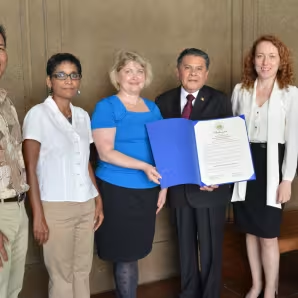
A Year In: A Review of the Deferred Action for Childhood Arrivals Program
MPI experts discussed an MPI profile of the DACA population and reflect on the policy’s success and shortcomings.

A House Divided: Divergent Views in Congress Over Immigration Reform
An online web chat with MPI's Doris Meissner and Muzaffar Chishti examining the U.S. Senate & House bills for Immigration Reform in 2013.

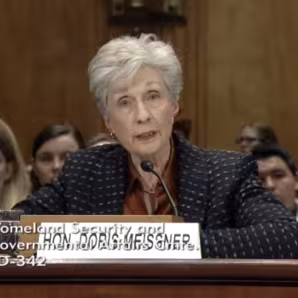
Doris Meissner Testimony Video: Border Security
Testimony of Doris Meissner, Senior Fellow and Director, U.S. Immigration Policy Program, before the Committee on Homeland Security and Governmental Affairs, U.S. Senate.
Deferred Action for Childhood Arrivals at the One-Year Mark: A Profile of Currently Eligible Youth and Applicants
One year in, the Deferred Action for Childhood Arrivals (DACA) program reached 49 percent of eligible youth, with uptake sharply divided by state, national origin, and access to education.

Pensando Regionalmente para Competir Globalmente: Aprovechar la Migración y el Capital Humano en Estados Unidos, México y Centroamérica
La reforma migratoria de EE.UU. con visas flexibles y legalización, apoyada por inversión regional en capital humano, es clave para la competitividad de toda la región.
Side-by-Side Comparison of 2013 Senate Immigration Bill with Individual 2013 House Bills
The 2013 Senate immigration bill and five targeted House bills diverged sharply on legalization, enforcement, and legal immigration structure.
Now that the Senate Has Passed Landmark Immigration Legislation, All Eyes Are on the House
Republican divisions in the U.S. House of Representatives threatened to stall the most sweeping overhaul since 1965.
Migración Mexicana a los EE.UU.: Factores Económicos Subyacentes y Posibles Escenarios de Flujos Futuros
Los flujos netos de mexicanos a EE.UU. crecerán post-crisis pero no alcanzarán los niveles de los 90; la demanda sectorial estadounidense es el principal factor explicativo.

- General Inquiries
- Media Inquiries
-
Michelle Mittelstadt
202 266 1910 [email protected]