U.S. Immigration Policy Program
The U.S. Immigration Policy Program provides thought leadership on ways to improve the U.S. immigration system so that it works most effectively in the national interest. To that end, its work focuses on immigration pathways to the United States and immigration enforcement policies and their impacts. It examines the complex demographic, economic, social, political, foreign policy, and other forces that shape U.S. immigration.
Program staff produce data and analyses of immigration trends and the characteristics of U.S. immigrant populations, including unauthorized immigrants. And they conduct original research on the impacts of policy change and the experiences of immigrant populations in diverse parts of the country. This work is frequently informed by private convenings of policymakers and key stakeholders. For more, click here.
The Latest Research
U.S. Deportations and “Self-Deportations” in the First 18 Months of the Second Trump Term
Filling a gap amid a slowdown in official data reporting from the federal government, this analysis offers a window into deportation and "self…

Featured
Physicians in an Era of Changing Immigration Policy: The Case of Nephrology
The care of kidney disease in the United States relies heavily on international medical graduates (IMGs). Recent policy changes could deepen…

Temporary Visa Holders in the United States
The number of U.S. temporary visas plummeted during the COVID-19 pandemic, rebounded, and then fell again in fiscal year (FY) 2025. Preliminary data…

Following Years of High Border Arrivals, the U.S. Unauthorized Immigrant Population Hits New Peak
MPI estimates the U.S. unauthorized immigrant population reached a new peak of 15.8 million as of mid-2024, after holding steady at around 11 million…

More Featured Work
From Counterterrorism to Immigration Enforcement: 25 Years On, Post-9/11 U.S. Changes Have Been Repointed
Post-9/11 national security tools have been repurposed for immigration, expanding the U.S. government’s capacity for surveillance, data sharing, and…

Attacked as "De Facto Amnesty," U.S. Temporary Protected Status Is Abruptly Eroded
The Trump administration moved to terminate most of the 17 Temporary Protected Status (TPS) designations in place when its second term began,…

Though Rare, Birth Tourism to the United States Sparks Outsized Concern
While rare, birth tourism has become a central but contested justification in the Trump administration's push to end the guarantee of birthright…

Key Statistics
Learn more about immigrants and immigration to the United States
14.8%
The immigrant share of the total U.S. population
Learn how this share has evolved (opens in a new tab)50.2 million
The number of immigrants in the United States
Explore Data Profiles by State (opens in a new tab)18.4%
The share of workers in the U.S. civilian labor force who are immigrants
Get the data at U.S. and state levels (opens in a new tab)
Showing 301–310 of 824 results
Immigrant-Origin Adults without Postsecondary Credentials: A 50-State Profile
A 50-state profile finds 30 million immigrant-origin adults lacked postsecondary credentials in 2017, with English proficiency and legal status key upskilling barriers.
A New Migration Policy for A New Era: A Conversation with Mexico's Interior Secretary Olga Sánchez Cordero
On her first official trip to Washington, DC in the government of Mexican President Andrés Manuel López Obrador, who took office on November 30, Interior Secretary Olga Sánchez Cordero offers remarks on Mexico’s new approach to migration policy.
Executive Power Showdown: Congress and White House Quarrel over Immigration Spending
A standoff over immigration spending in 2019 pit Congress against the White House, reshaping the boundaries of executive enforcement authority.

The Travel Ban at Two: Rocky Implementation Settles into Deeper Impacts
Two years on, the Trump first-term travel ban cut monthly immigrant visas to five banned countries and collapsed refugee admissions.

Promising Strategies for Reintegration of Migrants Returning to Mexico and Central America
Authors of a year-long study of reception and reintegration services in Mexico and the Northern Triangle discuss the findings of their fieldwork, including the differing reintegration needs of individual migrant groups, promising reception and reintegration programs, ongoing challenges for origin communities, and policy recommendations to improve reintegration strategies.

Sustainable Reintegration: Strategies to Support Migrants Returning to Mexico and Central America
Mexico and Central American countries expanded reintegration services for returning migrants after 2015, but limitations in coverage, resources, and coordination persist.

A Wall Cannot Fix Problems at Border; Smart Solutions for Asylum Crisis Can
Rather than spend $5.7 billion on a wall, it would be far more effective to use the money to retool an overwhelmed U.S. asylum system and tackle the factors propelling Central Americans to flee.
Creativity amid Crisis: Legal Pathways for Venezuelan Migrants in Latin America
With more than 3 million Venezuelans living abroad as of late 2018, Latin American countries have improvised creative legal pathways but must now plan for the long term.
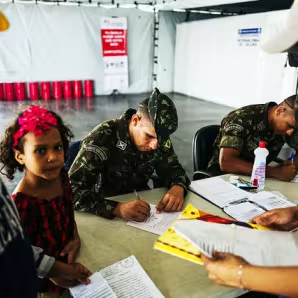
Creatividad dentro de la crisis: opciones legales para migrantes venezolanos en América Latina
Con más de 3 millones de venezolanos en el extranjero a fines de 2018, los países de América Latina han improvisado vías legales creativas, pero deben planificar a largo plazo.
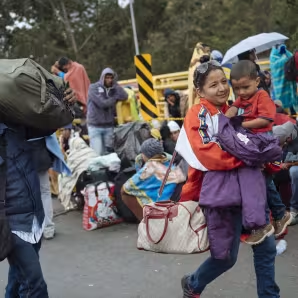
Exploring the Potential of Two-Generation Strategies in Refugee Integration
At a time when the U.S. refugee resettlement program is facing an extraordinary set of pressures and challenges, MPI experts and state refugee coordinators from Utah and Colorado discuss findings from an MPI report that points to the promise of using a two-generation approach to strengthen refugee integration in the United States.


- General Inquiries
- Media Inquiries
-
Michelle Mittelstadt
202 266 1910 [email protected]