Sustainable Reintegration: Strategies to Support Migrants Returning to Mexico and Central America
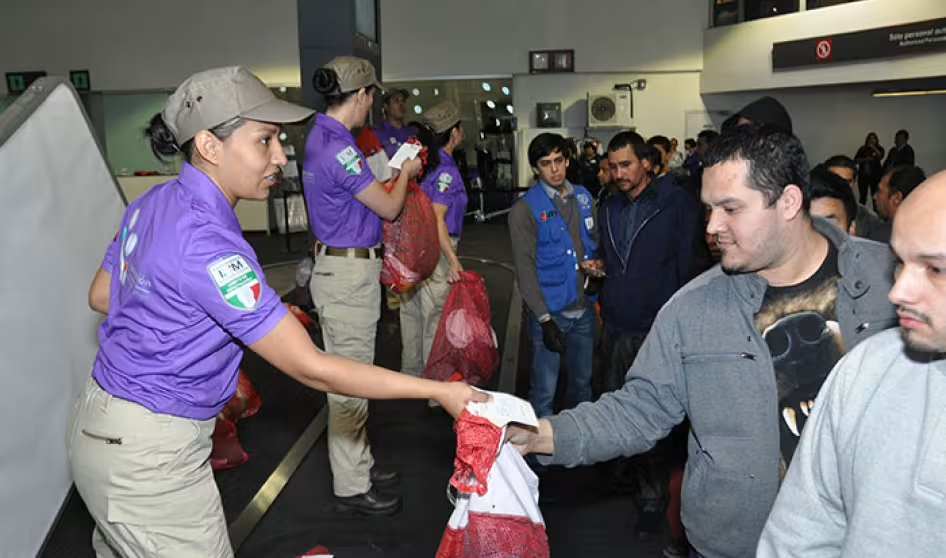
Mexico and Central American countries expanded reintegration services for returning migrants after 2015, but limitations in coverage, resources, and coordination persist.
As U.S. deportations to Mexico continue at substantial levels and the numbers returned by both the U.S. and Mexican governments to El Salvador, Guatemala, and Honduras are increasing, it has become more urgent for countries in the region to develop successful reception and reintegration programs that meet the diverse needs of returning migrants.
Between fiscal years 2012-18, the United States carried out approximately 1.8 million repatriations of Mexican migrants, and the United States and Mexico together accomplished 1.4 million returns of migrants from the three Northern Triangle countries.
Drawing on fieldwork and interviews with government officials, researchers, representatives of civil-society and international organizations, as well as returning migrants, this report highlights promising reintegration strategies and pressing challenges. Mexico and the three Northern Triangle countries exhibit different levels of capacity and degrees of implementation in their reception and reintegration programs. While most deported migrants now receive basic reception services, their access to reintegration services is somewhat more mixed. Among the challenges: Difficulty obtaining the official ID that allows returning migrants to access these services, limited awareness and geographic distribution of services, difficulty matching returning migrants’ skills with labor-market needs, and barriers to reintegration posed by social stigmatization and employment discrimination.
The report offers a range of recommendations to governments and others, including: Prepare migrants for reintegration prior to their return, even before deportation; issue primary ID documents from abroad or upon reception; and ensure reintegration services tap into returning migrants' cultural roots. Improving reception and reintegration services represents a long-term investment for both destination and origin countries, the authors conclude, holding the potential to reduce re-migration while enabling countries of origin to benefit from the skills and assets migrants have acquired abroad.
Table of Contents
I. Introduction
II. Shifting Migration Trends
III. Understanding Reception and Reintegration Service Needs
IV. Reception and Reintegration Services in Mexico, El Salvador, Guatemala, and Honduras
A. Mexico
B. El Salvador
C. Guatemala
D. Honduras
V. Common Challenges Facing Returning Migrants and Policy Opportunities to Better Serve Them
A. Common Challenges
B. Policy Opportunities
VI. Conclusion
Latin America and Caribbean Initiative
The Initiative combines rigorous research with direct engagement of governments, institutions, and stakeholders to help build orderly, rights-respecting migration systems across one of the world's most dynamic migration regions.
About the U.S. Immigration Policy Program
The U.S. Immigration Policy Program provides analysis of U.S. immigration pathways, the impacts of enforcement and other policies, and the characteristics of immigrant populations.



Related Content