U.S. Immigration Policy Program
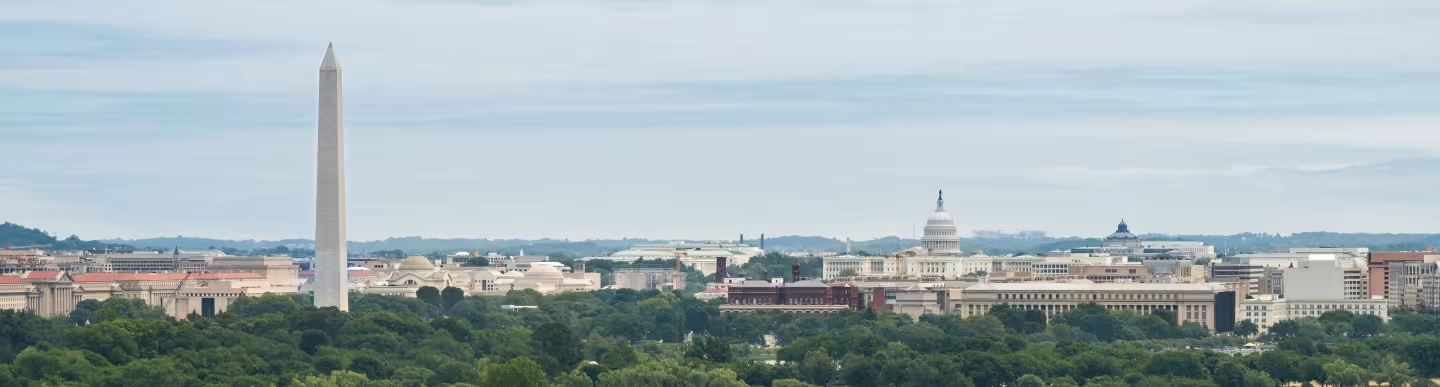
The U.S. Immigration Policy Program provides thought leadership on ways to improve the U.S. immigration system so that it works most effectively in the national interest. To that end, its work focuses on immigration pathways to the United States and immigration enforcement policies and their impacts. It examines the complex demographic, economic, social, political, foreign policy, and other forces that shape U.S. immigration.
Program staff produce data and analyses of immigration trends and the characteristics of U.S. immigrant populations, including unauthorized immigrants. And they conduct original research on the impacts of policy change and the experiences of immigrant populations in diverse parts of the country. This work is frequently informed by private convenings of policymakers and key stakeholders. For more, click here.
The Latest Research
U.S. Deportations and “Self-Deportations” in the First 18 Months of the Second Trump Term
Filling a gap amid a slowdown in official data reporting from the federal government, this analysis offers a window into deportation and "self…

Featured
Physicians in an Era of Changing Immigration Policy: The Case of Nephrology
The care of kidney disease in the United States relies heavily on international medical graduates (IMGs). Recent policy changes could deepen…

Temporary Visa Holders in the United States
The number of U.S. temporary visas plummeted during the COVID-19 pandemic, rebounded, and then fell again in fiscal year (FY) 2025. Preliminary data…

Following Years of High Border Arrivals, the U.S. Unauthorized Immigrant Population Hits New Peak
MPI estimates the U.S. unauthorized immigrant population reached a new peak of 15.8 million as of mid-2024, after holding steady at around 11 million…

More Featured Work
From Counterterrorism to Immigration Enforcement: 25 Years On, Post-9/11 U.S. Changes Have Been Repointed
Post-9/11 national security tools have been repurposed for immigration, expanding the U.S. government’s capacity for surveillance, data sharing, and…

Attacked as "De Facto Amnesty," U.S. Temporary Protected Status Is Abruptly Eroded
The Trump administration moved to terminate most of the 17 Temporary Protected Status (TPS) designations in place when its second term began,…

Though Rare, Birth Tourism to the United States Sparks Outsized Concern
While rare, birth tourism has become a central but contested justification in the Trump administration's push to end the guarantee of birthright…

Key Statistics
Learn more about immigrants and immigration to the United States
14.8%
The immigrant share of the total U.S. population
Learn how this share has evolved (opens in a new tab)50.2 million
The number of immigrants in the United States
Explore Data Profiles by State (opens in a new tab)18.4%
The share of workers in the U.S. civilian labor force who are immigrants
Get the data at U.S. and state levels (opens in a new tab)
Showing 191–200 of 824 results
Border Déjà Vu: Biden Confronts Similar Challenges as His Predecessors
A record surge of unaccompanied minors at the U.S. border in early 2021 exposed the Biden administration's lack of preparation and reliance on the same responses that stymied its predecessors.
American Dream and Promise Act of 2021: Who Is Potentially Eligible?
These MPI estimates offer insight into how proposed legislation could affect different populations.

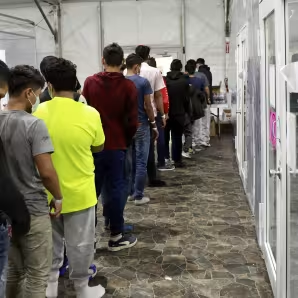
Hampered by the Pandemic: Unaccompanied Child Arrivals Increase as Earlier Preparedness Shortfalls Limit the Response
The increase in unaccompanied child arrivals at the U.S.-Mexico border in February and March has led to backups and overcrowding at U.S. Customs and Border Protection facilities ill-suited to house children, in part due to earlier significant reductions in Office of Refugee Resettlement shelter capacity during 2020. This commentary explores preparedness shortfalls and the options the Biden administration has moving forward.
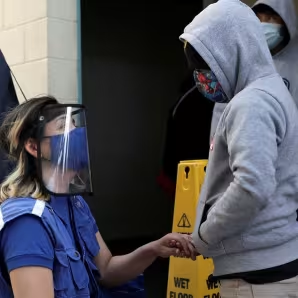
Legal Snags and Possible Increases in Border Arrivals Complicate Biden’s Immigration Agenda
Legal challenges, rising border arrivals, and other issues have complicated the Biden administration's early efforts to redirect immigration enforcement and asylum processing.
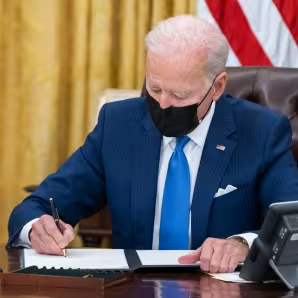
Prospects for a U.S. Legalization Program and the Unauthorized Immigrant Groups that Could Factor in the Debate
In light of President Biden's call on Congress to enact a sweeping immigration proposal that offers most unauthorized immigrants a pathway to citizenship, this discussion takes stock of various legalization options; unveils MPI estimates of subgroups within the unauthorized population, including DREAMers and essential workers; and examines the prospects of bipartisan support for any legislative efforts at immigration reform.
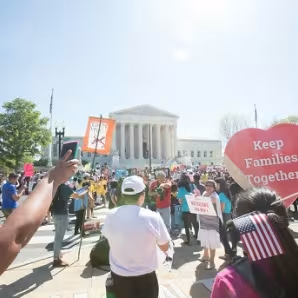
MPI Estimates of Potential Beneficiaries under the DREAM Act of 2021
These estimates provide a sense of the unauthorized populations that could potentially gain legal status under this bill.
A Deeper Look at the DREAMers Who Could Feature in the Legalization Debate in Congress
The DREAM Act of 2021 could represent one of the narrower legalization measures with better prospects for passage in a narrowly divided Congress. MPI's latest estimates of the DREAMers who could gain conditional and then permanent legal status are offered here, as are the share of DREAMers who feature in another ongoing conversation, around essential workers in the U.S. labor market overall as well as in the health-care sector.

Back on the Table: U.S. Legalization and the Unauthorized Immigrant Groups that Could Factor in the Debate
With 11 million unauthorized immigrants embedded in U.S. communities, there are legislative and executive options for policymakers to consider to offer durable legal status.
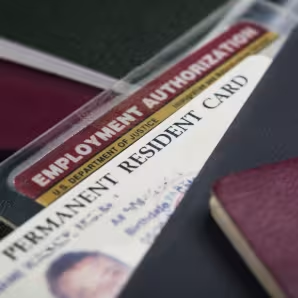
Biden Administration Is Making Quick Progress on Asylum, but a Long, Complicated Road Lies Ahead
The Biden administration's challenge to dismantle Trump-era barriers to asylum at the U.S.-Mexico border is akin to fixing a plane while flying it. This commentary examines actions taken to date and articulates a series of steps that could help establish an effective, humane asylum system that works in tandem with border management goals and efforts to reduce the drivers of migration through regional migration management measures with neighboring countries.
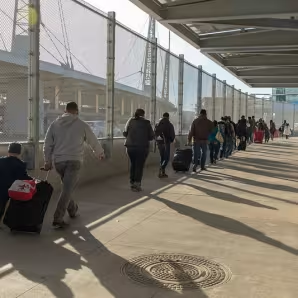
Biden Sets the Stage for a Remarkably Active First 100 Days on Immigration
President Joe Biden's first 100 days in office brought sweeping immigration executive actions, but thin Senate margins and competing crises pose steep hurdles to legislative progress.
- General Inquiries
- Media Inquiries
-
Michelle Mittelstadt
202 266 1910 [email protected]