Human Services Initiative
The Human Services Initiative produced research, policy analysis, and technical assistance to inform U.S. federal, state, and local policies on immigration issues affecting children, families, and health and human services. Its work spanned three core areas: strengthening refugee resettlement services with attention to underserved groups such as women, children, and individuals with disabilities; analyzing policies and programs for unaccompanied minors in custody, in communities, and upon return to their countries of origin; and examining legal and policy frameworks governing immigrants' eligibility for public benefits such as Medicaid and SNAP, while addressing barriers to access for asylees, children of immigrants, and other eligible groups.
Keep Up with the Latest
Showing 1–10 of 40 results
Immigrants’ Eligibility for U.S. Public Benefits: A Primer
The U.S. 1996 welfare law created a complex patchwork of eligibility for federal supports. This 2024 primer maps which categories of immigrants qualify for 13 U.S. public benefit programs and how some states extend coverage.

The Unmet Potential of Community Consultations in U.S. Refugee Resettlement
U.S. refugee resettlement consultations with receiving communities fall short of their potential, hampered by the narrowness of their scope and limited meaningful dialogue.

Understanding Poverty Declines among Immigrants and Their Children in the United States
Immigrant poverty in the United States fell 36 percent between 2009 and 2021, driven by economic recovery, a wider safety net, and pandemic aid that reached many noncitizen families.

Strengthening Medical and Mental Health Services for Unaccompanied Children in U.S. Communities
This conversation examined unaccompanied children’s access to medical and mental health services post-release and offered recommendations for improvements.

A Path to Meeting the Medical and Mental Health Needs of Unaccompanied Children in U.S. Communities
Unaccompanied children in U.S. communities carry high burdens of trauma and illness, yet fragmented systems and access barriers leave major health needs unmet.

SNAP Access and Participation in U.S.-Born and Immigrant Households: A Data Profile
Post-1996 federal welfare rules bar many lawfully present immigrants from SNAP. In 2019, many of the 13 million people in low-income immigrant households faced limited or no access to food assistance.

Four Strategies to Improve Community Services for Unaccompanied Children in the United States
Coordination, school-based hubs, interdisciplinary care, and a skilled workforce are four key strategies to improve post-release services for unaccompanied children.

A Profile of Low-Income Immigrants in the United States
In 2019, nearly 15 million U.S. immigrants were low income and had higher uninsured rates and lower public benefits use than their U.S.-born counterparts at similar income levels.
The Public-Charge Final Rule Is Far from the Last Word
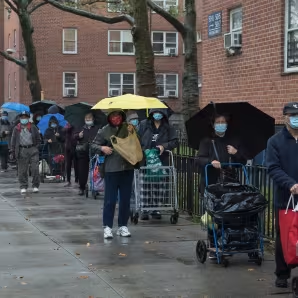
The Biden administration public-charge final rule undoes deep restrictions imposed during the Trump era, codifying much of the policy in place from 1999 to 2019. Yet confusion and fear over triggering negative immigration consequences will continue to keep many immigrants and their U.S.-born relatives from accessing benefits and services for which they are eligible absent a robust educational campaign, this commentary explains.

The Missing Link: Connecting Eligible Asylees and Asylum Seekers with Benefits and Services
Asylees are eligible for many U.S. refugee-equivalent benefits but lack systems to connect them. Weak outreach and fragmented data leave many underserved.
