Human Services Initiative
The Human Services Initiative produced research, policy analysis, and technical assistance to inform U.S. federal, state, and local policies on immigration issues affecting children, families, and health and human services. Its work spanned three core areas: strengthening refugee resettlement services with attention to underserved groups such as women, children, and individuals with disabilities; analyzing policies and programs for unaccompanied minors in custody, in communities, and upon return to their countries of origin; and examining legal and policy frameworks governing immigrants' eligibility for public benefits such as Medicaid and SNAP, while addressing barriers to access for asylees, children of immigrants, and other eligible groups.
Keep Up with the Latest
Showing 11–20 of 40 results
Immigrant Children’s Medicaid and CHIP Access and Participation: A Data Profile
In 2019, 40 percent of income-eligible immigrant children were barred from Medicaid and CHIP, and even eligible children enrolled at much lower rates.

Bridging the Digital Divide for U.S. Children in Immigrant Families
Taking stock of lessons learned about remote learning during the pandemic, this webinar examined how governments, schools, and service providers can advance digital equity for children in immigrant families.

Advancing Digital Equity among Immigrant-Origin Youth
This report examines digital equity barriers facing immigrant-origin youth in the United States and offers recommendations to help schools and policymakers close technology gaps.

Relaunching the Central American Minors Program: Opportunities to Enhance Child Safety and Family Reunification
The Central American Minors Program relaunch in 2021 expanded family reunification access. But it needs dedicated funding, simpler processing, and stronger integration support to succeed.

El relanzamiento del Programa de Menores Centroamericanos: Oportunidades para realzar la protección infantil y la reunificación familiar
El relanzamiento del Programa para Menores Centroamericanos en 2021 expandió el acceso a la reunificación familiar, pero aún requiere más financiamiento localizado, procesamientos más sencillos y mayor apoyo a la integración.

How the Child Welfare System Can Better Respond to Needs of Children from Immigrant Families
One out of four U.S. children has an immigrant parent. Explore the intersections between immigration and child welfare systems, along with promising local practices that child welfare agencies can take to improve their interactions with these families.

Medicaid Access and Participation: A Data Profile of Eligible and Ineligible Immigrant Adults
In 2019, 4.3 million income-eligible immigrants were barred from Medicaid by status restrictions, with wide state variation in eligibility and participation.

Different Statuses, Different Benefits: Determining Federal Assistance for Afghan Evacuees
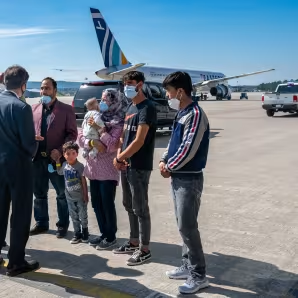
Afghans evacuated to the United States are entering with a range of legal statuses, with important implications for their ability to access benefits and services that will help them settle into their new communities. This commentary outlines the different statuses and resulting consequences for eligibility for assistance, based on whether the arrivals are recognized as refugees, Special Immigrant Visa (SIV) recipients, or parolees.
Supporting Unaccompanied Children in the U.S. Communities Where They Live
Featuring findings from a recent MPI report, speakers examined the process of releasing unaccompanied children to sponsors, the current structure of federal post-release services, and the most significant needs these children and their U.S. sponsors experience. The discussion also explored efforts by philanthropic, state, and local actors to address the needs of this population and their communities, what service gaps exist, and key recommendations to improve access to services.

Strengthening Services for Unaccompanied Children in U.S. Communities
Tens of thousands of unaccompanied children arrive in U.S. communities each year with critical legal and service needs that local systems are ill-equipped to meet.