Research


Explore All Research
Showing 111–120 of 1123 results
Diverse Flows Drive Increase in U.S. Unauthorized Immigrant Population
MPI estimates 11.3 million unauthorized immigrants lived in the United States as of mid-2022, up from 11.2 million a year earlier. While the country has witnessed high levels of arrivals at the U.S.-Mexico border, the unauthorized population also has been marked by significant ongoing declines in the unauthorized from Mexico and other exits, as this analysis explains.

Rocking the (Small) Boat: Novel Options to Tackle Irregular Migration to the United Kingdom
With UK voters headed to the polls on July 4, one thing is clear: Whatever party wins the election will face the ongoing challenges of addressing irregular arrivals by boat and growing asylum claims. But this could also be an opportunity for novel policy approaches and collaboration with international partners in Europe and beyond, this commentary argues.

Leveraging Digital Skills: Immigrant-Origin High School Graduates Offer a Pool of Talent for U.S. Employers
With immigrants and their U.S.-born children expected to drive all net growth in the future labor force, there is a significant opportunity to leverage the digital skills of immigrant-origin adults to meet growing employer demand for technologically adept workers. This commentary draws on analysis of PIAAC data to study the skills of U.S. adults by immigrant generation.

Building on Regular Pathways to Address Migration Pressures in the Americas
Despite a rich history of regular immigration pathways, the Americas still struggle with irregular migration. Hemispheric cooperation and reformed mobility agreements are needed.

Construyendo vías regulares para abordar presiones migratorias en el hemisferio occidental
A pesar de una rica historia de vías regulares, el hemisferio sigue luchando con la migración irregular. Se necesitan cooperación hemisférica y acuerdos reformados.
Expanding Language Access in Federally Supported Programs: Practical Solutions for Persistent Problems
Despite federal civil-rights obligations, language access in federally funded programs remains deeply uneven, leaving Limited English Proficient (LEP) residents underserved.

Translating Principles into Action: Countries Set New Agenda on the Los Angeles Declaration’s Second Anniversary
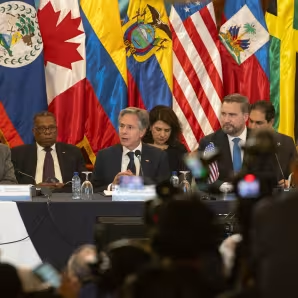
Two years after signing the Los Angeles Declaration on Migration and Protection, governments from across the Americas met in Guatemala to assess the state of cooperation in the hemisphere. Working with nongovernmental and international organizations, they also produced an agenda for practical action for the next year, as this commentary explains.
De los principios a la acción: una nueva agenda para el segundo aniversario de la Declaración de Los Ángeles
Dos años después de la firma de La Declaración de Los Ángeles sobre Migración y Protección, los gobiernos de a través de las Américas se reunieron en Guatemala para analizar el estado de cooperación en el hemisferio. Organizaciones no gubernamentales e internacionales produjeron una agenda de acción práctica para el próximo año. Se explica en este comentario.
Supporting Immigrant and Refugee Families through Infant and Early Childhood Mental Health Services
Immigrant and refugee children face major barriers to mental health services, with screening gaps, insurance disparities, and a shortage of culturally responsive care.

Supporting Self-Sufficiency: Considerations for refugees’ transition out of sponsorship and complementary pathways programmes
Refugees transitioning out of volunteer-based sponsorship programmes face mismatched expectations and structural gaps that undermine their long-term self-sufficiency.
