Asia & the Pacific
All Content
Showing 351–360 of 394 results
Tajikistan: From Refugee Sender to Labor Exporter
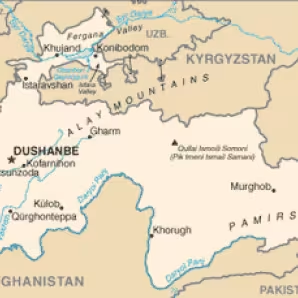
After its 1990s civil war, Tajikistan became a leading per capita labor exporter; about 600,000 Tajiks leave annually, with remittances representing up to 50 percent of GDP.
Characteristics of the Asian Born in the United States in 2000
As of 2000, the 8.2 million immigrants from Asia made up 26 percent of the U.S. foreign-born population.

On the Beach: Racial Confrontation in Australia
The December 2005 Cronulla riots, in which 5,000 youths attacked Australians of largely Lebanese backgrounds at a Sydney beach, laid bare tensions over multiculturalism and national identity.
The New 'Boat People': Ensuring Safety and Determining Status
This report examines the approaches to interception and rescue of “boat people,” and evaluates their distinct humanitarian needs as well as possible solutions to maritime migration.
The Philippines' Culture of Migration
As of December 2004, 8.1 million Filipinos were in close to 200 countries; remittances reached $8.5 billion in 2004, making labor migration a cornerstone of the Philippines' economy.
Migration Issues: Ones to Watch
Three migration trends to watch in 2006: Turkey's EU bid, rising government use of detention and deportation, and diaspora political influence in home-country elections.
Georgia Looks West, But Faces Migration Challenges at Home
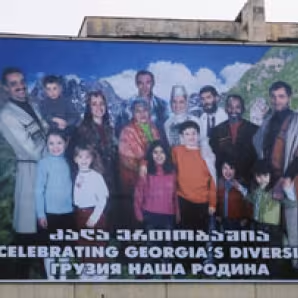
Post-Rose Revolution Georgia faces intertwined migration challenges.
Assessing the Tsunami's Effects on Migration
The December 2004 tsunami reshaped migration in Asia, leaving unauthorized workers without aid, mobilizing diaspora support, and halting deportations to affected nations.
Nepal's Dependence on Exporting Labor
Labor migration has become central to Nepal's economy.
The Foreign-Born Hmong in the United States
More than 15,000 Hmong refugees began resettling in the United States in 2004, joining roughly 103,000 foreign-born Hmong in California, Minnesota, and Wisconsin.