Asia & the Pacific
All Content
Showing 341–350 of 394 results
Protecting Overseas Workers: Lessons and Cautions from the Philippines
An ambitious overseas worker protection system in the Philippines expands safeguards for migrants but also entails risks related to weak oversight, and fee-based financing.

Leveraging Remittances for Development
Remittances to developing countries finance education, health, and small business while reducing poverty. Policies seeking to reduce transfer costs would promote these outcomes.
The Phenomenal Rise in Remittances to India: A Closer Look
India's remittances surged between 1990 and 2005 as economic liberalization and a growing high-skilled diaspora shifted flows from informal to formal channels.
Circular Migration and Development: Trends, Policy Routes, and Ways Forward
Circular migration policies fall short of achieving development goals. Success requires voluntary return, investment-friendly origin countries, and private-sector engagement.
Indonesia's Labor Looks Abroad
In 2006, Indonesia had 2.7 million workers abroad, many of them women in domestic roles.
The Rise in Remittances to India: A Closer Look
India was the world's top remittance recipient in 2005, drawing $24.6 billion.
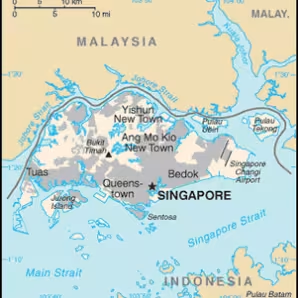
Singapore: Hungry for Foreign Workers at All Skill Levels
Singapore maintained a two-tiered foreign worker system in 2006, keeping lower-skilled migrants transient while recruiting highly skilled talent.
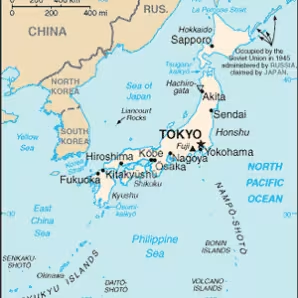
Japanese Immigration Policy: Responding to Conflicting Pressures
Balancing demographic decline and security fears, Japan relies on indirect immigration channels while officially refusing to accept unskilled foreign labor.
From A Zero-Sum to a Win-Win Scenario? Literature Review on Circular Migration
Circular migration holds real development potential, but realizing win-win outcomes depends on conditions that research has only begun to map.
Remittances and Development: Trends, Impacts, and Policy Options, A Review of the Literature
Remittances show real development promise, but critical knowledge gaps persist, including basic questions such as who remits, in what quantities, and through which channels.