Asia & the Pacific
All Content
Showing 331–340 of 394 results
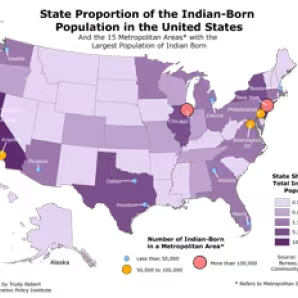
Indian Immigrants in the United States
In 2006, nearly three-quarters of Indian-born adults in the United States held a bachelor's degree or higher.
Hometown Associations: An Untapped Resource for Immigrant Integration?
Hometown associations connect origin and destination communities and could strengthen immigrant integration if their capacity is supported.

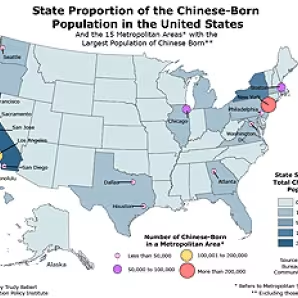
Chinese Immigrants in the United States in 2006
In 2006, Chinese-born immigrants were the largest asylee group in the United States.
Dual Citizenship in the Age of Mobility
More than half of all countries globally now tolerate dual citizenship, which authors argue can boost naturalization, broaden participation, and support immigrant integration.
Spotlight on the Foreign Born of Pakistani Origin in the United States in 2006
In 2006, Pakistani-origin immigrants in the United States were highly educated, widely naturalized, and clustered in a few states, metro areas, and skilled jobs.
North Korea: Understanding Migration to and from a Closed Country
North Korea’s refugee outflows, labor exports, and tightly managed inter-Korean exchanges reveal a closed state cautiously testing migration and economic openings.
The Proposed European Blue Card System: Arming for the Global War for Talent?
The European Union’s Blue Card proposal exposes tensions between common rules, national control, and the deeper reforms needed to attract highly skilled workers.
South Korea Opens Its Arms
Once proud of its homogeneity, South Korea began pivoting in 2007 and declared itself "the leader of embracing foreigners.”
Testing Immigrants — Literally
Multiple countries raised or imposed language and civics requirements in 2007, all in the name of integration.
Language Policies and Practices for Helping Immigrants and Second-Generation Students Succeed
Analysis of 14 immigrant-receiving countries shows that sustained language education support can substantially narrow immigrant student achievement gaps.