Managing the Pandemic and Its Aftermath: Economies, Jobs, and International Migration in the Age of COVID-19
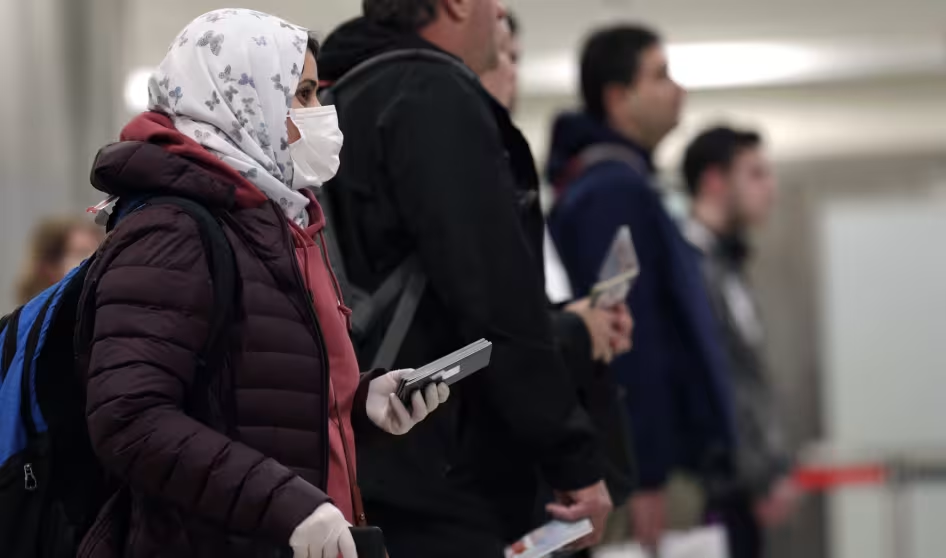
Global migration fell 46 percent in the first half of 2020. This report examines the COVID-19 pandemic's economic toll on migration systems and paths toward recovery.
The COVID-19 pandemic’s immediate costs, measured in lives lost and damaged, have been appalling and continue to rise. In addition, its effects on individuals’ livelihoods and economies around the world have been deep and are likely to be long lasting. While saving lives was the near-exclusive focus during the first phase of the crisis, governments are now trying to strike a delicate balance between preventing further economic damage by reopening parts of their economies, while managing the obvious health risks of doing so.
In the international mobility and migration arenas—policy areas enormously affected by the health and economic effects of the pandemic—this reflection considers both how these fields have fared thus far and the challenges that lay ahead. It first examines how measures put in place to stop the spread of the virus have affected family, labor, and humanitarian migration. It then highlights the thorny questions, as well as some opportunities, policymakers will face going forward.
Among the critical questions: How will countries protect those most vulnerable to the disease and to economic precariousness? Will this become a moment in which governments seek to recalibrate the global trading system, aiming to increase economic self-reliance without falling into protectionism? And will the pandemic prompt countries to rethink aspects of their immigration systems, including how they screen arrivals, the number and types of foreign workers admitted, and the strategies for helping newcomers integrate into a new society?
Table of Contents
1 Introduction
2 The Challenge of a Lifetime
Economic Carnage: An Initial Exploration of COVID-19’s Economic Impacts
3 COVID-19’s Impact on Key Components of Migration and Mobility Systems
A. Reopening Family and Labor Migration Channels?
B. Reopening Humanitarian Migration Channels?
4 Peering around the Corner: Radical Transformation or a Continuation of Pre-Pandemic Migration Practices?
Balancing Acts: Managing Both COVID-19 and Its Economic Consequences
5 Realigning Economic Relationships in the Post-Pandemic Era
A. Increasing Economic Self-Reliance While…
B. … Avoiding the Protectionism Trap
6 “Opportunities”: From Protecting Lives at All Costs to Managing Both the Pandemic and the Economic Devastation
A. Beginning to Rethink Migration Systems
B. Managing Borders in the Post-Pandemic World
C. Reexamining the Dependence on Foreign Workers
D. Reforming Immigrant-Dense, Low-Wage Labor Markets
E. Immigrant Integration
F. All Hands on Deck for the Recovery Effort
G. “Doing Well by Doing Good”
7 Reflections and Interim Lessons Learned
8 Conclusion
About the Transatlantic Council on Migration
Through rigorous research, high-level convenings, and tailored policy advice, the Council provides policymakers with essential analysis and cutting-edge policy recommendations to help tackle the most vexing policy questions.
About the Global Program
The Global Program bridges policy advice, research, and candid dialogue to design effective migration policies, drawing on global evidence and anticipating the forces reshaping how people move.


Related Content