Brain Waste among U.S. Immigrants with Health Degrees: A Multi-State Profile

Related Content
Highlights
Some 263,000 immigrants with health degrees are underutilized due to licensing barriers—an untapped U.S. workforce that could help address COVID-19-era health-care shortages.
- Some 263,000 U.S. immigrants with undergraduate health degrees are underutilized—working in lower-skilled jobs or unemployed—due to credential-recognition barriers, limited English proficiency, and other obstacles.
- These professionals are widely distributed across the country; nearly two-thirds are English proficient, and more than 80 percent are legally present in the United States.
- Nursing is the most common degree among underutilized immigrant health professionals (46 percent nationally), with high underutilization rates in Utah (43 percent), Hawaii (37 percent), and North Carolina (34 percent).
- Immigrants’ linguistic and cultural skills are particularly valuable during COVID-19; easing licensing barriers could expand the health workforce.
The coronavirus pandemic that swept into communities across the United States beginning in Spring 2020 has placed enormous strain on health-care systems and highlighted the work of both U.S.- and foreign-born health professionals. But even as the need for testing, treatment, and care is high, an estimated 263,000 immigrants and refugees with at least a four-year degree in a health field have largely been sidelined, either employed in jobs that require no more than a high school diploma or out of work.
This fact sheet offers the first state-level profile of this untapped pool of immigrant health professionals. Using data from the U.S. Census Bureau and U.S. Department of Labor, it provides estimates of the number and key characteristics of underutilized immigrants with health degrees, including their English proficiency, the other languages they speak, their top fields of study, and the legal statuses they hold.
Among the key findings of this analysis are that these immigrants are widely distributed across the United States, not concentrated in traditional immigrant-gateway states. There is also considerable overlap between the languages other than English that they speak and those spoken by Limited English Proficient populations in the states where they live, making them a potentially valuable resource in providing linguistically and culturally competent care.
U.S. and State Data
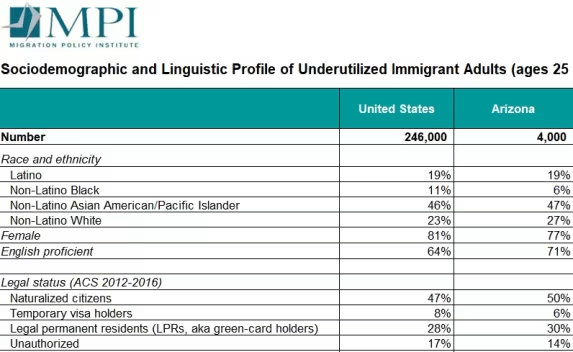
This spreadsheet offers estimates of immigrants and refugees with health-related undergraduate degrees who are underemployed or unemployed, both nationwide and in selected states. It includes details on their race/ethnicity, legal status, degree majors, origin countries, and the languages other than English that they speak. Click here.
Table of Contents
1 Introduction
2 State-Level Numbers and Characteristics of Underutilized Immigrant Health-Care Professionals
A. Geographic Distribution
B. English Proficiency
C. Linguistic Competency
D. Top Three Fields of Study
E. U.S. Citizenship and Legal Status
3 Conclusions
About the U.S. Immigration Policy Program
The U.S. Immigration Policy Program provides analysis of U.S. immigration pathways, the impacts of enforcement and other policies, and the characteristics of immigrant populations.
About the National Center on Immigrant Integration Policy
The Center is a national hub connecting policymakers, educators, community leaders, and service providers with evidence-informed policy research, technical assistance, and data to advance effective immigrant integration at U.S., state, and local levels.



Related Content