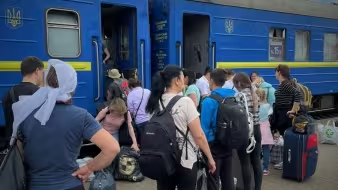
Briefing on Ukraine: Avenues to safety and meeting immediate needs
This discussion focused on the first-ever implementation of the EU Temporary Protection Directive in response to the 2022 Ukrainian crisis, prospects for the integration of the displaced, and lessons from the 2015-2016 refugee crisis.
As of March 2022, more than 1.7 million people have fled Ukraine so far, and the United Nations expected more than 4 million others would leave the country and need protection and assistance in the coming months. Those fleeing to neighbouring countries, mostly women and children, were met with an impressive voluntary and government mobilization to answer immediate needs.
Similarly, European Union (EU) policymakers are organised an unprecedented response, unanimously approving the first-ever activation of the Temporary Protection Directive that was expected to provide immediate protection and rights, reduce pressures on national asylum systems, and enhance responsibility sharing. Questions remained, however, about how the directive would work in practice and how quickly it could be rolled out, in particular as European asylum agencies and migration authorities face a range of operational issues for the first time. They needed to set up a new process to register people, but also organise which agencies (including EU ones) and which funding mechanisms could be tapped to ensure adequate reception and emergency assistance.
In the medium term, populations fleeing Ukraine needed access to affordable housing, education, the labour market, and health care. Questions covered in this discussion included: How can European countries with tight housing markets and overburdened health-care systems, yet simultaneously pressing labour shortages, plan for the more medium- and long-term needs of those displaced by the war? And how can Ukrainian diasporas be mobilized effectively in the response without being overburdened with untenable demands?
This MPI Europe webinar featured expert views on the implementation of the Temporary Protection Directive, prospects for the integration of displaced populations, and lessons from the 2015-2016 refugee crisis that could apply in the current context.
Speakers:
Sophie Magennis, Head of Policy and Legal Support, United Nations High Commissioner for Refugees (UNHCR) Representation for EU Affairs
Esther Pozo-Vera, Head of Asylum Unit, Directorate-General for Migration and Home Affairs, European Commission
Alexander Sorel, Senior Adviser to the Executive Director, European Union Agency for Asylum
Jasmijn Slootjes, Senior Policy Analyst, MPI Europe
Moderator:
Hanne Beirens, Director, MPI Europe
-

Sophie Magennis

Esther Pozo-Vera
Alexander Sorel

Related Content