U.S. Immigrant Population Spotlights
Showing 121–130 of 277 results
Frequently Requested Statistics on Immigrants and Immigration in the United States
In 2015, about 1 million Korean immigrants lived in the United States, the result of a migration pattern influenced by political, economic, and military relations between the two countries.
Korean Immigrants in the United States
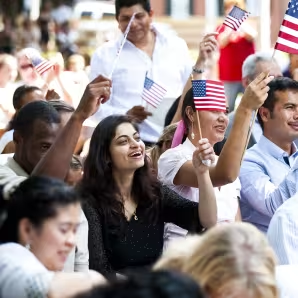
Approximately 1 million Korean immigrants (overwhelmingly from South Korea) lived in the United States in 2015, representing 2.4 percent of the U.S. immigrant population. While earlier waves consisted largely of unskilled laborers and their families, contemporary Korean immigration boasts high socioeconomic standing and Koreans are generally considered among the most successful immigrant groups.

Syrian Refugees in the United States
About 18,000 Syrian refugees were resettled in the United States in the five-year period ending in 2016, in response to civil war in Syria.
Language Diversity and English Proficiency in the United States
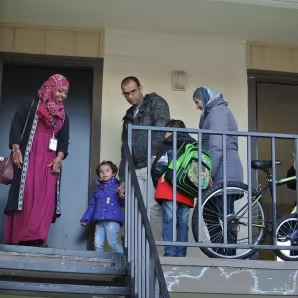
In 2015, the share of foreign-language speakers in the United States who were fully English proficient rose to 60 percent.

Immigrant Veterans in the United States in 2016
In 2016, immigrant veterans in the United States were more likely than native-born veterans to hold college degrees and reported higher average household incomes.

Caribbean Immigrants in the United States
In 2014, approximately 4 million Caribbean immigrants lived in the United States; more than 90 percent came from Cuba, the Dominican Republic, Jamaica, Haiti, or Trinidad and Tobago.
Naturalization Trends in the United States
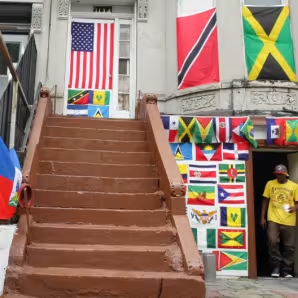
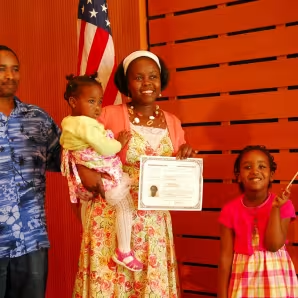
As of 2014, 20 million immigrants in the United States were naturalized citizens, generally earning higher incomes and owning homes at higher rates than noncitizens.
Brazilian Immigrants in the United States
Generally highly educated Brazilian immigration to the United States is reflected in strong labor outcomes, low poverty rates, and rising remittances.

Vietnamese Immigrants in the United States
Vietnamese immigrants in the United States numbered 1.3 million in 2014, with high rates of naturalization and above-average incomes.

International Students in the United States
In SY 2014-15, 975,000 international students were in the United States, with growth concentrated in a handful of states and STEM-heavy fields.