U.S. Immigrant Population Spotlights
Showing 101–110 of 277 results
South American Immigrants in the United States
South Americans made up 7 percent of U.S. immigrants in 2017, boosted by rising Venezuelan arrivals.

Mexican Immigrants in the United States
Mexicans remain the largest U.S. immigrant group but their population fell by 300,000 between 2016 and 2017 as departures outpaced arrivals.
Vietnamese Immigrants in the United States
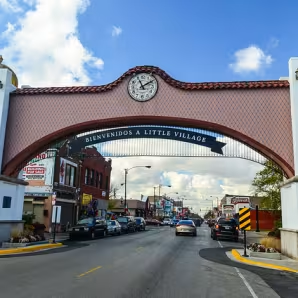
More than 1.3 million Vietnamese immigrants lived in the United States in 2017, with high naturalization rates and median household income above both immigrant and native-born averages.

European Immigrants in the United States
About 4.8 million Europeans lived in the United States in 2016, accounting for just 11 percent of all immigrants, down dramatically from 75 percent in 1960.

Immigrants in the U.S. States with the Fastest-Growing Foreign-Born Populations
From 2010 to 2016, 15 U.S. states saw their immigrant populations grow 15 percent or more, led by North Dakota, West Virginia, and South Dakota.

Canadian Immigrants in the United States
Canadians account for a declining share of all U.S. immigrants. They do have above-average education, high incomes, and near-average naturalization as compared to other immigrants.

International Students in the United States
The United States hosted 1.1 million international students in 2017, but new enrollment fell as other destinations gained in prominence.

Dominican Immigrants in the United States
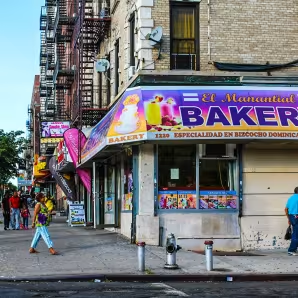
The nearly 1.1 million Dominican immigrants in the United States in 2016 were concentrated in New York, New Jersey, and Florida.
Filipino Immigrants in the United States
Filipinos comprised the fourth largest U.S. immigrant group in 2016, dropping from second place in 1990.

Frequently Requested Statistics on Immigrants and Immigration in the United States
In 2016, nearly 43.7 million immigrants made up 13.5 percent of the U.S. population, with Mexico the top origin country and immigrants comprising 17 percent of the labor force.