U.S. Immigrant Population Spotlights
Showing 81–90 of 277 results
Haitian Immigrants in the United States
Even as the number of Haitian immigrants in the United States rose to new levels in 2018, the population faces an uncertain legal future.

Filipino Immigrants in the United States
Just over 2 million Filipino immigrants lived in the United States as of 2019, with median household incomes of $93,000 and high educational attainment rates.

Cuban Immigrants in the United States
Cuban immigrants in the United States remain a distinct foreign-born group shaped by decades of preferential U.S. policy forged during the Cold War.

Immigrant Health-Care Workers in the United States
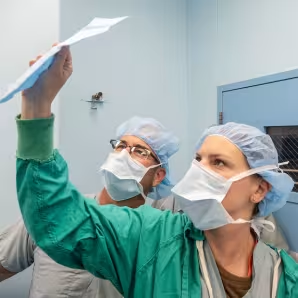
Immigrants made up nearly 18 percent of U.S. health-care workers in 2018, and were disproportionately represented at both the highest and lowest rungs of the field.
Venezuelan Immigrants in the United States
Venezuela's collapse has driven immigration to the United States, bringing a highly educated but economically vulnerable population that is concentrated in Florida.

Immigrant Women and Girls in the United States
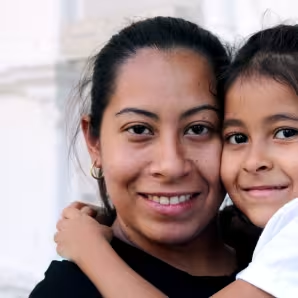
Women make up the majority of the U.S. immigrant population, but they face higher poverty rates, lower labor force participation, and greater health insurance gaps than U.S.-born women.
Frequently Requested Statistics on Immigrants and Immigration in the United States
The U.S. immigrant population reached 44.7 million in 2018, but growth is slowing and the profile of newcomers is shifting.

Chinese Immigrants in the United States
The Chinese immigrant population in the United States is among the fastest growing and most highly educated.

Temporary Visa Holders in the United States
U.S. temporary visa issuances fell in fiscal year (FY) 2018 from a peak three years earlier, with declines driven by policy changes, the travel ban, and shifting global landscape.

Sub-Saharan African Immigrants in the United States
The highly diverse sub-Saharan African immigrant population in the United States more than doubled since 2000, reaching 2 million in 2018.