Transatlantic Council on Migration

The Transatlantic Council on Migration is a unique, deliberative body, launched in 2008, that supports pragmatic, evidence-based migration and integration policymaking across Europe and North America through essential analysis, high-level convenings, and cutting-edge policy advice to senior leaders.
The Council aims to help inform the transatlantic agenda and promote better-informed policymaking by proactively identifying critical policy issues, analyzing them in light of the best research, and bringing them to public attention. At the same time, it aims to serve as a resource for governments as they grapple with the challenges and opportunities associated with international migration. The Council’s goal is to support pragmatic and evidence-based policymaking that can adapt to evolving needs and changing political realities. Learn more about the Council here.



Showing 81–90 of 185 results
Exploring Innovative Ideas to Strengthen the Global Protection System
An discussion examining the huge strains on the global protection system and how it can better respond to protracted refugee situations and other long-term displacement, focusing on the conclusions of the Transatlantic Council on Migration's recent meeting, Beyond Asylum: Rethinking Protection Policies to Meet Sharply Escalating Needs.

Beyond Asylum: Rethinking Protection Policies to Meet Sharply Escalating Needs (Transatlantic Council Statement)
Record-high displacement reveals territorial asylum's limits, demanding early investment in host communities, wider legal pathways, and efficient adjudication systems.
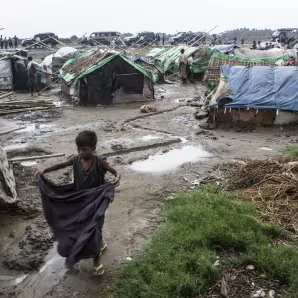
Rethinking Global Protection: New Channels, New Tools
The postwar protection regime is failing under modern displacement crises, and only integrating development programming and legal mobility channels can make it sustainable.
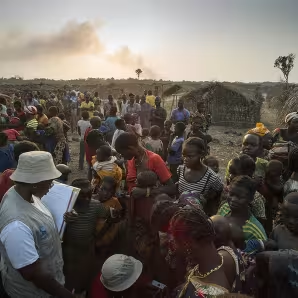
From Dependence to Self-Reliance: Changing the Paradigm in Protracted Refugee Situations
Protracted refugee dependency is neither inevitable nor acceptable. Self-reliance demands work rights, better livelihoods programs, and development actor engagement.

From Refugee to Migrant? Labor Mobility's Protection Potential
Labor mobility for refugees can enhance protection and cut irregular secondary migration, but must be designed to preserve the humanitarian foundation of the refugee regime.

Syrian Refugees in Turkey: The Long Road Ahead
Turkey's open-door response to Syrian displacement has grown unsustainable, requiring a shift from temporary protection to long-term integration and burden-sharing.
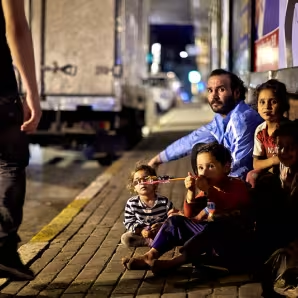
Protection in Crisis: Forced Migration and Protection in a Global Era
The 1951 Refugee Convention's persecution framework no longer covers most forced migrants, leaving the world's 51 million displaced without adequate legal protection.

Unpacking the Links between Segregation, Community Cohesion, and Opportunity: A Transatlantic Discussion
In this webinar, experts and policymakers from Europe and the United States discuss the relationship between immigration, residential segregation, community relations, and economic opportunities.
Residential Segregation: A Transatlantic Analysis
Residential segregation reflects structural inequality, not self-segregation alone, and housing fixes consistently underperform broader socioeconomic remedies.

Immigrant Civic Integration and Service Access Initiatives: City-Sized Solutions for City-Sized Needs
Cities of all sizes have built effective immigrant integration by leveraging existing services, authentic partnerships, and mayoral leadership.