Transatlantic Council on Migration

The Transatlantic Council on Migration is a unique, deliberative body, launched in 2008, that supports pragmatic, evidence-based migration and integration policymaking across Europe and North America through essential analysis, high-level convenings, and cutting-edge policy advice to senior leaders.
The Council aims to help inform the transatlantic agenda and promote better-informed policymaking by proactively identifying critical policy issues, analyzing them in light of the best research, and bringing them to public attention. At the same time, it aims to serve as a resource for governments as they grapple with the challenges and opportunities associated with international migration. The Council’s goal is to support pragmatic and evidence-based policymaking that can adapt to evolving needs and changing political realities. Learn more about the Council here.



Showing 101–110 of 185 results
Migration’s Local Dividends: How Cities and Regions Can Make the Most of Immigration (Transatlantic Council Statement)
Immigration benefits and challenges are asymmetrically distributed, and effective governance demands giving cities and regions a seat at the national policy table.

Giving Cities and Regions a Voice in Immigration Policy: Can National Policies Meet Local Demand?
Regional visa programs in key immigrant destinations direct workers to underserved areas but risk poor integration outcomes by overriding immigrants' market-driven location decisions.

How Migration Can Advance Development Goals (Transatlantic Council Statement)
Migration produces powerful development gains that policymakers underuse. Cooperation on reducing remittance costs and improving skills recognition is the most viable way forward.

Migration and the Great Recession: A Keynote Lecture
This German Historical Institute keynote lecture, organized together with the Migration Policy Institute, is part of the conference Migration during Economic Downturns—from the Great Depression to the Great Recession. The event will begin with a reception.

A Transatlantic Conversation: Managing Migration in the Era of Mobility
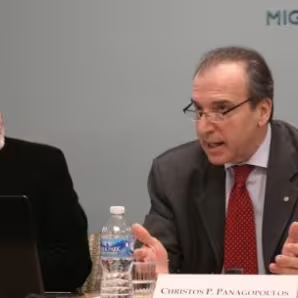
As the 2014 Greek Presidency of the Council of the European Union works to formulate the European Union’s next five-year program, this transatlantic discussion, presented in cooperation with the Greek Embassy, explores how governments can build a comprehensive migration system that meets humanitarian obligations and nurtures economic growth and social cohesion.
'Donkey Flights:' Illegal Immigration from the Punjab to the United Kingdom
Punjab's visa agents and criminal networks exploit every UK and Schengen loophole with greater speed and creativity than government bureaucracy can match.

Human Smuggling and Trafficking into Europe: A Comparative Perspective
Human smuggling and trafficking into Europe persist because weak borders, corruption, and unmet labor demand make them highly profitable and low-risk criminal enterprises.

Curbing the Influence of "Bad Actors" in International Migration (Transatlantic Council Statement)
Irregular migration persists despite massive enforcement investments because market demand drives illegality and bad actors consistently outpace government controls.

Trade-Offs in Immigration Enforcement
Return-only enforcement globally is costly and incomplete, making regularization an indispensable complement to deportation in any credible migration enforcement regime.

Securing Borders: The Intended, Unintended, and Perverse Consequences
Border enforcement consistently generates perverse consequences, and strong borders require strong institutions and rule of law as much as physical controls.
