Bridging the Digital Divide for U.S. Children in Immigrant Families
Taking stock of lessons learned about remote learning during the pandemic, this webinar examined how governments, schools, and service providers can advance digital equity for children in immigrant families.
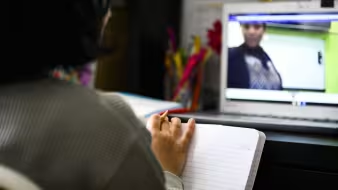
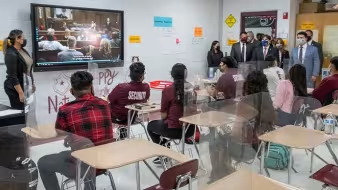
The Omicron surge caused many U.S. schools to return to remote learning, an all-too-familiar status since the sudden shift to virtual learning caused by the COVID-19 pandemic. The public-health crisis has tested school systems across the country and continues to pose operational challenges as schools transition between in-person, remote, and hybrid instruction.
Remote learning has become a controversial tool and now is often considered a last-resort pandemic response. One reason is the digital divide in who can access computers, high-speed internet, and digital skills training. Children in immigrant families often have disproportionately less access to digital tools and training than their peers, which can lead to knowledge gaps, lower grades, chronic absenteeism, and disenrollment.
This webinar featured findings from an MPI report that takes stock of lessons and promising practices from the pandemic, with insights from educators, community leaders, and other stakeholders on how to support immigrant children and U.S.-born children with immigrant parents during remote learning. Speakers examined related parts of the Infrastructure Investment and Jobs Act of 2021 and how federal, state, and local governments; school districts; schools; libraries; and service providers can advance digital equity for children in immigrant families.
Speakers:
Carmen Bordea, Digital Learning Program Coordinator, Office of Global Michigan
Genna Robbins, Manager of Professional Development Services, Internationals Network for Public Schools
Ji Soo Song, Broadband Advisor, Office of Educational Technology, U.S. Department of Education
Essey Workie, Director, Human Services Initiative, Migration Policy Institute (MPI)
About the Human Services Initiative
The Initiative produced work focusing on U.S. federal, state, and local policies on immigration issues affecting children, families, and health and human services.
About the National Center on Immigrant Integration Policy
The Center is a national hub connecting policymakers, educators, community leaders, and service providers with evidence-informed policy research, technical assistance, and data to advance effective immigrant integration at U.S., state, and local levels.
-

Carmen Bordea
Genna Robbins
Ji Soo Song