Leveraging the Skills of Immigrant Health-Care Professionals in Illinois and Chicago
Related Content
Highlights
Licensing barriers left an estimated 12,000 immigrant health professionals underemployed in Illinois in 2019, despite critical workforce shortages across the state.
- Illinois depends heavily on immigrants for health care—they were 37 percent of physicians and 19 percent of nurses—yet an estimated 12,000 immigrants with health or medical degrees were underemployed or out of work in 2019, half in Cook County.
- Most are women, foreign-trained, hold nursing degrees, and are legally present; many speak languages matching the needs of the state's limited English proficient patients.
- Barriers include non-recognition of foreign credentials, costly licensing, and training programs channeling immigrants into low-skill jobs rather than degree-level positions.
The nation’s health-care system has strained to keep up with the COVID-19 crisis. This pressure is occurring alongside mismatches in the supply and demand for health-care professionals that predate the pandemic, shaped by the aging of the U.S. population, declining birth rates, and other trends.
Explore U.S. and State Data
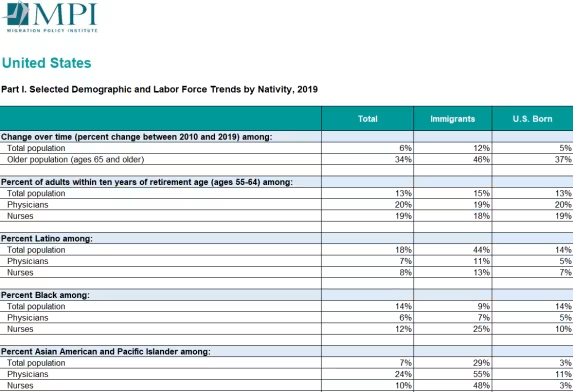
This data file offers estimates of skill underutilization among immigrant and U.S.-born adults with undergraduate degrees in medical and health sciences and services, both nationwide and in selected states. It includes details on their race/ethnicity, gender, legal status, origin countries, and the languages other than English that they speak.
Immigrant professionals have long played a vital role at all levels of the U.S. health-care workforce, but not all of those with in-demand expertise have been able to put their skills to work. Large numbers of immigrants with health and medical college degrees are underemployed or out of work, with many facing challenges having their foreign-earned academic and professional credentials recognized.
This issue brief explores the extent and nature of this skill underutilization, or “brain waste,” among highly skilled immigrant health-care professionals in Illinois, a state with the sixth largest immigrant population in the country and one that boasts a long history of innovative immigrant integration efforts. The brief also examines key demographic, linguistic, and employment characteristics of the estimated 12,000 under- and unemployed immigrants with health or medical degrees in the state, and highlights opportunities to more fully leverage their skills.
Table of Contents
1 Introduction
2 Old and New Challenges Faced by Illinois’ Health-Care System
3 Immigrant Health-Care Professionals in Illinois
A. Underutilized Health-Care Professionals in Illinois: A Profile
B. English Proficiency and Languages Spoken by Underutilized Health-Care Professionals
4 Reducing Brain Waste in Illinois: Challenges and Opportunities
A. Abiding Challenges
B. Institutional Opportunities
5 Conclusion
About the U.S. Immigration Policy Program
The U.S. Immigration Policy Program provides analysis of U.S. immigration pathways, the impacts of enforcement and other policies, and the characteristics of immigrant populations.
About the National Center on Immigrant Integration Policy
The Center is a national hub connecting policymakers, educators, community leaders, and service providers with evidence-informed policy research, technical assistance, and data to advance effective immigrant integration at U.S., state, and local levels.


Related Content