Navigating the Future of Work: The Role of Immigrant-Origin Workers in the Changing U.S. Economy

Immigrant-origin workers drove 83 percent of U.S. labor force growth from 2010 to 2018 and face similar automation and job-decline risks as their native-born peers.
Immigrant-origin workers—that is, immigrants and their U.S.-born children—have been the main drivers of U.S. workforce growth in recent years. They were responsible for 83 percent of labor force growth between 2010 and 2018, at which point they made up 28 percent of all U.S. workers. Looking ahead, all growth in the working-age population is projected to come from immigrant-origin adults through 2035.
Yet research on the future of work in the United States has largely overlooked this important segment of the workforce. This report examines the jobs held by immigrant-origin workers and third/higher-generation workers (those born in the United States to U.S.-born parents), and which of these jobs are likely to grow versus decline due to automation, offshoring, and other trends. It also considers the implications of the changing mix of jobs in the U.S. economy for both workforce development and immigration policy.
Among the findings of this data analysis:
- Similar shares of Immigrant-origin and third/higher-generation workers held “jobs of the future” (22 percent versus 24 percent) and declining jobs (26 percent versus 29 percent) in 2018.
- Latinos—both those of immigrant origins and the third/higher generation—were less likely than workers in other major racial or ethnic groups to hold jobs of the future and more likely to hold declining jobs.
- Black immigrant-origin workers were overrepresented in jobs of the future in 2018, particularly in health care and health-care support, while third/higher-generation Black workers were more likely to hold declining jobs, such as office and administrative support occupations.
This report is part of MPI’s multiyear Rethinking U.S. Immigration Policy initiative, which aims to generate a big-picture, evidence-driven vision for the role immigration can and should play in America’s future. To learn more about the initiative and read related research, check out the initiative’s home page.
Want to Learn More about Immigrant-Origin Workers and Their Credentials?
The following data tools offer U.S. and state-level data on immigrant-origin workers by education and credential level.
This provides data on immigrant-origin and all postsecondary students, both nationwide and by state:
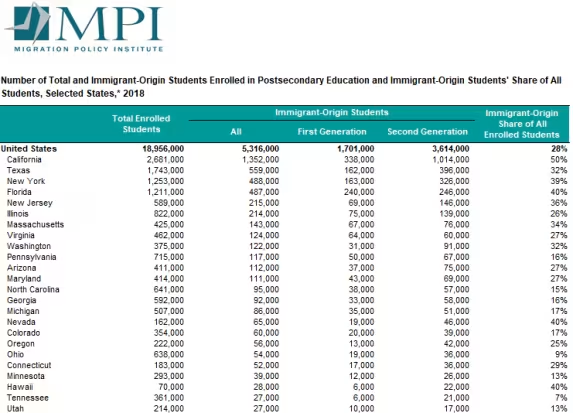
This second data tool offers information on immigrant-origin adults without a postsecondary credential nationwide and by state.
Table of Contents
1 Introduction
2 The Immigrant-Origin Workforce
3 Immigrant-Origin Workers and the Future of Work
A. Projected Trends in the Future of Work
B. Jobs of the Future and Declining Jobs
C. Where Do Immigrant-Origin Workers Fit In?
D. Race and Ethnicity and the Future of Work
E. Changes in the Quality of Jobs
4 Conclusion
About the Global Skills and Talent Initiative
Anchored in the premise that immigration policy must be part of a broader skills and talent strategy, the Initiative has a particular focus on employment-based immigration and the supports that can help immigrants apply their full range of educational and professional skills.
About the U.S. Immigration Policy Program
The U.S. Immigration Policy Program provides analysis of U.S. immigration pathways, the impacts of enforcement and other policies, and the characteristics of immigrant populations.
About the National Center on Immigrant Integration Policy
The Center is a national hub connecting policymakers, educators, community leaders, and service providers with evidence-informed policy research, technical assistance, and data to advance effective immigrant integration at U.S., state, and local levels.
Rethinking U.S. Immigration Policy Initiative
This Initiative is generating a big-picture, evidence-driven vision of the role immigration can and should play in America’s future by providing policy ideas that reflect new realities.





Related Content