African Migration through the Americas: Drivers, Routes, and Policy Responses
Related Content
Highlights
African migrants increasingly transit the Americas via the Darién Gap, though COVID-19 disrupted flows in 2020. Coordinated regional policy responses are needed.
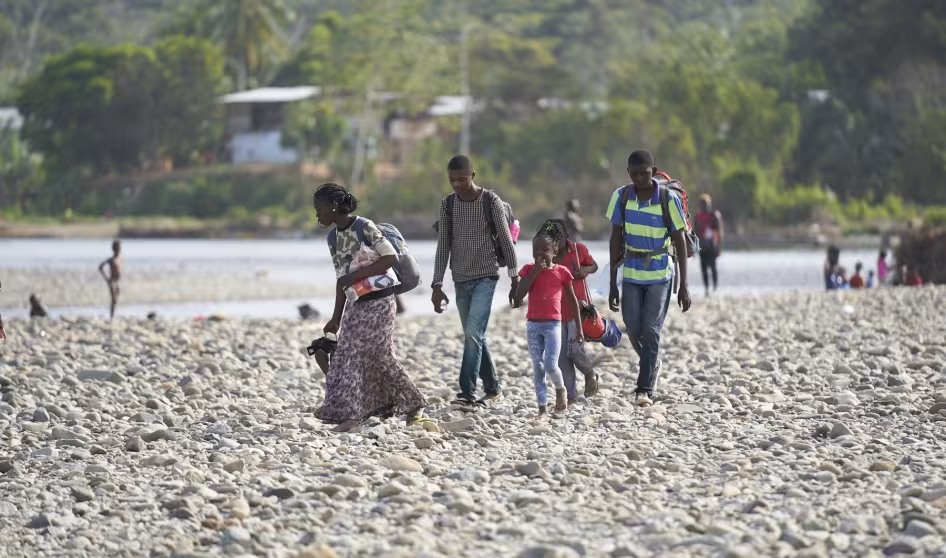
- Between 2016 and 2019, tens of thousands of African migrants—mainly from Cameroon, Congo, and Angola—transited the Americas annually via the Darién Gap. Then COVID-19 border closures halted flows.
- Migrants faced extreme dangers on the Darién crossing—violence, extortion, and death—and traveled irregular routes through Panama, Costa Rica, and Mexico with limited legal options.
- Host countries lack legal frameworks for African transit migrants, leaving them in prolonged legal limbo; detention policies vary widely and asylum systems are largely inaccessible for most.
- Recommendations include establishing regional coordination mechanisms, expanding temporary protections, improving data collection on extracontinental flows, and targeting assistance for migrants stranded in transit.
Since 2013, migrants from Africa have increasingly trekked through upwards of nine South and Central American countries to reach the U.S.-Mexico border, many seeking asylum. While still a very small flow, it is part of a broader and growing trend of migrants from outside Latin America—including from countries in the Caribbean and Asia—transiting through the region, often collectively referred to as extracontinental migrants. The increase in African migration through the Americas comes as Europe has more forcefully impeded migrants’ passage across the Mediterranean and as potential migrants’ social networks have relayed personal success stories and information about routes through the Western Hemisphere.
While the number of Africans traveling through the region is small compared to the large-scale movements of migrants from Venezuela and certain Central American countries, several things set this population apart—from linguistic and cultural differences to how Latin American countries address their arrival and facilitate onward movement. As this migration increases, it will be crucial for transit countries to build their capacity to manage migration and address the specific challenges that arise for Africans moving through the Western Hemisphere, including discrimination.
This report examines the range of factors that drive African migration through the America, common routes taken, and transit countries’ policy responses. The report also provides recommendations for national governments and international actors to address these unique migration dynamics.
Para leer este reporte en español, haga clic aquí.
Table of Contents
1 Introduction
2 Drivers of Migration and Forced Displacement
A. Eritrea
B. Somalia
C. Democratic Republic of Congo
D. Cameroon
E. Ghana
3 Current and Future Migration Patterns
A. Intra-African Migration
B. African Migration to Europe
C. Migration through the Americas
4 Immigration Policies and Management Capacity
A. Managing Transit through Permits and Enforcement
B. Humanitarian Protection and Other Legal Statuses
C. Access to Rights and Integration
5 Conclusion and Recommendations
Latin America and Caribbean Initiative
The Initiative combines rigorous research with direct engagement of governments, institutions, and stakeholders to help build orderly, rights-respecting migration systems across one of the world's most dynamic migration regions.
About the U.S. Immigration Policy Program
The U.S. Immigration Policy Program provides analysis of U.S. immigration pathways, the impacts of enforcement and other policies, and the characteristics of immigrant populations.
About the Global Program
The Global Program bridges policy advice, research, and candid dialogue to design effective migration policies, drawing on global evidence and anticipating the forces reshaping how people move.



Related Content