U.S. Immigration Policy Program
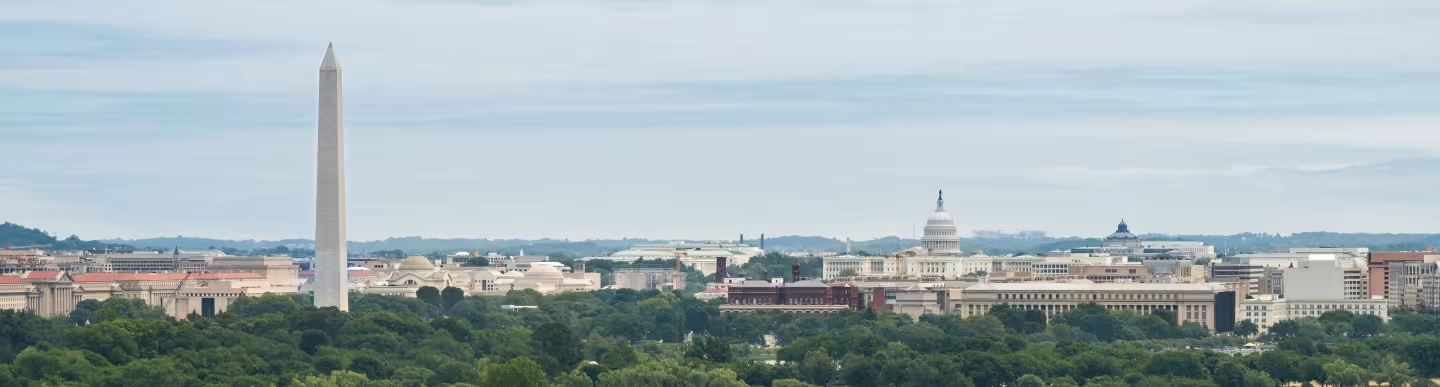
The U.S. Immigration Policy Program provides thought leadership on ways to improve the U.S. immigration system so that it works most effectively in the national interest. To that end, its work focuses on immigration pathways to the United States and immigration enforcement policies and their impacts. It examines the complex demographic, economic, social, political, foreign policy, and other forces that shape U.S. immigration.
Program staff produce data and analyses of immigration trends and the characteristics of U.S. immigrant populations, including unauthorized immigrants. And they conduct original research on the impacts of policy change and the experiences of immigrant populations in diverse parts of the country. This work is frequently informed by private convenings of policymakers and key stakeholders. For more, click here.
The Latest Research
U.S. Deportations and “Self-Deportations” in the First 18 Months of the Second Trump Term
Filling a gap amid a slowdown in official data reporting from the federal government, this analysis offers a window into deportation and "self…

Featured
Physicians in an Era of Changing Immigration Policy: The Case of Nephrology
The care of kidney disease in the United States relies heavily on international medical graduates (IMGs). Recent policy changes could deepen…

Temporary Visa Holders in the United States
The number of U.S. temporary visas plummeted during the COVID-19 pandemic, rebounded, and then fell again in fiscal year (FY) 2025. Preliminary data…

Following Years of High Border Arrivals, the U.S. Unauthorized Immigrant Population Hits New Peak
MPI estimates the U.S. unauthorized immigrant population reached a new peak of 15.8 million as of mid-2024, after holding steady at around 11 million…

More Featured Work
From Counterterrorism to Immigration Enforcement: 25 Years On, Post-9/11 U.S. Changes Have Been Repointed
Post-9/11 national security tools have been repurposed for immigration, expanding the U.S. government’s capacity for surveillance, data sharing, and…

Attacked as "De Facto Amnesty," U.S. Temporary Protected Status Is Abruptly Eroded
The Trump administration moved to terminate most of the 17 Temporary Protected Status (TPS) designations in place when its second term began,…

Though Rare, Birth Tourism to the United States Sparks Outsized Concern
While rare, birth tourism has become a central but contested justification in the Trump administration's push to end the guarantee of birthright…

Key Statistics
Learn more about immigrants and immigration to the United States
14.8%
The immigrant share of the total U.S. population
Learn how this share has evolved (opens in a new tab)50.2 million
The number of immigrants in the United States
Explore Data Profiles by State (opens in a new tab)18.4%
The share of workers in the U.S. civilian labor force who are immigrants
Get the data at U.S. and state levels (opens in a new tab)
Showing 671–680 of 824 results
Aligning Temporary Immigration Visas with U.S. Labor Market Needs: The Case for a New System of Provisional Visas
This paper outlines MPI’s design of a flexible provisional visa that would tie temporary labor inflows to real-time demand while offering workers who meet clear criteria pathways to stay.

6th Annual Immigration Law & Policy Conference
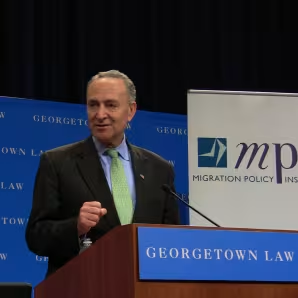
This conference offered law and policy analysis and discussion on cutting-edge immigration issues. Speakers included Senate Immigration Subcommittee Chairman Charles Schumer and Assistant Secretary for Immigration and Customs Enforcement John Morton.
ICE to Expand New Immigration Enforcement Program in Local Jails
Of approximately 12,000 “criminal aliens” flagged by Secure Communities in its first months, only 862 were the highest-priority Level 1 offenders.
Supreme Court Rules against Charging Unauthorized Immigrants with "Aggravated Identity Theft"
A U.S. law aiming to target hackers and thieves became a major immigration enforcement tool before the Supreme Court unanimously curbed its use against unauthorized workers.
Harnessing the Advantages of Immigration for a 21st-Century Economy: A Standing Commission on Labor Markets, Economic Competitiveness, and Migration
A permanent expert commission using evidence to flexibly guide U.S. employment-based immigration levels would strengthen the country’s economic competitiveness.
Push for Comprehensive Immigration Reform Grows, But Several Obstacles Remain
With broad U.S. immigration reform stalled by the recession, the bipartisan DREAM Act emerged as the most viable path for many of the nation's 12 million unauthorized immigrants.
Signs of Change in Immigration Enforcement Policies Emerging From DHS
The Obama administration moved in 2009 to refocus the 287(g) program on immigrants with criminal convictions, signaling a shift from Bush-era enforcement priorities.
Obama Administration Signals It May Review a Number of Bush Immigration Policies
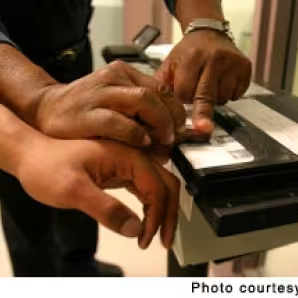
Funding for the U.S. National Fugitive Operations Program grew to $218 million by 2008, although 73 percent of those arrested had no criminal record.
Collateral Damage: An Examination of ICE's Fugitive Operations Program
ICE's fugitive operations program arrests mostly low priority noncriminals instead of the dangerous fugitives it was created to target.
DHS and Immigration: Taking Stock and Correcting Course
The Department of Homeland Security's immigration system remains fragmented six years into its existence, spurring the need for clearer roles and stronger oversight.

- General Inquiries
- Media Inquiries
-
Michelle Mittelstadt
202 266 1910 [email protected]